

Reasons why sending your child to an international school is a worthy investment
- Understanding the international environment correctly to determine whether you should send your child to an international school
-
Should you send your child to an international school? Reasons why you should send your child to an international school
- 2.1 International standard educational programs and learning pathways
- 2.2 A team of highly qualified teachers, both domestic and international
- 2.3 Facilities that meet international standards
- 2.4 A place to train essential life skills for children
- 2.5 Start practicing English and other foreign languages early
- VAS - A place to nurture global citizens
Choosing the right school is one of the most important decisions parents make for their child's future. In today’s globalized world, many families find themselves asking: "Is sending my child to an international school truly a worthy investment?" It’s not just about facilities or language, it’s about giving your child the tools to succeed in a global world. In this article, we will help you understand what an international environment really looks like and explore the reasons why this could be the best stepping stone for your child’s journey ahead.
1. Understanding the international environment correctly to determine whether you should send your child to an international school
In Vietnam, many parents still find it confusing to distinguish between international, bilingual, and private schools.The following definitions will help parents distinguish between these three types of schools:
- Private Schools: Established by an individual, a group, or a company/corporation.
- Bilingual Schools: Apply a teaching and learning program in two languages.
- International Schools: Apply international standard programs (the most common in Vietnam is the Cambridge program), teaching in English or bilingually. Notably, these schools have 100% foreign investment.
In addition, these three models have several different characteristics such as:
Regarding the curriculum:
- Private Schools: The curriculum follows the Ministry of Education and Training (MOET) standards and is taught in Vietnamese. English classes are increased, and international teaching methods are integrated.
- Bilingual Schools: An international program combined with the MOET curriculum, taught in Vietnamese and one of other languages such as English, Chinese, French...
- International Schools: Follow globally recognized curricula, often adapted to the local context in Vietnam. Teachers teach 100% in English using current international methods. Some subjects in Vietnamese will be scheduled separately to supplement the program. Notably, the school has a continuous system from Kindergarten to High School to help students develop in a fixed, familiar environment, without wasting time adapting to moving schools.
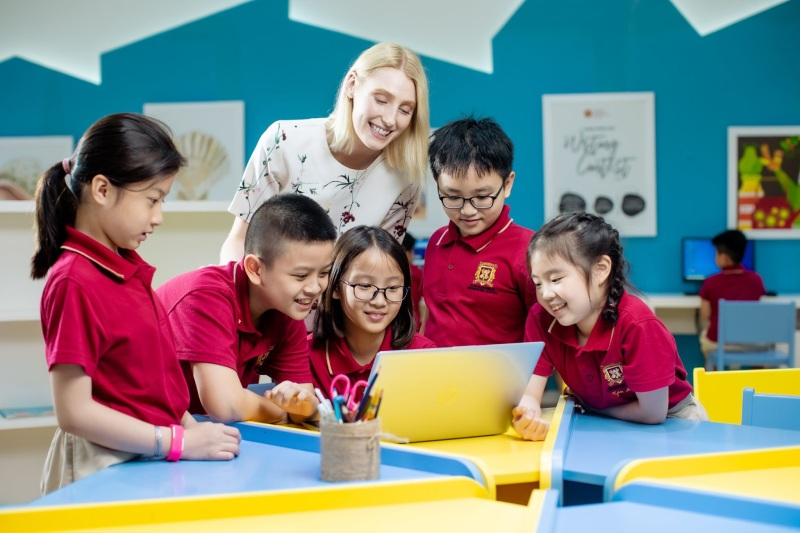
The curriculum at international schools is diverse, and most classes are taught by foreign teachers
Regarding teachers:
- Private Schools: Mostly Vietnamese teachers; only some schools have about 5-10% international teachers.
- Bilingual Schools: Have from 15-50% foreign teachers.
- International Schools: 60-80% foreign teachers.
Class size:
- Private Schools: 35-40 students/class.
- Bilingual Schools: 25-35 students/class.
- International Schools: 15-25 students/class.
Facilities: All three types of schools are equipped with suitable facilities for students, but facilities at international schools will be "slightly better" than the rest. Since the schools have foreign investment, the facility system is more complete.
Currently, international schools are developing very strongly in Vietnam in general and Ho Chi Minh City in particular, so that students have the opportunity to access the most advanced curricula in the world such as: UK, USA, Australia, Canada...
There are three most popular international programs today:
- International Baccalaureate (IB) Program: Equips skills and knowledge for students to become global citizens, making it easy to apply to world universities after graduation.
- Cambridge International Program: For Primary to High School students to provide comprehensive knowledge and skills so they can be creative, learn, and become outstanding international citizens.
- SACEi Program: Taught 100% in English, focusing on necessary research skills to prepare for future university majors.
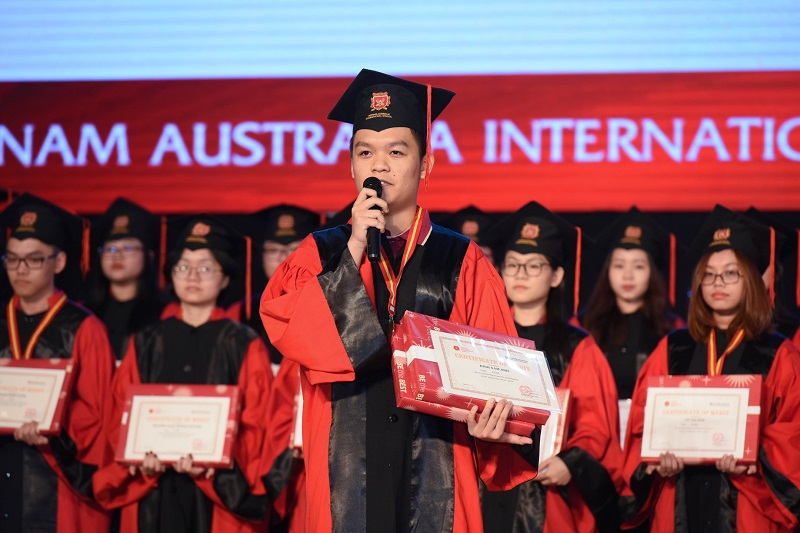
International schools offer degrees with global value
2. Should you send your child to an international school? Reasons why you should send your child to an international school
2.1. International standard educational programs and learning pathways
Although many parents wonder "whether or not to send their child to an international school," many still choose international schools for their children because of the international standard curriculum. Students not only gain necessary knowledge and skills but also develop comprehensively in both physical and mental health. At the same time, becoming fluent in one or more languages helps them confidently communicate in daily life or study and settle abroad in developed countries later.
In Ho Chi Minh City, one of the most prominent international schools is Vietnam Australia International School (VAS) with a system of 6 campuses spread across key districts of the city. The educational program at VAS sets a top goal of being student-centered, creating the most comprehensive training and development environment for children. Therefore, the education system here is divided into 3 specific pathways:
- CEP Advanced Pathway: English duration is usually from 19-20 periods/week for students in this pathway. When entering Secondary school, students also explore subjects such as international business, global perspectives, and ICT.
- CAP Pathway: Subjects like Math, Computer Science, Economics, ICT, Business, and Global Perspectives are taught 100% in English. Additionally, the average English duration in this pathway is 22-25 periods/week.
- CAPI Pathway: Subjects are taught 100% in English (28-36 periods/week). VAS offers one of the most intensive English programs among bilingual schools in Ho Chi Minh City.system.
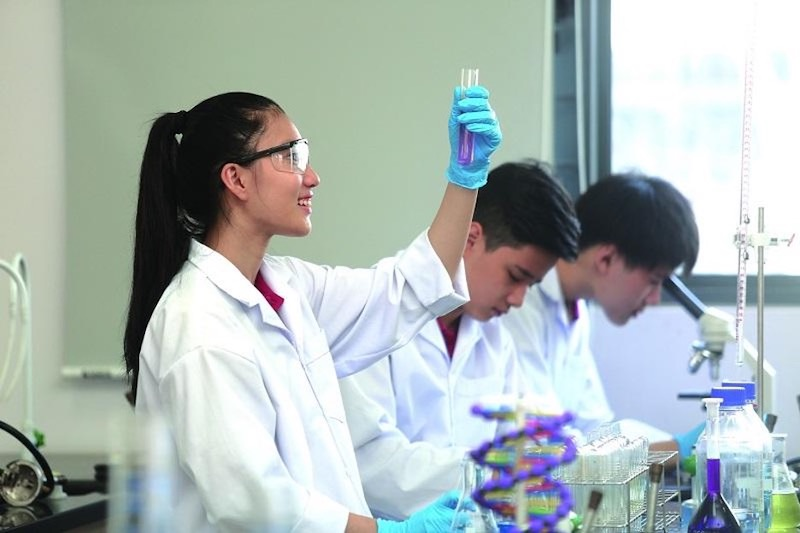
The learning pathway is tailored to each student at Vietnam Australia International School (VAS)
2.2. A team of highly qualified teachers, both domestic and international
To help children develop good foreign language skills, VAS builds a team of experienced native and international teachers with high professional qualifications and a love for the profession, fluent in many foreign languages with international degrees.
At VAS, teachers must have at least one Bachelor of Education degree or an equivalent degree from foreign universities. At the same time, teachers who want to apply must go through a strict process such as:
- Pre-screening: at the Human Resources department.
- Two rounds of interviews: Human Resources Department & Professional Department.
- Background, judicial, and degree checks.
- Professional Council makes the hiring decision.
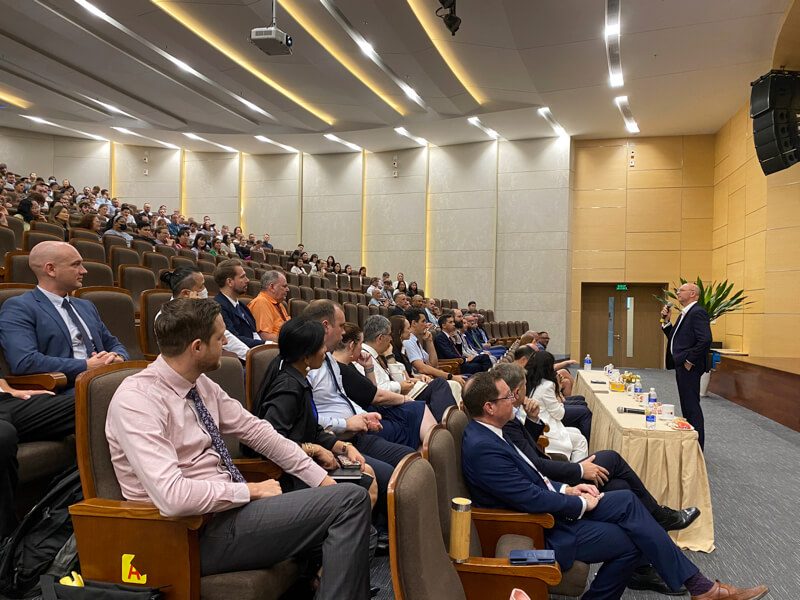
Training for 1,000 teachers at VAS before the new school year according to Cambridge standard programs
When becoming a teacher at VAS, every year, teachers will be trained and quality-checked by Cambridge Assessment International Education (CAIE) to ensure they are capable of teaching the Cambridge international program. Training sessions will also include: classroom teaching, lesson planning, grading, and how to care for students. In addition, teachers are also closely managed and monitored according to VAS's KPI system to ensure professional criteria and standards in each semester.
2.3. Facilities that meet international standards
Facilities are also one of the prominent factors that many parents rely on to evaluate if they are wondering whether to send their child to an international school. Most international schools are invested in on a large scale, from the appearance to the equipment inside.
For example, Vietnam Australia International School (VAS) is a member of Cambridge International Schools, so the CAIE organization regularly checks the quality of equipment to ensure safety and conditions for students to actively learn and research according to specific subjects.
Each classroom at VAS is equipped with a projector, tablet, TV, and other learning tools to better serve the teaching and learning process. At the same time, VAS also has a system of modern classrooms and functional rooms such as: research labs, ICT rooms, music, fine arts, and painting rooms, basketball courts, outdoor playgrounds, swimming pools, soccer fields, and a complex sports area.
Besides, VAS also strictly complies with safety measures for classrooms such as: fire protection systems and security camera systems so parents can monitor their children's play and study at school. Furthermore, the VAS system is designed with 60% greenery coverage to help create a fresh environment close to nature for the students.
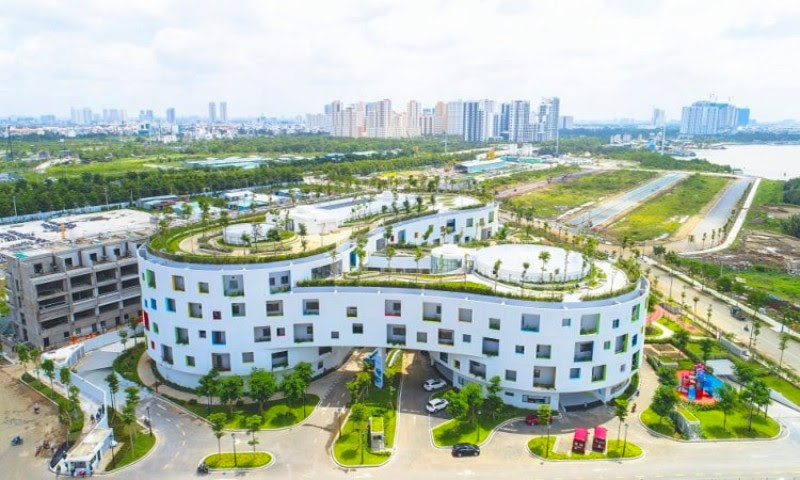
The campus of Sala branch under the Vietnam Australia International School (VAS) system
2.4. A place to train essential life skills for children
In addition to academic skills, life skills are also an important factor that will follow children throughout their long journey later. Therefore, international schools also pay special attention to this issue to fully and comprehensively equip necessary life skills suitable for each age, even aiming to help them become global citizens with the necessary qualities.
At VAS, children are equipped with many essential skills, helping them be more confident in studies and life, as well as the bravery to help them develop strong problem-solving skills through projects, talent contests, or field trips after school. If you are wondering whether to send your child to an international school, parents should consider this aspect to make the right decision.
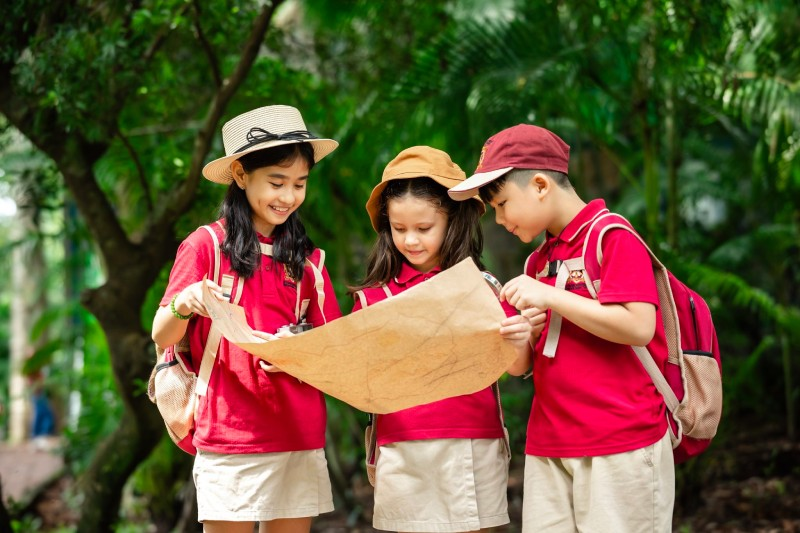
Children learn necessary life skills through extracurricular activities
Some skills children learn at VAS include:
- Self-service skills
- Teamwork skills
- Emotion management skills
- Self-protection skills
- Communication skills
- Time management skills
- Problem-solving skills
- Independence skills
- Logical thinking skills
- Integration skills ...
2.5. Start practicing English and other foreign languages early
English is the second language children are exposed to very early when attending international schools. With English duration from 22 - 36 periods/week depending on each specific learning pathway, Vietnam Australia International School (VAS) is in the top tier of international schools with the highest English duration in HCMC. Therefore, parents can rest assured about their child's English proficiency when studying at VAS.
Upon completing the high school program, students also receive two internationally valuable diplomas that help them reach the world level in the future, including:
- Cambridge AS/A Level
- National Baccalaureate Diploma
>>> Read more: How to Choose an International School in Ho Chi Minh City
3. VAS - A place to nurture global citizens
With a Cambridge standard international educational environment, VAS cannot lack clubs or exciting competitions that help students develop and train to become global citizens. No matter the level or grade, VAS has competitions such as:
- English Speaking Contest
- Reading
- Podcasting
- Drama
- VAS Olympic
- VAS’s Got Talent
- VAS Painting Contest ...
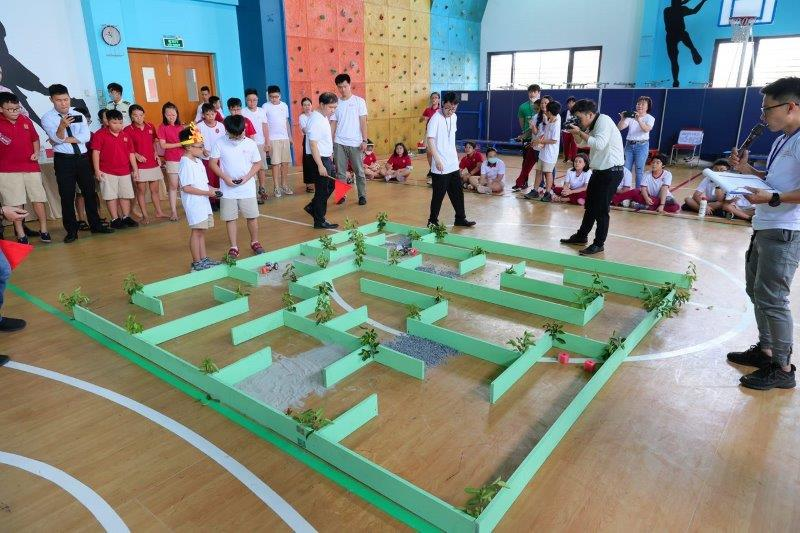
The Robocon contest helps children unleash their creativity and nurtures young talent
Such a learning environment full of entertainment and training has helped VAS maintain its position as a good international school in HCMC, helping parents trust their choice and answering the question "should you send your child to an international school." VAS hopes to develop more and more and continuously train more comprehensive generations to benefit the community and society.
>>> Read more: What do VAS international school tuition fees include?
Above are the criteria to help parents consider whether to send their child to an international school and the values that this environment brings. Additionally, to learn more about Vietnam Australia International School, parents can contact directly at: www.vas.edu.vn or 0911267755.
>>> Read more: List of the 20 best international bilingual elementary schools in HCMC