


Should you send an 18-month-old child to school? What parents need to prepare
- Should you send an 18-month-old child to school?
-
8 Key Benefits of Sending Your Child to School at 18 Months Old
- 2.1 Establishing a stable daily routine
- 2.2 Rapid language and communication development
- 2.3 Encouraging curiosity and cognitive abilities
- 2.4 Learn how to play together and manage your emotions.
- 2.5 Build confidence and adaptability
- 2.6 Fostering independence from an early age
- 2.7 Age-appropriate play
- 2.8 Improve physical fitness
- Difficulties when children start school too early
- Things parents need to prepare before sending their 18-month-old child to school
- Why do many parents trust VAS to send their 18-month-old children?
- Conclusion
At around 18 months old, children begin to explore the world more actively but still need a high level of care from their parents. This is also when many parents wonder: should an 18-month-old child be sent to school yet? Will sending them to school early help them develop better or cause unnecessary stress?
In reality, there is no one-size-fits-all answer, but there are research and real-life experience to help parents consider before making a decision.
1. Should you send an 18-month-old child to school?
Many parents worry that 18 months is too early for their child to go to school. However, according to educational psychology experts, the 10 – 18 month period is a golden time for a child's language, communication, and cognitive development. Going to school early helps children experience a new environment, form daily routines, and develop better social skills compared to just staying home with their parents.
Of course, the final decision still depends on the physical condition, personality, and adaptability of each child. Some more confident and adaptable children will quickly get used to school, while sensitive ones who are more emotionally dependent on their parents may need more time to adjust.
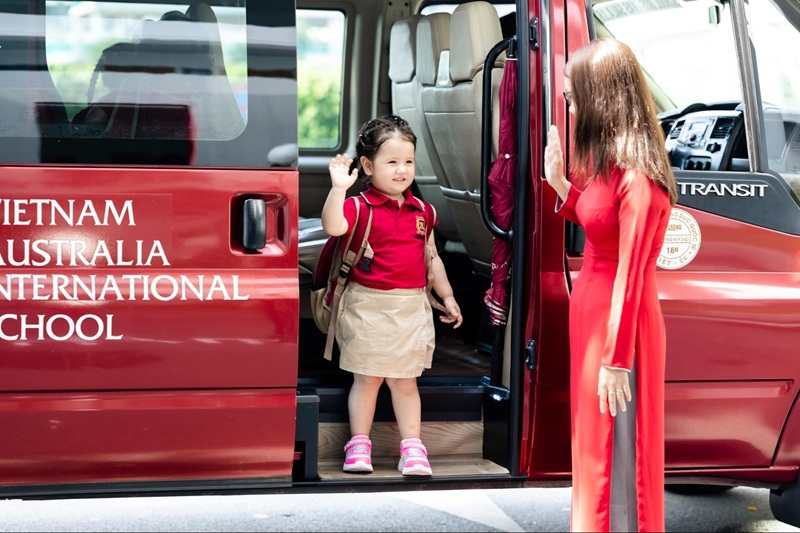
Parents should monitor and observe their children before making the decision to send them to school
2. 8 Key Benefits of Sending Your Child to School at 18 Months Old
Sending an 18-month-old child to school helps parents balance work and childcare; not only that, but it also brings many benefits to the child's comprehensive development. Below are the highlights that parents can consider.
2.1 Establishing a stable daily routine
A school environment with a clear schedule helps children form healthy daily habits early on. The child will know the fixed times for eating, sleeping, and playing, from which their body and mind gradually stabilize compared to an unstructured routine at home.
2.2 Rapid language and communication development
When immersed in a classroom environment, children are exposed to a variety of sounds, sentences, and communication situations. Regular interaction with friends and teachers helps enrich their vocabulary, andtheir communication and language skills develop quickly.
2.3 Encouraging curiosity and cognitive abilities
At 18 months old, children start wanting to learn about everything around them. When going to school, they will participate in many exploratory activities such as puzzle-solving, recognizing colors, and getting familiar with common animals or objects. These real-life experiences stimulate the brain, naturally helping children develop cognitive abilities and logical thinking.
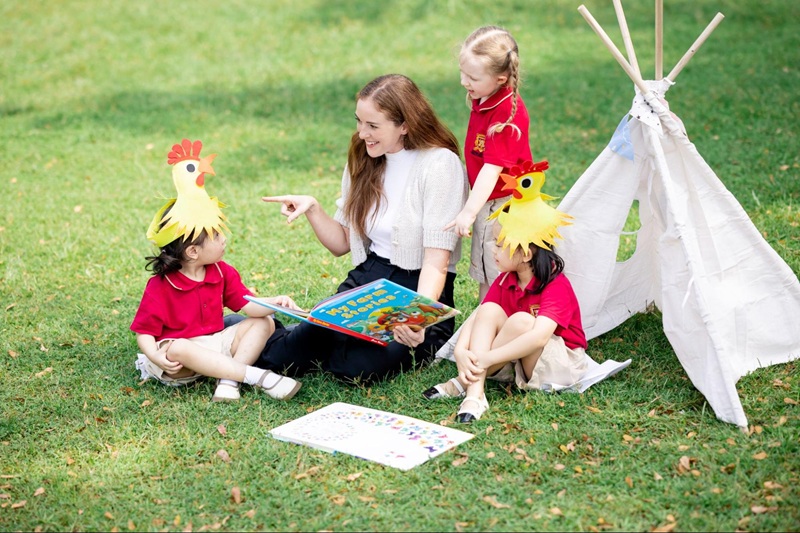
The preschool education program helps children develop greater awareness of the world around them
2.4 Learn how to play together and manage your emotions.
Young children often have a “mine first” mentality, finding it hard to share toys or take turns with others. The classroom environment is exactly where children gradually understand and learn to play together, wait for their turn, and yield when necessary. Through this, they learn how to regulate their emotions, feel happy when playing together, and gradually reduce crying over grabbed toys.
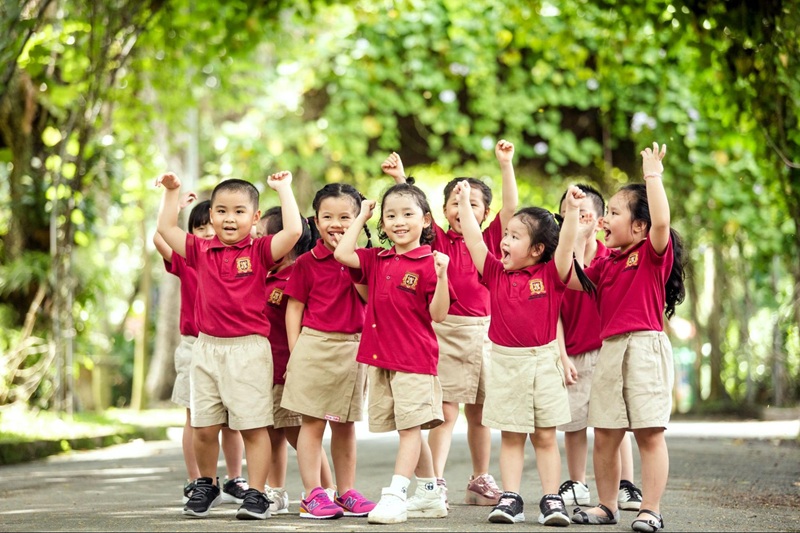
Through the school environment, children learn how to integrate and control their emotions
2.5 Build confidence and adaptability
Every time they complete an activity at school – from feeding themselves and putting away toys to performing with friends – children receive encouragement from their teachers. These small successful experiences help them become more confident and ready to adapt to new environments. As they grow older, they will easily integrate into the next educational levels.
2.6 Fostering independence from an early age
Going to preschool at 18 months helps children learn many basic independent skills: feeding themselves, putting things away, and going to the bathroom under the teacher's guidance. Each of these skills is a foundation for children to build proactiveness in life, reducing their dependence on their parents.
2.7 Age-appropriate play
Getting to play is the most important thing for young children. At school, children can participate in age-appropriate physical and mental games, which help release energy and nurture creativity. Unlike playing alone at home, playing with friends helps children learn many social skills that books don't teach.
2.8 Improve physical fitness
Physical activities at school like running, jumping, climbing, singing and dancing, or playing outdoors help children's muscles and bones develop healthily. Combined with a balanced diet in class, children are supported in achieving better growth in height, weight, and their immune system.
3. Difficulties when children start school too early
Although sending an 18-month-old child to school brings many benefits, parents also need to mentally prepare for some initial difficulties:
- Difficulty separating from parents: At this stage, many children are still very attached to their parents. When leaving familiar arms, they might cry a lot, cling to the teacher, or refuse to participate in activities during the first few days of school.
- Prone to sickness due to changing environments: Exposure to a group environment makes children more susceptible to respiratory diseases, the flu, or digestive issues due to their immature immune systems. This is normal, but parents need to be prepared to support their child during the early stages.
- Changes in daily routines: When going to school, the child will have to adapt to eating, sleeping, and playing times according to the class schedule. For children who previously had a free routine at home, this change can cause discomfort and take a few weeks to adjust to.
- Environmental "shock": Some sensitive children will feel pressured by loud noises, many strangers, or new rules. This can make them stressed, tired, and sometimes develop a "fear of going to school."
These difficulties can be completely minimized if parents prepare carefully before enrolling their child.
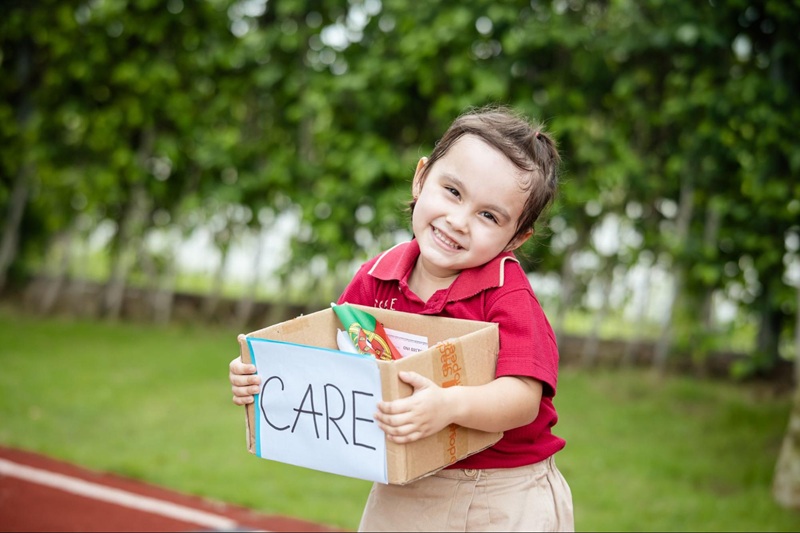
Parents need to consider the child's psychological issues when sending them to school early
4. Things parents need to prepare before sending their 18-month-old child to school
To make the child's journey to school smoother, parents should take some steps to prepare both their mindset and daily routine.
4.1 Help your child gradually get used to school
Before officially starting school, parents can take their child to visit the school, play in the yard, or participate in a few short experiential activities. Getting familiar with the new space, teachers, and new friends helps reduce their anxiety upon enrollment.
4.2 Establishing a daily routine that aligns with classroom routines
About 1–2 weeks before starting school, parents should train their child to eat and sleep on a schedule similar to the class timetable. This helps the child's body adapt early, avoiding fatigue or irritability when school officially starts.
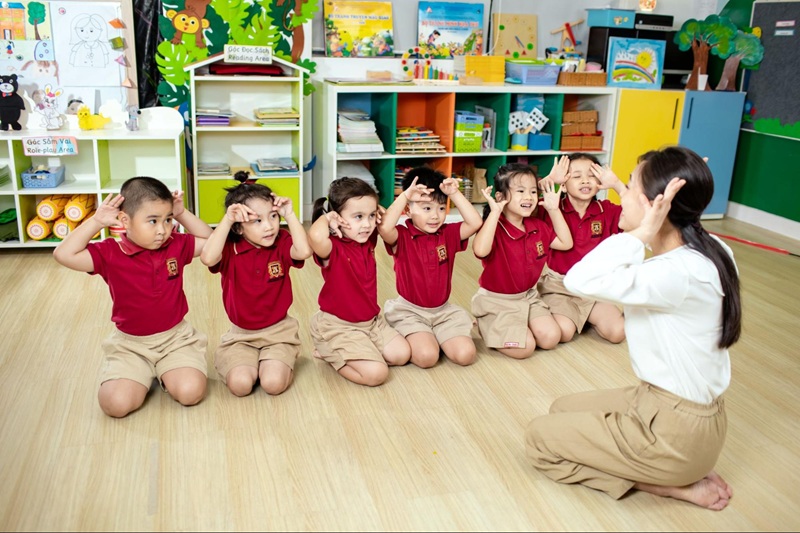
Going to school will create habits of discipline and a scientific routine for children
4.3 Communicate and share with the teacher about your child's characteristics
Each child has their own personality and needs. Parents should share with the teacher about the child's eating habits, preferences, sensitive points, or signs to note so the teacher can take better care of them.
4.4 Observe and adjust as needed
In the first few weeks, parents should regularly communicate with the teacher to keep track of the child's situation. If the child shows signs of stress, loss of appetite, or difficulty integrating, the family and the school can work together to adjust the support method to help the child adapt faster.
>>> See more: Common mistakes parents make when choosing a Preschool for their child
5. Why do many parents trust VAS to send their 18-month-old children?
Vietnam Australia International School (VAS) is one of the top choices for parents when they want to send their children to school from 18 months old, thanks to the following outstanding factors:
- Safe and modern learning environment: VAS builds a friendly learning space, with spacious classrooms, outdoor playgrounds, and indoor physical activity areas that ensure absolute safety for children. This gives parents peace of mind when their children participate in daily physical activities and play.
- Dual International – Vietnamese education program: Children from 18 months old are introduced to a bilingual environment, learning through play, music, and movement. Modern educational methods help children develop language and social skills right from their early years.
- Dedicated and highly qualified teaching staff: Teachers at VAS are well-trained and highly experienced in caring for young children. The combination of solid expertise and a love for children ensures that they are closely cared for and encouraged to develop naturally.
- Scientific care and nutrition regimen: The daily menu at VAS is diverse, fully nutritious, and tailored to the needs of 18-month-old children. The school also focuses on monitoring the health and physical development of each child.
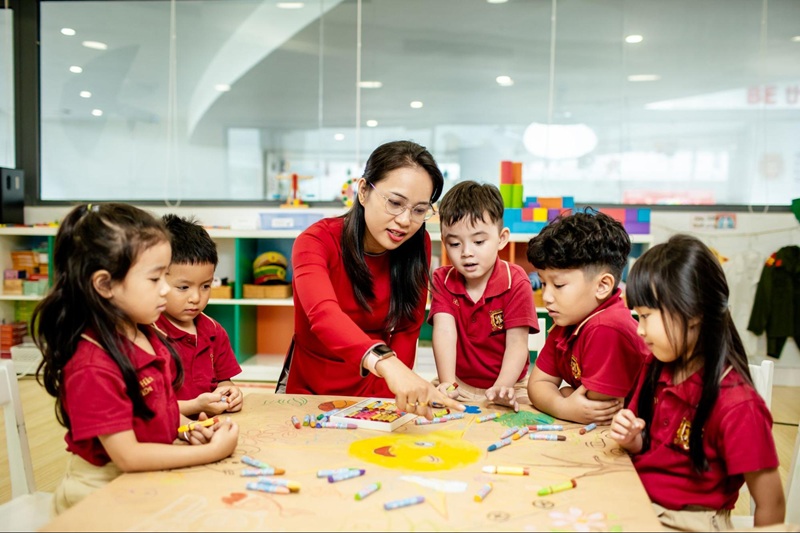
VAS takes a child-centered approach, applying a "learn through play" method to help children develop comprehensively
Thanks to these factors, parents can have complete peace of mind when sending their 18-month-old children to study at VAS, allowing them to develop physically while nurturing their intellect and emotions during the golden stage of childhood.
>>> See more: Discover details about the latest VAS international school tuition fees
6. Conclusion
Sending an 18-month-old child to school is an important turning point for both the child and the family. If well-prepared, this will be an opportunity to help the child establish a daily routine, develop socio-linguistic skills, and foster independence early on.
Choosing a reputable school like VAS will make your child's early journey smoother and safer. Parents should accompany their children during this transition period so that every day at school is a happy day, creating a solid foundation for comprehensive development later on.
If you are interested in the international education program at VAS, please contact us via hotline: + 0911 26 77 55 or visit the website www.vas.edu.vn for the most detailed consultation from our team.
>>> See more: Which international school should you choose for your child in Ho Chi Minh City?