


Your Child's Preschool Journey: What Parents Need to Know!
Preschool children need to develop communication, social, cognitive, and self-care skills to prepare for school and life.
The transition to preschool is more than just a change in scenery; it is a fundamental leap in a child's developmental path. However, many parents feel a natural sense of apprehension regarding the ideal timing, effective educational methodologies, and the best ways to support their child through this transition. In this article, VAS provides expert insights and necessary skills for preschool children to transform this phase into an exciting adventure of discovery.
1. The Importance of Sending Your Child to Preschool
Preschool is far more than a childcare solution, it is a specialized environment designed to cultivate social skills, communication, and independent thinking. Early exposure to a structured learning environment provides children with a superior foundation in linguistics, mathematics, and logical reasoning, while significantly enhancing their ability to integrate into the community.
Enrolling in preschool also familiarizes children with classroom rules and discipline, which are critical precursors to success in primary school and beyond. At this stage, children learn the art of collaboration, follow professional guidance from educators, and establish consistent daily learning habits.
Key Benefits of Early Childhood Education:
- Intellectual Stimulation: Diverse activities such as letter recognition, numeracy, and exploring colors or shapes act as catalysts for cognitive development.
- Social-Emotional Growth: Children learn the nuances of peer interaction, the value of sharing, and the importance of adhering to collective classroom standards.
- Igniting Creativity: Creative outlets like arts, crafts, and music empower children to express their unique identities and expand their imaginative boundaries.
- Physical Excellence: Through structured outdoor play and physical education, children develop gross motor skills, enhance hand-eye coordination, and improve their reflexes and flexibility.
- Refining Daily Habits: The preschool routine instills healthy habits, including punctual dining, scheduled rest, personal hygiene, and the responsibility of tidying up after play.
- Building Self-Assurance: Engaging in group activities encourages children to be bold and confident. Over time, they become comfortable expressing their opinions and communicating effectively with those around them.
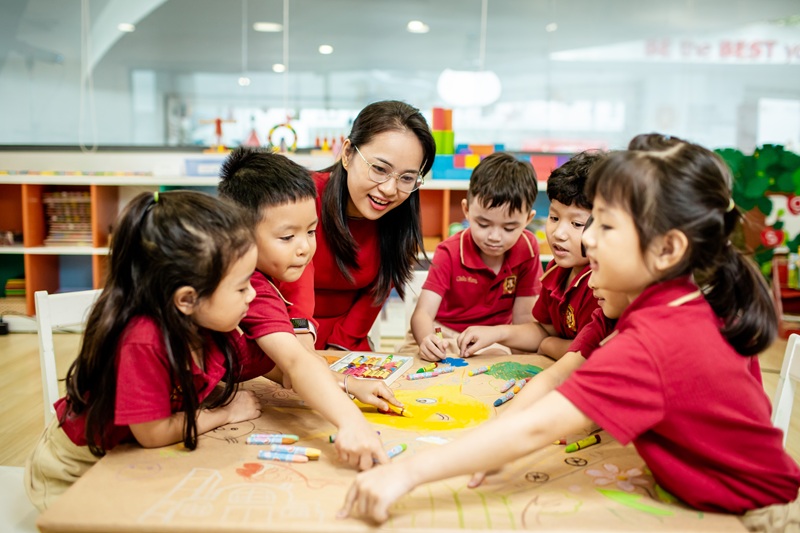
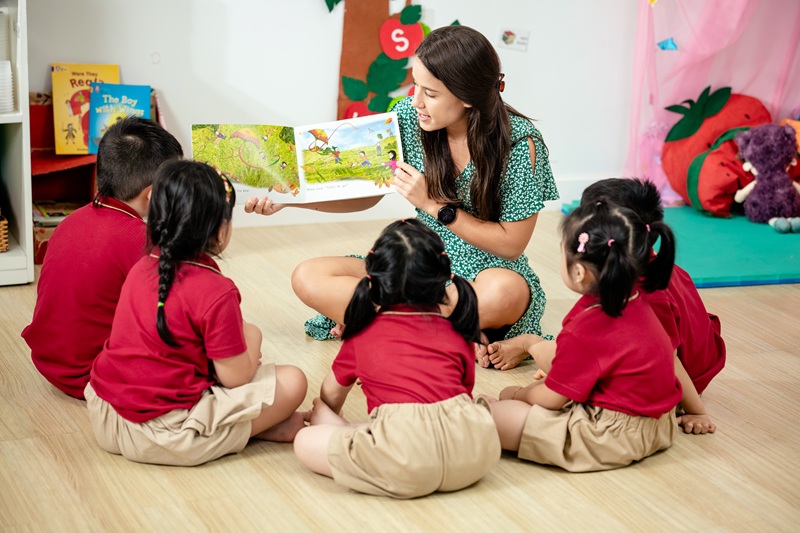
Preschool children participate in group activities and learn from friends and teachers
2. Important skills that preschool children need to develop
Beyond basic academic knowledge, preschool children need to cultivate several vital skills to ensure a smooth transition and build lasting confidence. VAS prioritizes the following developmental areas:
2.1. Communication and Social Skills
Communication is the cornerstone of early development. By interacting with teachers and peers, children learn to articulate their thoughts and emotions while discovering how to resolve conflicts peacefully.
- Encouraging children to speak up and ask questions about things that pique their curiosity.
- Providing opportunities for group games, role-playing, and storytelling helps children understand teamwork and respect for diverse opinions.
- Guiding children on how to properly greet others, express gratitude, and offer apologies in various social contexts.
2.2. Thinking and Cognitive Skills
In the classroom, activities involving colors, shapes, letters, and numbers serve as the building blocks for cognitive growth. These lessons sharpen memory, observational skills, and problem-solving abilities.
- Parents should encourage children to question the world around them and help them navigate toward the answers.
- Engaging in "thinking games" such as puzzles, word building, or "spot the difference" to stimulate mental agility.
- Reading together not only expands vocabulary but also develops a child's imagination and logical reasoning.
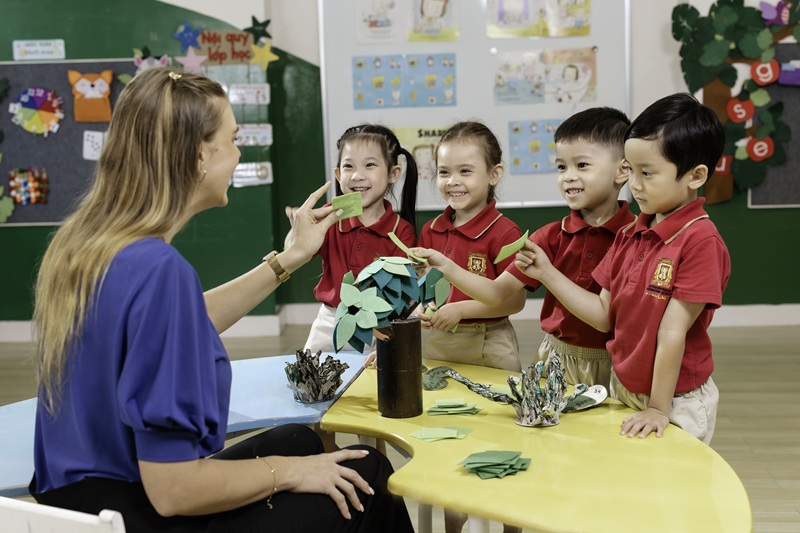
Extracurricular activities help children develop their thinking and creative observation skills
2.3. Self-reliance and responsibility skills
Independence is a fundamental component of the preschool journey. Children learn to manage their own needs, which directly boosts their self-esteem in daily tasks.
- Self-Care Routines: Parents can guide children through simple personal tasks, such as brushing their teeth or tidying up their toys independently.
- Household Contribution: Encouraging children to participate in light chores like wiping the table or arranging cutlery to foster a sense of belonging.
- Assigning small, manageable responsibilities so children learn to take ownership of their actions and belongings.
>>> Read more: Things parents need to prepare when sending their child to daycare
3. Effective methods for teaching preschool children
Every child has a unique learning style. By applying tailored educational methods, parents can spark a genuine interest in discovery. Here are the most effective strategies to naturally develop a child's critical thinking, creativity, and communication skills:
3.1. Learning through games
Children absorb information most effectively when engaged in fun, creative activities. Play-Based Learning allows children to explore the world while remaining entertained. Whether it is through puzzles, role-playing, or physical movement, these games build teamwork, boost imaginative thinking, and refine social reflexes.
For example: Physical games with small balls or team sports help refine motor skills while teaching the basics of collaboration.
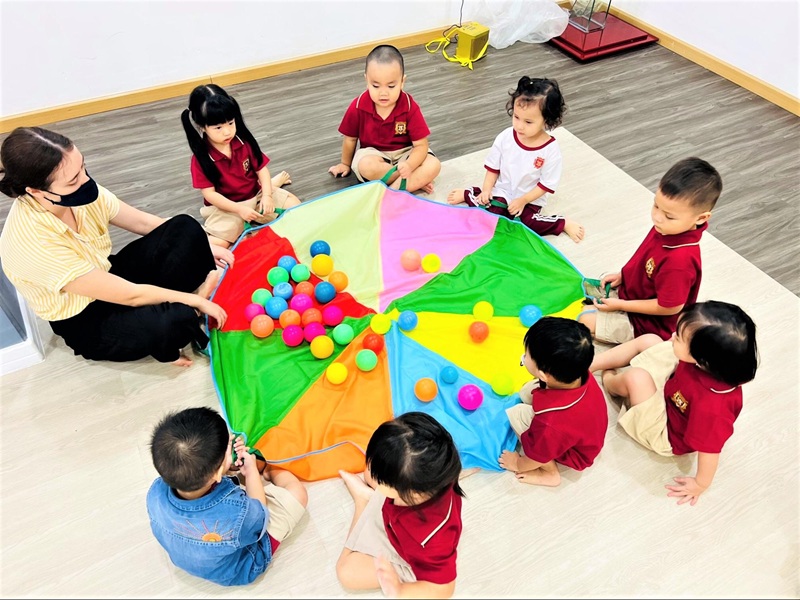
Children participating in a physical game with small balls helps practice motor skills and teamwork
3.2. Applying Montessori education in preschool
The Montessori method prioritizes experiential learning, allowing children to discover and learn at their own pace. A Montessori environment is carefully curated to offer children the freedom to choose their activities, fostering intrinsic motivation rather than forced study. This method is highly effective in developing autonomy, critical thinking, and the ability to manage their own time and learning space.
3.3. Encourage children to learn through books and comic books
Reading books and comic books is one of the most powerful ways to enhance a child's linguistic and logical foundations. Through storytelling, children improve their pronunciation, vocabulary, and ability to follow complex narrative arcs. Beyond academic growth, books teach vital life lessons about friendship, ethics, and empathy. Establishing a daily reading habit from a young age is a gift that lasts a lifetime.
A child reading a book shows focus and develops thinking skills and creativity through exploring the story
4. The best ways for parents to support their child in preschool
Parents are the most vital partners in a child's educational success. To optimize this journey, consider the following supportive actions:
- Establish a Positive Learning Environment at Home: Designate a specific "learning corner" equipped with age-appropriate books and creative tools. A dedicated, inviting space signals to the child that learning is a valued and enjoyable activity.
- Facilitate the Transition to School: Help your child acclimate to their new environment by discussing upcoming school events and encouraging participation in extracurricular activities. Building a positive narrative around school helps reduce separation anxiety.
- Partner with Educators: Maintain consistent communication with your child's teachers. By collaborating to monitor developmental progress, you can identify your child's unique strengths and areas that may need additional encouragement at home.
Quick Tips for Home Support:
| Action | Objective |
| Interactive Reading | Boosts imagination and logical inference. |
| Role-Playing | Enhances social empathy and conflict resolution |
| Consistent Routine | Provides emotional security and time management skills. |
5. Frequently Asked Questions about Preschool Children
To help you prepare your child for this new academic environment, we have addressed the most common inquiries based on expert pedagogical insights:
5.1. What is the best age for a child to start preschool?
While many children formally begin preschool at age 3, there is no one-size-fits-all answer. The "ideal" age depends largely on an individual child’s emotional and social development. Whether a child starts slightly earlier or later, the priority is ensuring they feel emotionally secure and confident when entering the classroom.
5.2. How can we help our children overcome their fear of going to preschool?
To mitigate "separation anxiety" and school-related fears, parents should foster a positive narrative around learning. Sharing joyful stories about school activities, meeting new friends, and the exciting discoveries they will make can transform a child’s apprehension into genuine curiosity and enthusiasm.
5.3. Should children be taught at home before going to school?
Introducing foundational skills such as: letter recognition or basic numeracy, can certainly give a child a confidence boost. However, it is vital to avoid a high-pressure environment. Education at home should remain natural and play-based, focusing on the joy of discovery rather than rigid performance.
At Vietnam Australia International School (VAS), we implement advanced pedagogical frameworks that bridge the gap between world-class international methods. By integrating the Montessori philosophy with Play-Based Learning, our dedicated educators create a nurturing environment where children develop holistically from critical thinking to advanced social skills.
Beyond academic excellence, VAS emphasizes a healthy balance between rigorous studies and vibrant extracurricular activities. Our curriculum is designed not just for theoretical knowledge, but to empower independent thinking, creative problem-solving, and essential life skills.
>>> Read more: Discover in detail the current tuition fees for VAS bilingual preschool
6. Conclusion
The transition to preschool is a critical stepping stone, providing children with the linguistic and social foundations they need for a bright future. With the right mix of a positive school environment and active parental support, your child will build the resilience and intellect necessary for life's subsequent stages.
Remember, your consistent love and engagement are the most powerful tools in helping your child flourish. If you are interested in a world-class international education at VAS, our admissions team is ready to provide personalized guidance.
Hotline: +84 911 26 77 55
Website: www.vas.edu.vn
>>> Read more: List of 23 quality international schools in HCMC today