


What should parents prepare for their child going to preschool? Things parents need to know
Starting daycare can be stressful for both parents and children. Many parents worry: Will my child cry? Can they eat on their own? Will they make friends? The good news is - proper preparation can make this transition much easier. To provide peace of mind and ensure a smooth transition, VAS has curated a comprehensive guide to the essential elements of preschool readiness. By following these professional insights, you can help your child step into their new environment with confidence and joy.
1. The ideal age for a child to start preschool
There is no universal "correct" age to start preschool; rather, the timing varies significantly based on national educational cultures and regional lifestyles. Globally, the average age for starting daycare or preschool reflects these diverse perspectives:
- Vietnam: Typically between 2 and 2.5 years old.
- China: Generally starts at 3 years old.
- Japan: Infants as young as 3 months old can begin daycare.
- Germany: With an educational philosophy that emphasizes natural development from birth, infants may start at 1 month old.
- Sweden: Schools typically begin accepting toddlers around 1 year old.
- Canada: On average, children start after 2 years old.
- USA: Many preschools accept infants as early as 6 weeks old.
- United Kingdom: Most children begin formal nursery or preschool between 3 and 4 years old.
While the "right" time depends on your family's professional demands and location, child development experts identify the period between 1 and 3 years old as a critical developmental milestone. During this window, children begin to babble, develop a natural desire for social connection, and experience a surge in sensory and cognitive awareness.
By arranging for your child to enter a preschool environment during this stage, you ensure they do not miss a "golden opportunity" for accelerated physical and intellectual growth.
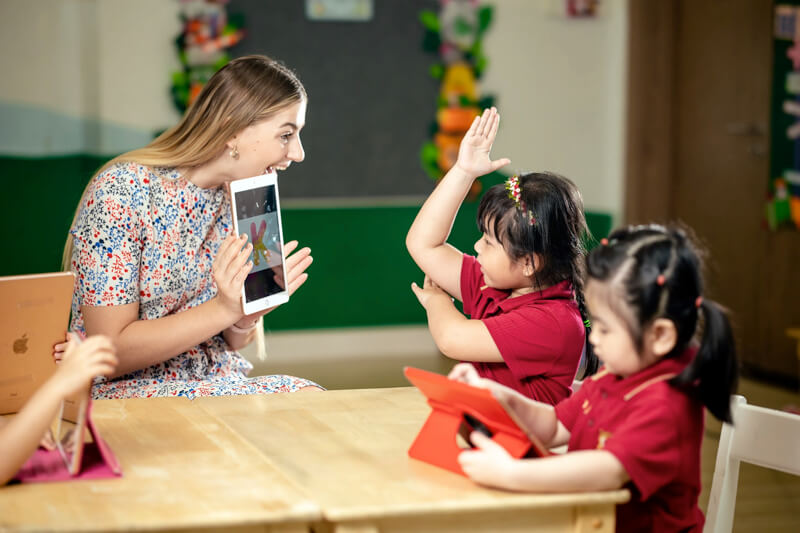
The age to attend preschool depends on each country
2. The benefits of sending your child to daycare
Research conducted by the University of Oxford suggests that attending preschool significantly enhances a child’s practical skills and linguistic development. Dr. Laurence Roope further highlights that the interactive activities within a classroom setting empower children to communicate more effectively and improve their active engagement skills. Specifically, early enrollment in preschool provides the following transformative benefits:
- Character Building and Enhanced Communication: In a preschool environment, children interact with diverse peers and educators. This exposure fosters a natural curiosity to learn and a willingness to share, gradually refining their personality and interpersonal skills.
- Accelerated Cognitive and Perceptual Development: Numerous studies indicate that children who attend daycare exhibit superior cognitive abilities and faster information processing. Key milestones such as: walking and speaking often occur earlier and more effectively than in children of the same age who remain exclusively at home.
- Heightened Creative Thinking: Through structured lessons, imaginative play, and classroom interactions, children develop robust creative skills and a more vivid imagination, which are essential for long-term intellectual growth.
- Effective Emotional Regulation: Educators provide essential guidance on social skills and managing complex emotions like anger, jealousy, envy, and frustration. As a result, children learn healthy coping mechanisms, significantly reducing the frequency of temper tantrums, stubbornness, or self-centered behavior common in early childhood.
- The Art of Sharing: The preschool setting creates a social laboratory where children make friends, converse, and share resources. Living and playing in a group helps them become more sociable and tempers individual egos. Furthermore, they begin to develop the vital skill of sharing ideas during collaborative group tasks.
- Cultivating Independence: Moving away from a protective home environment, children learn to manage personal activities such as eating, napping, and using the restroom. Under the gentle guidance of teachers, they master self-care routines and develop a sense of responsibility and empathy toward those around them.
3. What should I prepare for my child going to daycare?
Entering preschool is a major milestone for any child. The initial days of transition away from a parent's constant presence can be challenging. To ensure your child integrates smoothly, VAS recommends focusing on four key pillars of preparation: Nutrition, Psychological Readiness, Essential Supplies, and Life Skills.
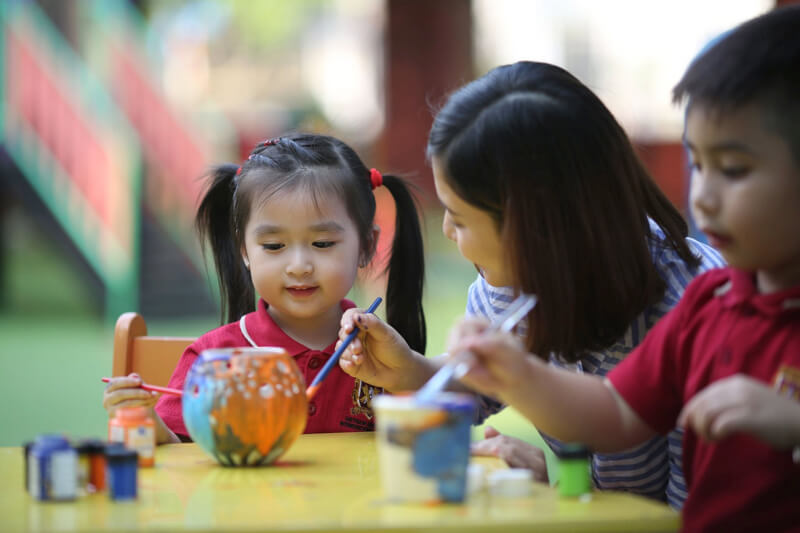
What should be prepared for a child going to daycare?
3.1. Nutritional preparation and eating habits
Nutrition is the foundation of a child’s physical and cognitive development. A scientific approach to diet ensures that your child maintains the stamina and health required for consistent school attendance.
- Ensure your child consumes the four essential food groups: carbohydrates, proteins, healthy fats, and vitamins/minerals. Prioritize foods rich in Vitamins A and C to boost their immune system.
- Train your child to eat a variety of foods in moderate portions. This introduces them to different flavors and nutrients while helping parents identify any potential food allergies.
Parents should share vital dietary information with the school's nutritionists to prevent issues like malnutrition or childhood obesity.
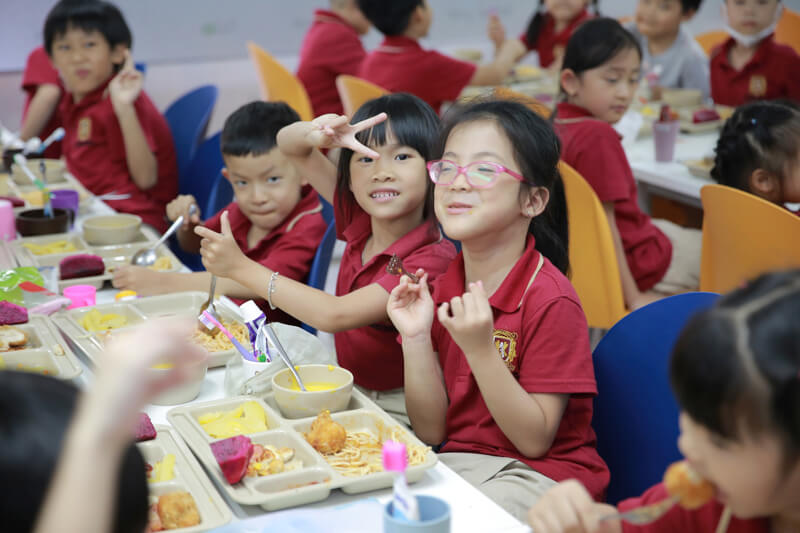
Nutrition is very important for preschool children
3.2. Psychological preparation
Children at this age are emotionally fragile and may experience separation anxiety. It is essential to help them view school as a positive sign of "growing up."
- Parents should use vibrant, visual aids such as: photos or videos of the school and its fun activities, to help your child proactively visualize their new environment.
- Spend time visiting the school together before the official start date. Let them witness the lively classrooms and playgrounds to foster a sense of eager anticipation.
- Before bedtime, talk to your child about their upcoming "adventure." Discuss who their teachers might be and the fun they will have. Keeping the narrative positive transforms school attendance from a requirement into a voluntary, exciting choice.
3.3. Preparation of materials and supplies
Equipping your child with the right tools ensures they stay comfortable and safe throughout the day.
- Pack 1-2 spare outfits in case of spills or accidents, plus a seasonal jacket (light for summer, warm for winter).
- Choose a water-resistant, correctly sized backpack. Don't forget a hat and face mask for outdoor activities.
- Pack various towels (hand towels, sweat towels, tissues) and a familiar "companion," such as a favorite teddy bear, to provide a sense of security in a new space.
For toddlers, pack 4-5 diapers and ask teachers to assist with regular checks. If your child has specific medical needs or prefers a particular brand of milk/bottle, provide these to the school to maintain a sense of home familiarity.
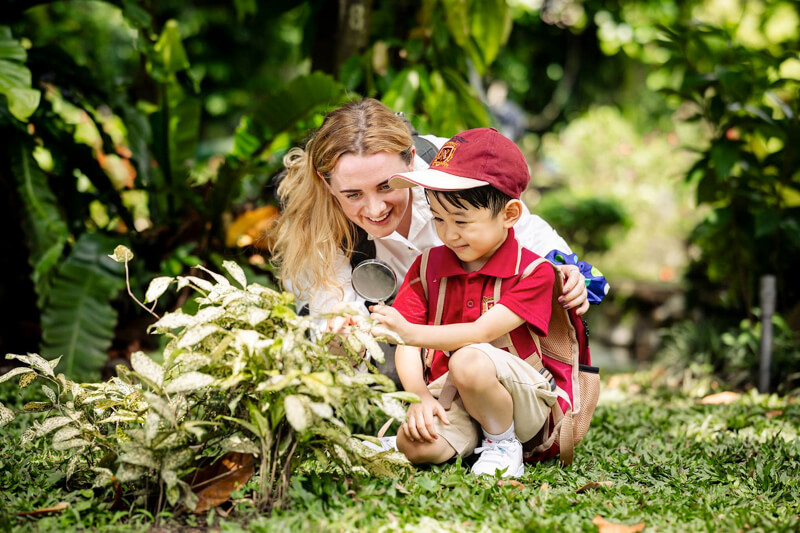
Parents need to fully prepare supplies when the child goes to kindergarten
3.4. Developing essential skills
To foster independence and confidence, parents should begin practicing these fundamental skills at home:
- Self-Feeding: Mastering the use of a spoon and cup builds a child’s survival instincts and autonomy.
- Personal Self-Care: Gently guide your child through basic routines like brushing teeth, putting on shoes, dressing themselves, and adhering to a consistent nap schedule.
- Social Etiquette: Teach polite communication, such as saying "Hello," "Thank you," and "Goodbye." This ensures they can interact respectfully with teachers and peers.
- Safety Awareness: Educate your child on how to respond to strangers and identify hazards, such as sharp objects, high balconies, or electrical outlets.
- Organization & Time Management: Involve your child in tidying up toys or folding clothes to build a habit of neatness. Establishing a structured schedule for play and rest prepares them for the organized rhythm of school life.
4. How to choose the ideal preschool for your child?
A preschool is more than just a daycare, it is a foundational environment that shapes a child's character and physical development. Choosing the right institution is a decision that requires careful evaluation. To ensure your child's education is effective and sustainable, parents should consider these six critical criteria:
- The school’s location is the first factor to consider, as it directly impacts the daily routine of both parents and children. Ideally, the school should be conveniently located to minimize travel time. Selecting a campus near your home or place of work can significantly ease the daily commute and pick-up logistics.
- Parents should look for a curriculum that balances exploration, physical movement, and hands-on practice both inside and outside the classroom. Additionally, if your professional schedule requires you to work on Saturdays, consider schools that offer weekend activities to ensure your work-life balance is not disrupted.
- Flexibility in Pick-up and Drop-off Hours: Consider whether the school’s hours align with your work schedule. For example, if your workday ends at 5:00 PM but school finishes at 4:00 PM, inquire about after-school care services. A school with flexible hours or extended care can provide much-needed peace of mind for busy parents.
- Choose a school that aligns with your family’s financial capabilities. However, tuition should be viewed through the lens of value. If a school’s fees are higher than average, evaluate the return on investment: Does the quality of service, facilities, and the boost to your child's physical and intellectual development justify the cost? High-quality early education is often a worthwhile long-term investment.
- Preschool teachers are the primary influencers of your child's personality and foundational knowledge. It is vital to select a school that employs a highly qualified teaching staff characterized by professional expertise, enthusiasm, and a strong ethical commitment to childcare.
- Every school implements a different pedagogical approach. Parents should research these programs thoroughly to ensure they match their child's learning style and future goals. If you plan for your child to study abroad or relocate internationally, a Bilingual International Program is often the best choice, as it provides a progressive foundation for seamless global integration.
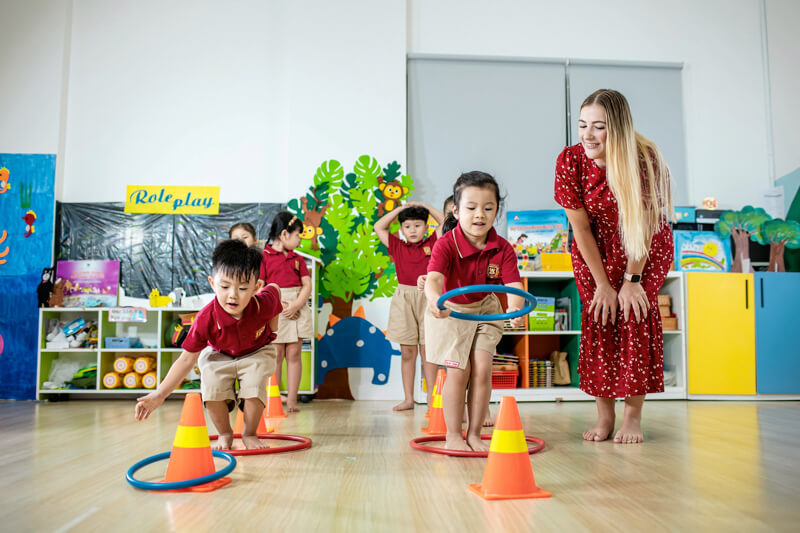
The teaching staff plays an important role in developing a child's qualities and intellect
>>> Read more: The A-Z guide to choosing an international school for parents
5. VAS - the perfect environment to build a solid foundation for children.
In Ho Chi Minh City, Vietnam Australia International School (VAS) is honored to have accompanied thousands of families through their children's earliest milestones. The trust placed in us by generations of parents is the driving force behind our continuous dedication. At VAS, we strive to nurture a solid foundation for every child through these five core pillars:
- Modern Global Curriculum: As a registered Cambridge International School, VAS implements a curriculum that meets the rigorous global standards of the Cambridge Assessment International Education (CAIE). We uniquely blend these international standards with the Vietnamese National Curriculum, ensuring students achieve global fluency while preserving their cultural identity.
- Elite Teaching Faculty: VAS educators must pass stringent evaluations by CAIE to teach the Cambridge program. Beyond their professional expertise, our Kindergarten teachers are chosen for their genuine passion for early childhood development and their dedicated, attentive care.
- World-Class Facilities: All classrooms and functional rooms feature high-quality imported furniture designed for aesthetics and safety. Learning tools and toys are sterilized regularly, ensuring a healthy environment for every child.
- An 18-Year Educational Heritage: Established in 2004, VAS has a long-standing history of academic success. Welcoming nearly 2,000 new students annually from Kindergarten to Grade 12, we are proud to be the first international school in HCMC to welcome a second generation of students—the children of our very own alumni.
- Globally Recognized Qualifications: As a Cambridge hub in Vietnam, VAS students can sit for prestigious exams—including Cambridge IGCSE, AS/A Level, and IELTS—directly at our school. These certifications are recognized by leading universities and employers worldwide, providing a clear pathway to international success.
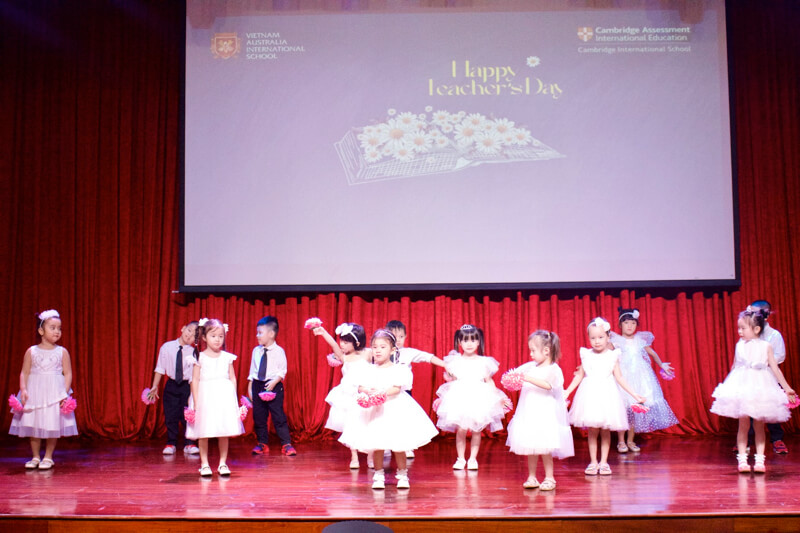
VAS and fun activities
>>> Read more: Detailed updates on the VAS international school tuition fee schedule
Transitioning to preschool is a vital step in helping your child realize their dreams and build a successful future. If you are seeking a professional environment that combines advanced pedagogy, a scientific nutritional program, and compassionate care, VAS is the perfect choice. With 18 years of experience in the educational sector, we are confident in providing a progressive learning environment that builds a solid foundation for your child's lifelong growth.
Website: www.vas.edu.vn
Hotline: 0911 26 77 55
>>> Read more: What makes the Cambridge international program special? What parents need to keep in mind