


6 Effective Methods for Emotional Education in Preschool Children
- What is Emotional Education for Preschool Children?
- The Role of Emotional Education for Preschool Children
- Advantages and Challenges of Emotional Education for Preschool Children
- Top 6 Methods for Emotional Education for Preschool Children
- VAS - An Internationally Standardized Emotional Education Environment
In addition to intellectual development, emotional education for preschool children is also a major focus for many parents because it strongly influences a child’s overall development. Below are 6 effective methods to help preschool children develop emotional awareness and management skills with VAS.
1. What is Emotional Education for Preschool Children?
Emotional education for preschool children is the process of helping children recognize different emotions and respond appropriately to both positive and negative feelings.
According to psychologist Paul Ekman, children experience a range of 13 basic emotions including happiness, sadness, fear, anger, surprise, excitement, confusion, contempt, shame, contentment, amusement and pride.
These emotions are natural responses of the brain that help people choose appropriate actions and express feelings externally. Therefore, emotional education for preschool children helps children learn how to recognize and manage these emotions appropriately.
2. The Role of Emotional Education for Preschool Children
Preschool is one of the most important stages of early childhood development. Therefore, emotional education for preschool children plays an important role in children’s overall development in the following ways:
- Helping children recognize and understand emotions: At this age, children often do not know how to clearly express their feelings. Teaching children how to identify and name emotions is an important step in helping them learn how to manage emotions appropriately.
- Developing social skills: Preschool children often experience difficulties in communication and social interaction. Through emotional education, children learn how to listen and express their feelings more effectively. They also learn how to share, cooperate, and build positive relationships with friends and adults around them.
- Building self-confidence: When children are encouraged and supported in expressing their feelings, they become more confident and develop a more positive view of themselves. This also helps children build self-esteem and emotional well-being.
- Improving concentration in class: Emotional management skills help children focus better during lessons and complete learning activities more effectively.
- Building relationships with others: Children who can manage emotions well are often better at listening, sharing, and empathizing with others. This helps them improve communication skills and develop stronger social relationships.
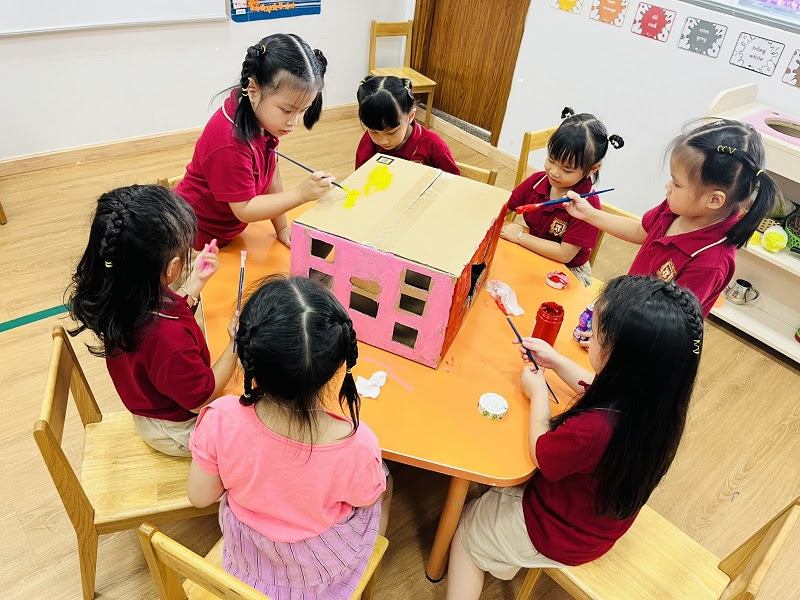
Preschool is one of the most important stages of early childhood development
3. Advantages and Challenges of Emotional Education for Preschool Children
While the importance of emotional education for preschool children is widely recognized, its implementation involves a unique set of favorable conditions and obstacles.
Advantages
- Support from the education sector: Teachers are provided with teaching materials and professional training related to emotional education for preschool children.
- Many schools also organize training programs and activities for teachers to exchange experiences and improve teaching methods for emotional education.
- Schools invest in facilities and learning environments to help children develop emotional and social skills in a safe and supportive setting.
- Parents increasingly cooperate closely with teachers and schools in supporting children’s emotional development.
Challenges
Although emotional education for preschool children has received more attention in recent years, there are still several challenges:
- Many children still have difficulty controlling emotions and expressing feelings appropriately, which may lead to inappropriate behavior.
- Differences in emotional development may make shy or introverted children slower in developing emotional management skills compared to other children.
- Some teachers may not yet have teaching methods that are suitable for each child’s individual psychology and personality.
- Due to busy schedules, some parents may not spend enough time with their children and rely heavily on schools and teachers for emotional education.
- Some schools still lack sufficient facilities, educational tools, and toys to create an ideal environment for children’s social-emotional development.
4. Top 6 Methods for Emotional Education for Preschool Children
Below are 6 simple methods that help preschool children develop emotional awareness, confidence, empathy, and communication skills from an early age.
4.1. Choosing the Right Curriculum
An appropriate curriculum, learning materials, toys, and lesson themes are important factors that should be prepared before implementing emotional education for preschool children. To avoid overwhelming children with too many activities, schools should carefully review the preschool curriculum and integrate suitable games and activities that support emotional and social development. This helps children stay interested in lessons and actively participate in classroom activities.
Learning tools and toys also play an important role in helping children explore emotions. Therefore, these materials should be visually appealing, safe, and suitable for children’s learning and experience. In addition, they should match the lesson content and be arranged from simple to more advanced levels to support children’s awareness and understanding.
Some suitable learning materials for preschool children include:
- Soft and safe toys designed based on story characters
- Coloring pictures
- Images and videos that contain positive emotional content for children
4.2. Creating a Positive Learning Environment
A positive learning environment encourages children to enjoy going to school while supporting their creativity and imagination. In addition, a supportive environment also helps children develop emotional and social skills more effectively. Therefore, classroom decoration and the preparation of learning and play materials are important factors that help children explore, learn, and develop.
Some methods that can be applied to create a positive learning environment for children include:
- Decorating classroom walls or common areas with pictures of school activities, cartoon characters, and fairy tale characters that children enjoy to create positive emotions and interest.
- Organizing drawing activities with blank character faces so children can freely express emotions through facial expressions and artwork.
- Encouraging children to tell stories during class or having teachers share gentle and meaningful stories related to emotional education.
With these approaches, combined with a friendly and caring environment between teachers, students, classmates, and the school, children can feel more comfortable and emotionally secure. As a result, they may become more open and willing to share their feelings.
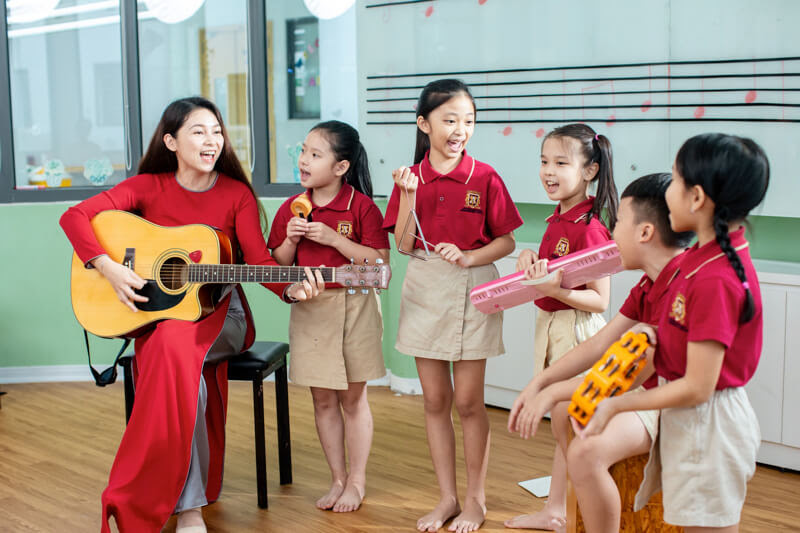
A good learning environment is a factor that encourages children to love going to school
4.3. Creating Emotional Education Scenarios
Creating real-life situations is one of the most effective ways to teach emotional education to preschool children. Below are several examples that can be applied in class activities:
- Giving children their favorite toys to create feelings of happiness and excitement.
- When children have conflicts or arguments with friends, teachers should calmly ask about the situation and gently explain it to each child to help them understand and empathize with one another. At the same time, children should be taught how to apologize and take responsibility for their actions.
- Allowing children to role-play different fairy tale characters so they can experience emotions such as sadness, happiness, jealousy, and gratitude. Through these activities, children learn how to care for and empathize with others.
- Creating situations such as role-playing parents caring for younger children or organizing pretend birthday parties to observe how children communicate and behave.
Through these situations, children have opportunities to express their emotions and gradually learn how to respond appropriately in different circumstances.
4.4. Incorporating Multiple Stories
Stories included in preschool learning activities should meet several important criteria:
- Suitable for children’s age
- Simple, positive, and relatable content
- Interesting storylines that guide children through different emotions and end with positive messages
After each story, teachers or parents should ask children about their thoughts and feelings. In addition, adults can:
- Encourage children to interact and discuss the story with friends
- Organize group activities and games related to the story
- Explain story details and character emotions to help children better understand the characters’ feelings and behaviors
4.5. Collaboration Between Schools and Parents
Schools and parents should work closely together to monitor children’s emotional development. After each school day, parents can communicate with teachers to better understand their children’s emotional progress and behavior at school.
In addition, schools should regularly organize workshops and sharing sessions to help parents better understand the importance of emotional education for preschool children at home. Emotional education should come from care, support, and positive guidance, and parents should also become good role models for their children.
5. VAS - An Internationally Standardized Emotional Education Environment
Vietnam Australia International School (VAS) provides a learning environment that supports preschool children’s emotional, mental, and academic development.
The preschool program at VAS is designed based on the Vietnamese National Education Program (MOET) combined with the British Early Years Foundation Stage (EYFS). Through this curriculum, preschool children at VAS focus on developing four important areas:
- Physical Development: Indoor and outdoor activities help children improve physical health and develop movement skills.
- Emotional Development: Learning activities help children explore different emotions and learn how to care for others.
- Life Skills Development: Through arts and sports activities, children develop personal skills and improve teamwork and communication abilities.
- Thinking and Cognitive Development: Children are introduced to concepts in Mathematics, ICT, and Science through interactive games and activities that encourage curiosity and interest in learning.
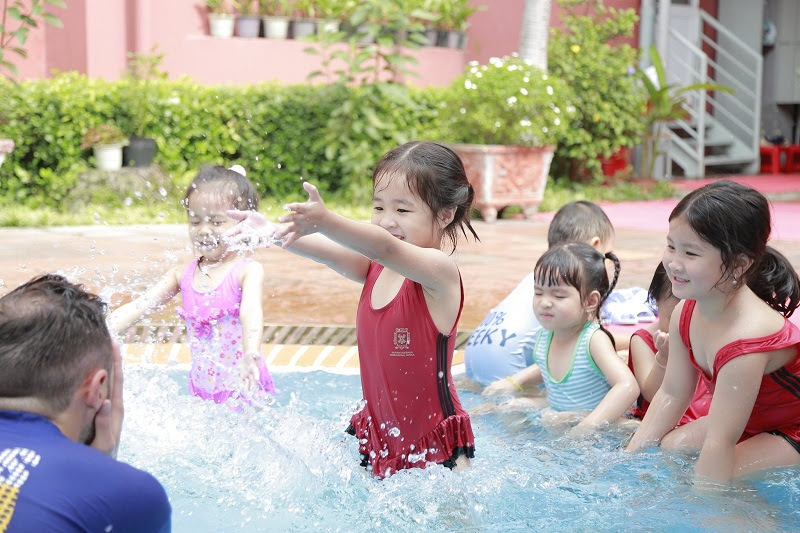
Preschool children at VAS focus on developing four important skills
In addition to classroom learning, VAS also offers a variety of after-school clubs to support children’s overall development, including:
- Design & Fine Arts
- Ballet
- Basketball
- Chess
- Football and Multi-Sports Activities
- Culinary Discovery & Cooking
- Coding
- Music Exploration
- Modern Dance and K-Pop Dance
- Keyboard and Ukulele
- Robotics
- Table Tennis
- Self-Defense Martial Arts
These clubs are not only after-school activities but also opportunities for children to explore experiences and choose activities that match their interests and hobbies.
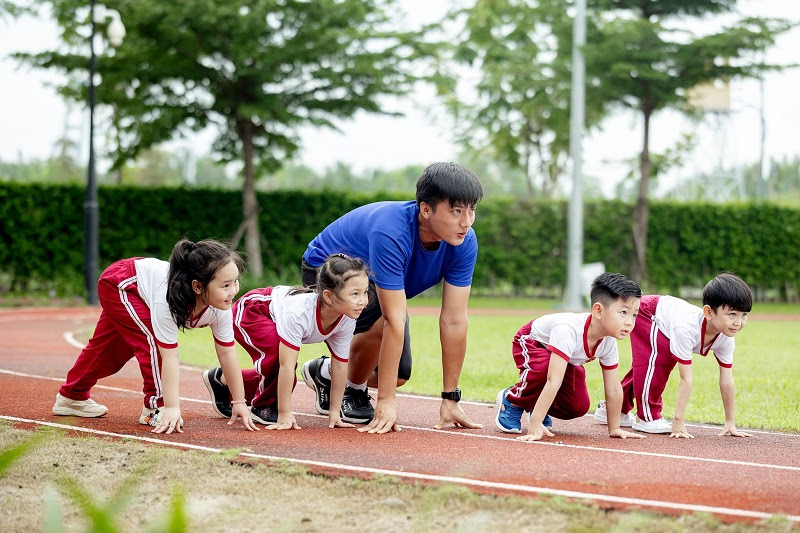
VAS offers a variety of after-school clubs for preschool children
In addition, VAS also organizes annual activities and events that support emotional education for preschool children, such as:
- VAS Talks
- VAS Olympic
- VAS’s Got Talent
- VAS Summer Camp
With a positive learning environment and emotional education activities designed for preschool children, VAS is a suitable choice for parents looking for an international learning environment for their children.
>>> Read more: Details of Vietnam Australia International School tuition fees
Take the Next Step: To learn more about the preschool programs at the Vietnam Australia International School, visit our website at www.vas.edu.vn or contact our hotline at 0911 26 77 55.
>>> Read more: 16 essential life skills for 5-year-olds that parents should know