


Teaching Life Skills to 5-Year-Olds: Top 16 Essential Skills for Children
- What are life skills for children?
- Why is it necessary to teach life skills to 5-year-old children?
-
Top 16 essential life skills for 5-year-olds
- 3.1 Teaching life skills to 5-year-old children - Self-feeding skills
- 3.2 Teaching life skills to 5-year-old children - Communication and social skills
- 3.3 Teaching life skills to 5-year-old children - Swimming skills
- 3.4 Teaching life skills to 5-year-old children - The skill of organizing their belongings
- 3.5 Teaching life skills to 5-year-olds children- Self-care skills
- 3.6 Teaching life skills to 5-year-olds children- Time management skills
- 3.7 Teaching life skills to 5-year-old children - Skills for overcoming difficulties and challenges
- 3.8 Teaching life skills to 5-year-old children - Skills in sharing and helping others
- 3.9 Teaching life skills to 5-year-old children - Self-learning skills
- 3.10 Teaching life skills to 5-year-old children - Thinking and creative skills
- 3.11 Teaching life skills to 5-year-olds children- Emotional management skills
- 3.12 Teaching life skills to 5-year-old children - Skills for avoiding danger
- 3.13 Teaching life skills to 5-year-old children - Skills in planting trees and caring for animals
- 3.14 Teaching life skills to 5-year-old children - Road safety skills
- 3.15 Teaching life skills to 5-year-old children - Skills in using basic tools and equipment independently
- 3.16 Teaching life skills to 5-year-olds children - Teaching children how to react when approached by strangers
- Vietnam Australia International School (VAS) - A place trusted by many parents to teach life skills to their children.
- Conclusion
Teaching basic life skills helps children build a strong foundation for the future. Therefore, in the article below, VAS will share with parents why it is necessary to teach life skills to 5-year-old children and the top 16 essential life skills for them.
1. What are life skills for children?
Life skills for children are a set of abilities, behaviors, and mindsets necessary for children to face and adapt to all situations in life. If trained early, these skills not only help children overcome new daily challenges but also help build a solid foundation for their future development.
Regarding teaching life skills to children, education experts have also encouraged that we should not just stop at teaching children how to manage their time or use money effectively. Parents and schools should further train children in other soft skills such as: communication skills, logical thinking, creativity, self-protection skills, emotional management, and conflict resolution... These skills not only help children improve their learning quality but also help them form a confident demeanor, with the ability to adapt and positively contribute to society in the future.
Accordingly, the process of teaching life skills to children is also an important process, requiring patience and active support from both the school and parents. It can be said that life skills are essential for a child’s development. Therefore, parents can refer to more information about the life skills below and support children in developing these skills.
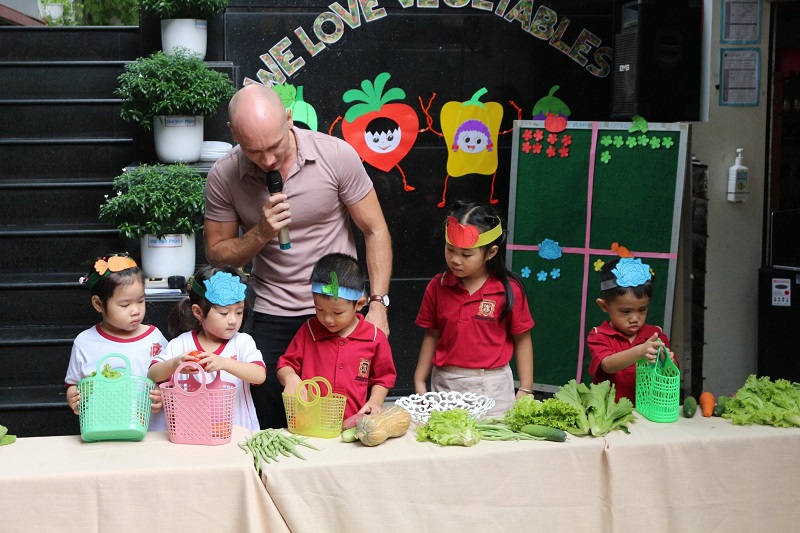
Children need to be trained in life skills early on
2. Why is it necessary to teach life skills to 5-year-old children?
In the context of a rapidly changing world, teaching life skills to 5-year-old children becomes even more important. It not only helps them face challenges and adapt but also creates a favorable environment for comprehensive development. As many scientific studies have proven, practicing life skills from a young age has a positive impact on their individual success in the future.
- Research on emotional management ability: Research published in the journal "Developmental Psychology" (2011) pointed out that: children who have good emotional management abilities from a young age will be able to adapt better to life's pressures, while also being more likely to achieve better academic and career outcomes.
- Creative and innovative thinking: Research by Kimberly A. Schonert-Reichl and Elias Mpofu (2019) also discovered a link between training creative thinking from a young age and the ability to create innovative solutions in the future. Children encouraged to develop creative thinking are often capable of generating new ideas, different solutions, and positively shaping their own futures.
- Confidence and independence: Research published in the "Journal of Experimental Social Psychology" (2012) showed that: children with confidence and good independent abilities from a young age often have the ability to achieve success in many fields, including academics, career, or social relationships.
- Interaction and communication skills: Studies on social development in children (e.g., "Social Development" - 2015) mention that children's social interaction and communication skills from a young age can affect their ability to build and maintain good relationships in the future, from teamwork to establishing personal relationships and long-term bonds.
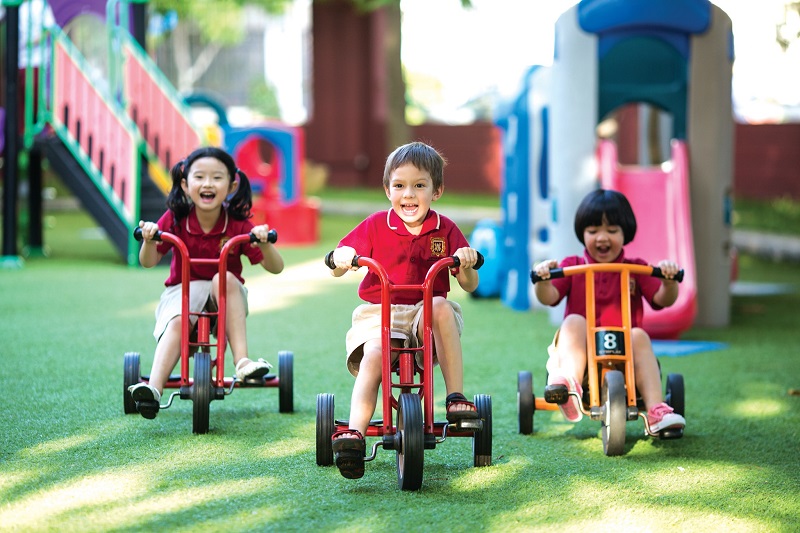
Children develop comprehensively when trained in life skills
3. Top 16 essential life skills for 5-year-olds
3.1. Teaching life skills to 5-year-old children - Self-feeding skills
Developing self-feeding skills for children is a fun but also challenging process. Below are some ways you can apply to help children develop their self-feeding ability effectively:
Start early: To get children used to eating by themselves, you can start by letting them hold and taste the food. This is a way to encourage children to eat voluntarily and freely explore their sense of taste.
Do not force and be patient: Allow children to decide the amount of food they want to eat. Sometimes, children might not want to eat or want to try other things. Be patient and avoid forcing them, so that the mealtime doesn’t become stressful for the child.
No electronic devices: Ensure that the child's dining space is comfortable, avoiding the use of electronic devices while eating. This helps children focus on self-feeding, chewing well, enjoying, and experiencing the food.
Encourage and praise: When children know how to eat by themselves and want to try new foods, encourage and praise them. This helps create motivation and confidence for children in developing self-feeding skills.
3.2. Teaching life skills to 5-year-old children - Communication and social skills
Communication and behavior is an extremely important skill, as children will use it throughout their growing up process. Here are the key benefits that practicing this skill brings:
Effective communication: Communication skills help children know how to express their opinions, emotions, and thoughts clearly and confidently. This helps children interact with others more effectively.
Building good relationships: Skillful communication helps children know how to connect and build good relationships with friends, family, and people around them. The ability to listen and show care for others is a crucial factor in building lasting relationships.
Conflict resolution skills: Communication skills help children learn how to face and resolve conflicts constructively. Children will master how to express their viewpoints without causing more tension, while also learning to listen to and understand others' perspectives.
Confidence in communication: Knowing how to communicate, children will feel more confident when participating in conversations and social activities. This positively affects the child's self-confidence and self-esteem.
Developing social skills: Communication skills are also related to children learning how to take on roles and perform tasks in social situations. Learning to express opinions, share ideas, and participate in groups helps children develop important social skills.
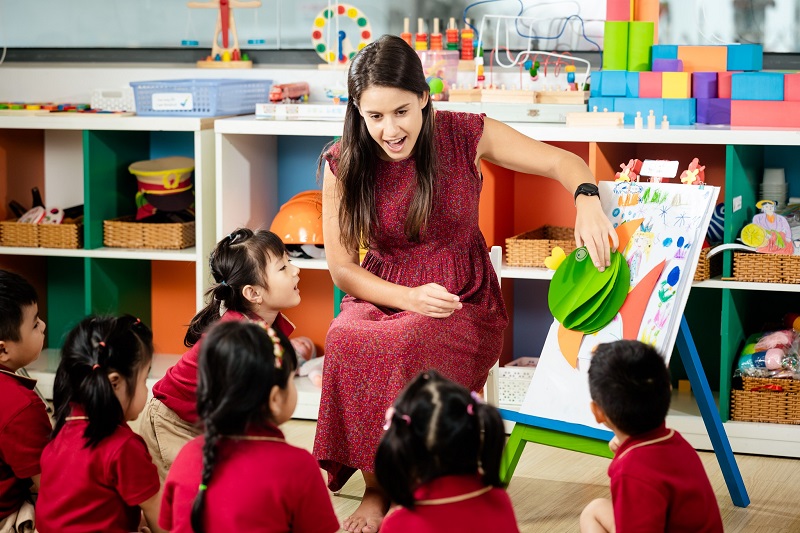
Children will easily build healthy relationships when trained in communication skills
3.3. Teaching life skills to 5-year-old children - Swimming skills
Teaching children swimming skills is a beneficial activity for their comprehensive development. It not only brings many health values but also offers outstanding benefits for their mental development. During swimming, the child's whole body muscles are maximally exercised, helping to enhance strength and flexibility. In particular, swimming also helps children develop their cardiovascular and respiratory systems, improving body growth and development.
Additionally, splashing around in the water is also a way to help children relieve stress and relax. Being in contact with water and the feeling of floating helps children relax their minds and reduce pressure. This is also a good opportunity for children to enjoy fun times and play freely with friends.
3.4. Teaching life skills to 5-year-old children - The skill of organizing their belongings
First of all, when wanting to teach children the skill of organizing their belongings, parents should help them clearly understand the goal of tidying up, such as creating a neat space and making it easy to find things. At the same time, explain to the child the process of cleaning each part of the room or specific space. Start from one corner and move to other areas. After that, guide children on how to sort things, such as using boxes, bins, or dividers. Finally, encourage children not to get discouraged if everything is not immediately as neat as expected, because tidying up is a process.
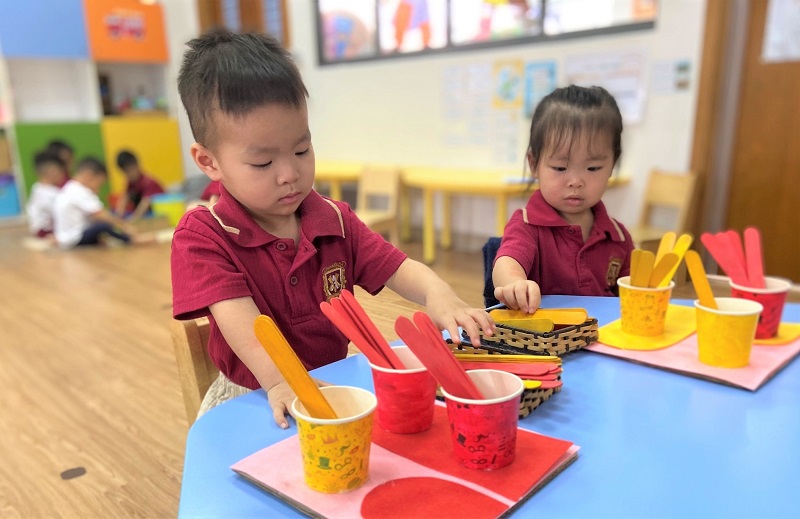
Children need to be guided on how to sort and put away their belongings in the right place
Training children in the skill of organizing their belongings is also a way for them to recognize their personal responsibilities and manage tasks. They will understand that keeping their surrounding environment clean and tidy is their responsibility, thereby forming good habits useful for their later life.
3.5. Teaching life skills to 5-year-olds children- Self-care skills
In reality, at any age, self-care skills are very necessary. Because by guiding children in basic skills such as personal hygiene, dressing themselves, managing time, and basic nutrition, you help them build a foundation for managing their daily lives independently. When children have the ability to take care of themselves, they will feel more confident in managing their daily lives and more confident in themselves. Accordingly, self-care will also develop a sense of responsibility. They will understand that they need to worry about themselves first and cannot always rely on others.
3.6. Teaching life skills to 5-year-olds children- Time management skills
Time management skills refer to the ability to plan, organize, and use time effectively to complete tasks and duties efficiently. This includes setting priorities, dividing time for different activities, and maintaining a balance between work, study, and entertainment. Parents can train children to manage their time effectively with the following steps:
Step 1 - Define goals: Help children understand their goals in time management. They need to know what they want to achieve and why time management is important.
Step 2 - Create a reasonable schedule: Guide children to schedule daily activities, from studying, playing, sleeping, to relaxing. A schedule is an important tool for organizing time systematically.
Step 3 - Prioritize tasks: Teach children how to prioritize tasks based on their importance and deadlines. They need to be guided to recognize and prioritize important tasks according to each level.
Step 4 - Break down tasks: Guide children on how to break large tasks into smaller parts and set goals to complete each part. This helps reduce the feeling of pressure and creates motivation for them to complete each small step.
Step 5 - Use reminder systems: Teach children how to use reminder systems like alarm clocks or calendar reminders so they don't miss important activities.
Step 6 - Make time for entertainment and rest: Encourage children to make time for recreational and resting activities. This helps maintain balance and prevents fatigue.
Step 7 - Evaluate and adjust: Encourage children to evaluate their time management process and adjust the schedule if necessary. They will learn how to adapt to changes and grow from mistakes.
3.7. Teaching life skills to 5-year-old children - Skills for overcoming difficulties and challenges
The skill to overcome difficulties and challenges is an extremely useful ability that we should train children in from a young age. Facing and overcoming difficult situations and obstacles in life not only helps children go further in their personal development but also helps them learn, develop problem-solving thinking, and build patience.
To practice this skill, parents must constantly encourage children to face difficulties positively. We need to teach children how to build flexible thinking to find different solutions to the same problem. Creating a safe environment, where children can experiment and make mistakes without fear of being criticized, helps them become more confident when facing new challenges.
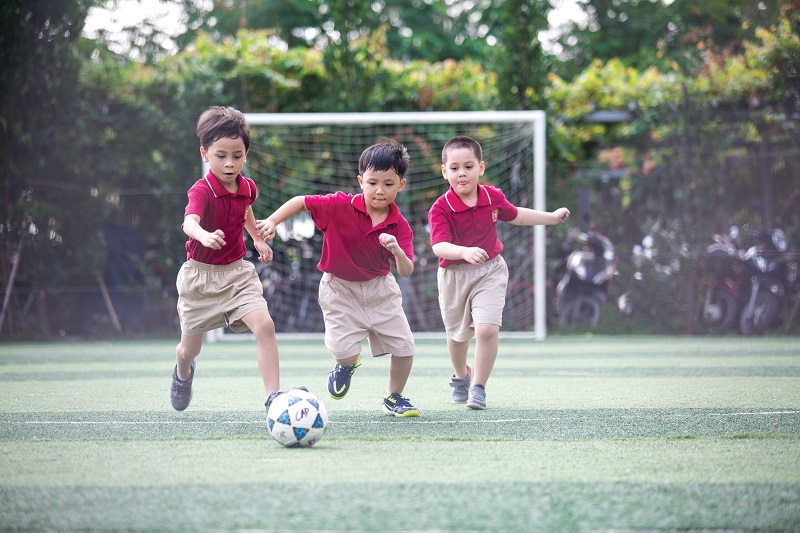
Children need to be encouraged and cheered on to face difficulties on their own
3.8. Teaching life skills to 5-year-old children - Skills in sharing and helping others
The skill of sharing and helping others is the ability to understand others and be willing to share knowledge, time, belongings, or support to help people in the community. This is an important ability in building positive relationships, creating cooperation, and making a better social environment.
To practice this skill, we can start by setting an example for children; parents should show sharing and helping others in daily life. After that, explain to the child the importance of sharing and helping, making them realize that this creates a better society for everyone.
Encouraging children to participate in group activities and volunteer projects is also a good way to practice this skill. Sharing knowledge or skills in these activities helps children see that they can contribute and support the community around them.
Practicing sharing skills can also start from small actions in the family and classroom. When children learn how to share and help with chores, spend time with relatives, or help friends with studying... they will easily experience and grasp the meaning of sharing and helping others.
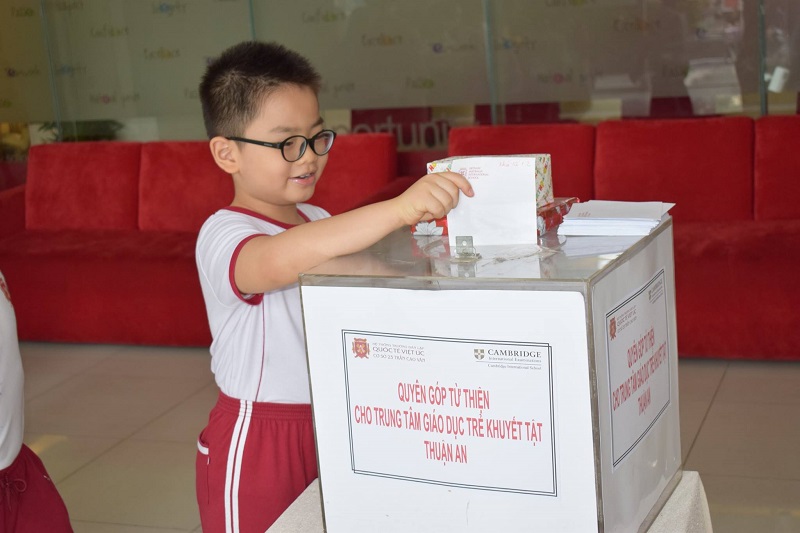
Children need to be nurtured with compassion through small deeds
3.9. Teaching life skills to 5-year-old children - Self-learning skills
Self-learning skills refer to a person's ability to seek out and absorb new knowledge and skills independently and autonomously. This includes knowing how to search for information, analyze, organize, and apply knowledge to solve problems and make a positive impact on life as well as personal development. To practice this skill, we need a combination of curiosity, analytical ability, and a willingness to experiment.
Encouraging curiosity is an important step to help children access new information. We can teach children how to search for information through reliable sources. This helps them develop analytical skills to evaluate the authenticity and usefulness of the information they find.
Furthermore, promoting an experiential attitude is an important part of training self-learning skills. Children need to be encouraged to experiment, practice, and apply the new knowledge they acquire. Through experimentation, they will better understand how this knowledge is applied in reality.
The benefits of practicing self-learning skills for children are countless. This skill helps children develop autonomy in learning and absorbing knowledge. It also helps children become creative and flexible in problem-solving.
3.10. Teaching life skills to 5-year-old children - Thinking and creative skills
Creative thinking is the ability to connect different ideas to create something new and unique. Put simply, this is a child's ability to think flexibly, explore new ideas, and find unique ways to solve problems. To practice this skill, parents, teachers, and schools need to create conditions for children to stimulate curiosity, critical thinking, and experiential opportunities.
Encouraging curiosity is an important step in exploring and learning about the world around us. By asking questions and seeking answers, children are encouraged to expand their thinking and look for new ideas. An effective way to train thinking and creative skills is to encourage children to participate in many different activities. From arts to science and technology, participating in different fields helps children get exposed to various forms of thinking and creative mindsets. Encouraging children to ask deep questions and learn more about topics they care about is also a crucial part of practicing this skill. Through learning, children will know how to deduce and analyze information logically, thereby bringing up personal ideas and viewpoints.
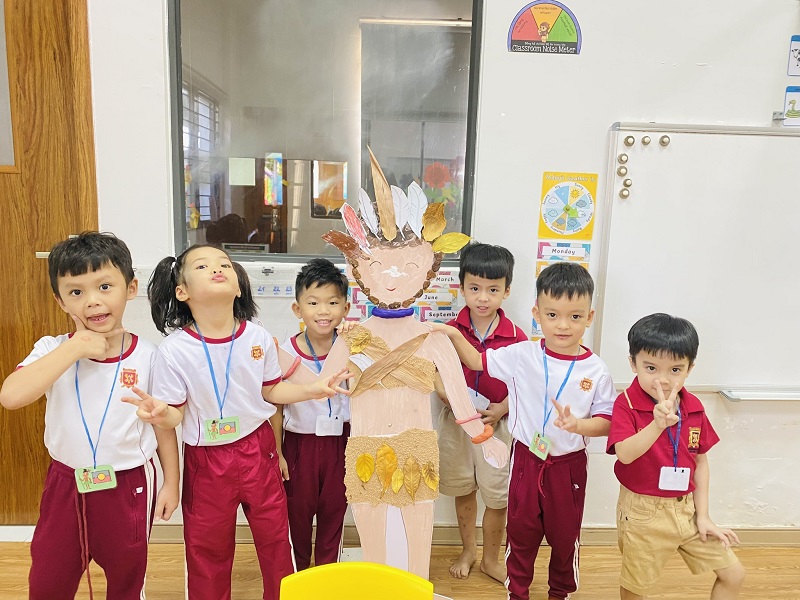
Encourage children with creative activities
3.11. Teaching life skills to 5-year-olds children- Emotional management skills
Emotional management skills refer to a child's ability to recognize, understand, and regulate their emotions in a healthy and effective way. This includes the ability to be aware of emotions, know how to express them appropriately, and be able to self-regulate emotions to create a positive psychological environment.
An effective way to train emotional management skills for children is to encourage self-awareness. Teach children how to recognize and name their emotions, thereby helping them better understand the moods and feelings they are experiencing. Children also need guidance from parents and teachers on how to adjust their emotions positively, for example, doing relaxing activities, taking deep breaths, or focusing on favorite activities.
Another equally important part in practicing this skill is promoting how to express emotions healthily. Teach children how to express their emotions appropriately and respect others. Because children also need to learn how to handle conflicts constructively, instead of acting out in anger or overreacting in difficult situations. It can be said that training this ability is very useful for children; they easily adjust and balance their psychology, develop social skills, and reduce stress. It also creates an effective learning environment and helps children develop self-awareness. From there, children have the ability to interact socially in a positive and more confident manner in daily life.
3.12. Teaching life skills to 5-year-old children - Skills for avoiding danger
Skills for avoiding danger refer to a child's ability to recognize and cope with situations that could pose a risk to their health and safety. This includes identifying and assessing dangerous situations, knowing how to face or stay away from them, and mastering basic safety principles.
To help children practice danger avoidance skills, parents can start by explaining what danger is. Teach children to recognize and be vigilant against potential dangerous situations in their surrounding environment, from the street to inside the house. This helps children develop awareness of situations that could harm them and know how to deal with them.
Besides that, parents also need to guide children on how to assess situations, teaching them to consider potential risks, thereby helping them find the best way to respond. At the same time, mastering how to seek help from adults is also a crucial factor; help children know how to identify and look for support when needed.
3.13. Teaching life skills to 5-year-old children - Skills in planting trees and caring for animals
A child's skills in planting trees and caring for animals will be shown through planting and taking care of trees, crops, as well as caring for animals like pets or aquarium fish. By carrying out these activities, children will learn how to create and maintain a lush living environment, learning about dependence and interaction in nature.
To practice this skill, children need guidance on how to choose seeds, ornamental plants, or animals suitable for the environment and their caring capacity. They need to participate in practical activities on how to cultivate, such as watering, fertilizing, protecting sprouts from harmful agents...
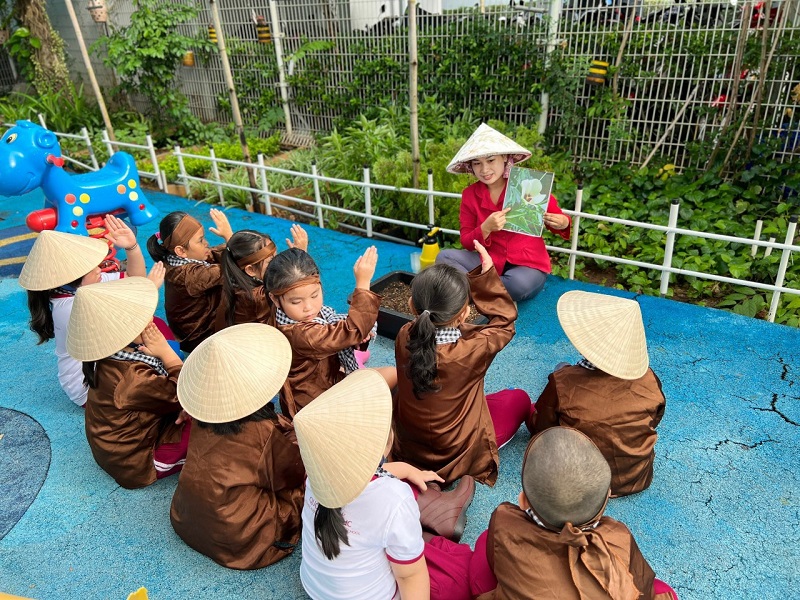
An extracurricular session of kindergarten students at VAS about types of flowers and plants
Practicing planting and animal care skills helps children develop love and respect for nature and living species. This helps children understand the importance of protecting the environment and caring for the life around them. Furthermore, doing these activities also helps children develop patience and a sense of responsibility.
3.14. Teaching life skills to 5-year-old children - Road safety skills
Safe traffic participation skills are the duties of a child when understanding and obeying traffic rules, knowing how to move safely on the streets. To practice this skill, children need to be guided on basic traffic rules, from crossing the street in the right place, recognizing traffic lights, to directional signs. In addition, parents should also support children in getting used to looking left and right before crossing the street and clearly indicating their intentions.
3.15. Teaching life skills to 5-year-old children - Skills in using basic tools and equipment independently
Practicing the skill of independently using tools means training children to understand how to operate and use tools and equipment. From pens and computers to sharp tools like scissors or knives... At kindergarten age, children need to be guided on how to use tools and equipment safely and properly. This process includes teaching children how to hold, use, and preserve common items. Parents can do this through practicing with children to help them grasp basic techniques like how to cut, write, or use a computer.
3.16. Teaching life skills to 5-year-olds children - Teaching children how to react when approached by strangers
Teaching children how to react when approached by strangers is about helping them recognize and respond safely when encountering situations where a stranger approaches or violates their personal space. Children need to be equipped with the ability to recognize and respond properly in unexpected situations. And to practice this skill, parents should show children how to recognize who is safe around them, such as family members, teachers, or friends. Then, teach children how to use a strong "No" when they feel uncomfortable and leave an unsafe situation. Moreover, in cases beyond the child's control, equip them with the skill to handle the situation and seek help from adults.
>>> Read more: What should a 5-year-old learn? 10 lessons to help children develop comprehensively
4. Vietnam Australia International School (VAS) - A place trusted by many parents to teach life skills to their children.
With nearly 20 years of operation in the field of education, Vietnam Australia International School (VAS) affirms that besides training academic knowledge for students, the school also creates a fun and creative educational environment. VAS is a place that nurtures good core values and trains life skills for children with the trust of parents.
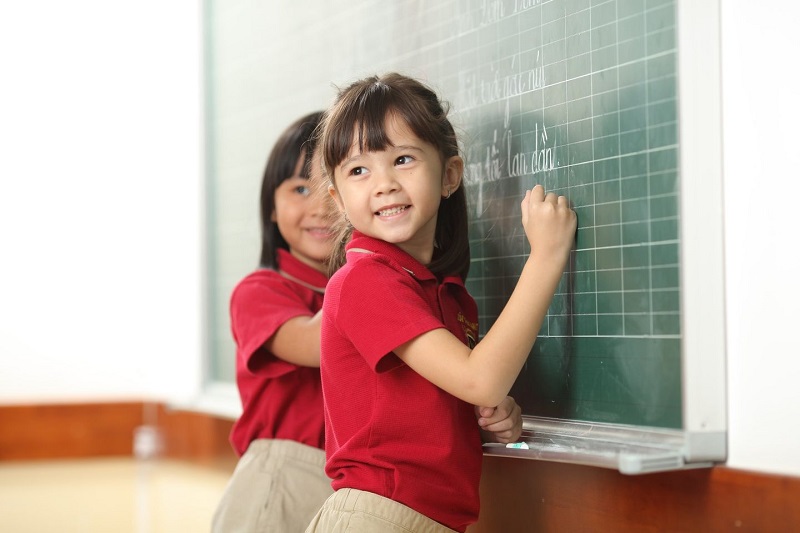
VAS - An international school system that brings comprehensive development for every generation of students
It can be seen that, in addition to main classes with standard curriculums, VAS is always proud of organizing diverse and rich extracurricular activities. From experiential field trips, cultural exchanges to foreign language and art classes, VAS helps students not only learn knowledge but also comprehensively develop their awareness and skills. Another highlight of VAS is the application of unique teaching methods, focusing on developing the abilities and skills of each student. Designing a flexible curriculum helps provide opportunities for each child to explore and develop their own interests and abilities.
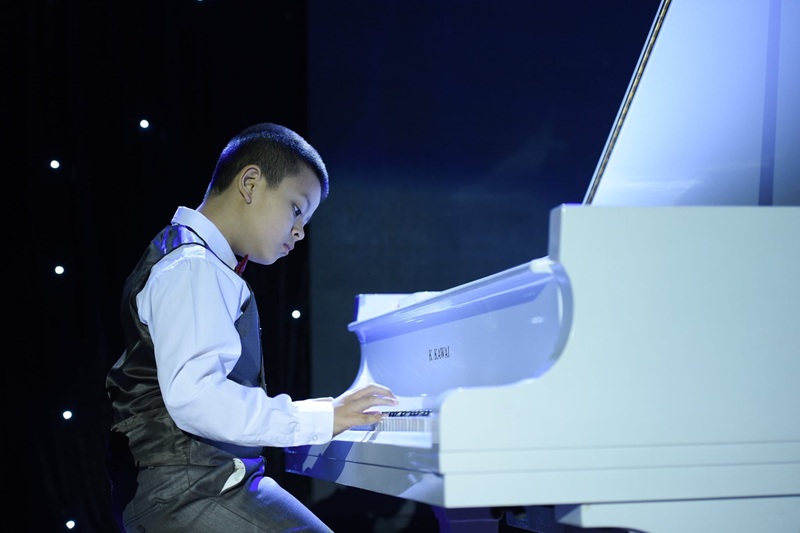
Students at VAS get to develop their personal artistic talents
Regarding the promotion of personal potentials, VAS has been continuing its efforts to upgrade diverse spaces for students to develop their artistic talents. From painting, playing instruments, and singing to dancing, organized art clubs help students find their passion and develop their creative skills.
Furthermore, VAS also always encourages students to participate in competitive and volunteer activities. Competitions like Robocon, English public speaking, or the VAS Got Talent contest not only help students practice skills but also help them become confident in front of the public. Volunteer activities such as helping orphans during the pandemic, or extending compassionate arms, are also ways VAS conveys the spirit of solidarity and sharing in the community.
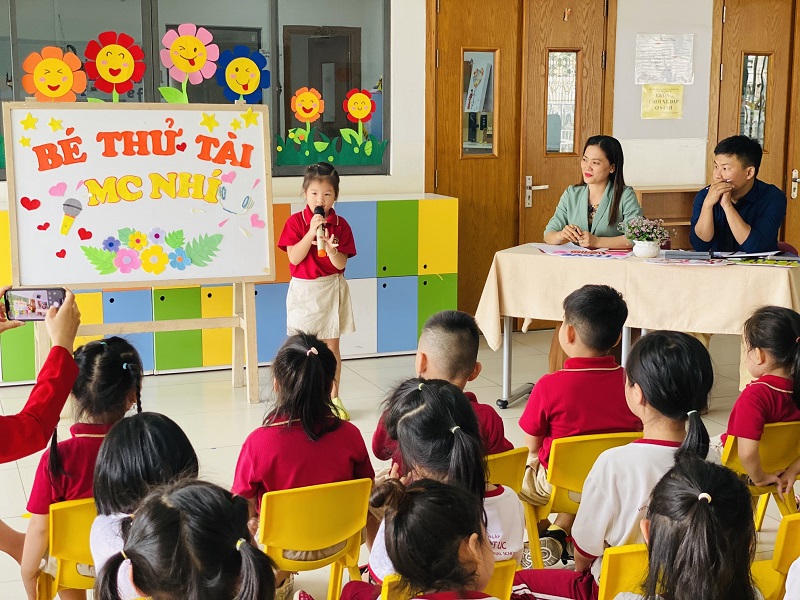
Regularly organized competitions help students reach their full potential
From dynamic activities to building a social and compassionate spirit, Vietnam Australia International School (VAS) is not only a place to teach general knowledge, but the school also aims to develop all aspects of a person, from knowledge to life skills, helping students become confident and responsible global citizens.
>>> Read more: What do VAS international school tuition fees include?
5. Conclusion
To affirm the importance of teaching life skills to 5-year-old children, above are the top 16 essential life skills for children that VAS wants to share with parents. Through this, the school also wants to mention that VAS is a creative and diverse learning environment, where practicing life skills for children is an essential part of the educational process. From learning to communicate and managing time to participating in art, sports, and volunteer activities, VAS not only ensures students possess a solid knowledge foundation but also equips them with practical skills for the future.
If you are interested in the international education program at VAS, please contact us via hotline: +0911 26 77 55 or visit the website www.vas.edu.vn to get the most detailed consultation from our team.
>>> Read more: Best International Primary Schools in Ho Chi Minh City