


What Is the Right Age for Children to Start Preschool? Practical Tips for Parents
- Preschool starting ages in different countries
- How Can Parents Encourage Children to Start Preschool?
- Current early childhood education approaches for preschool children
- Benefits of sending children to preschool
- Practical tips parents should know before sending children to preschool
- How VAS supports preschool children’s early development
Many parents of young children wonder about the right age to start preschool and how to prepare their child for this new stage. The answer does not depend on age alone. A child’s physical development, ability to adapt to a new environment, communication skills, and family circumstances may all influence when preschool is appropriate.
This article explores common preschool starting ages, signs of readiness, practical preparation tips, and factors parents can consider before making a decision.
1. Preschool starting ages in different countries
The age at which children start preschool varies across countries. The source notes that many schools accept children from around 2 years old, although the starting age may differ depending on local education systems, children’s physical development, and other circumstances.
Examples mentioned in the source include:
- England: Children typically start preschool at around 3–4 years old.
- Scotland: Children typically start preschool at around 3–4 years old.
- The United States: Children may attend preschool between 2 and 5 years old.
- Sweden: Preschools may accept children from over 1 year old.
- Germany: According to the source, childcare services may be available from infancy, while preschool or kindergarten typically begins later.
- Finland: Pre-primary education typically begins around age 6.
- New Zealand: The source states that children may start preschool at around 5 years old.
- Japan: There is no single fixed starting age mentioned, although the source states that many children under the age of 5 attend preschool.
- China: Children may start preschool or boarding school from around 3 years old, with an emphasis on developing independence and discipline.
In Vietnam, there is no single fixed age that is suitable for every child. The decision can depend on factors such as the child’s physical development, awareness, ability to adapt to a new environment, interest in learning and exploration, family caregiving arrangements, and readiness to interact with other children.
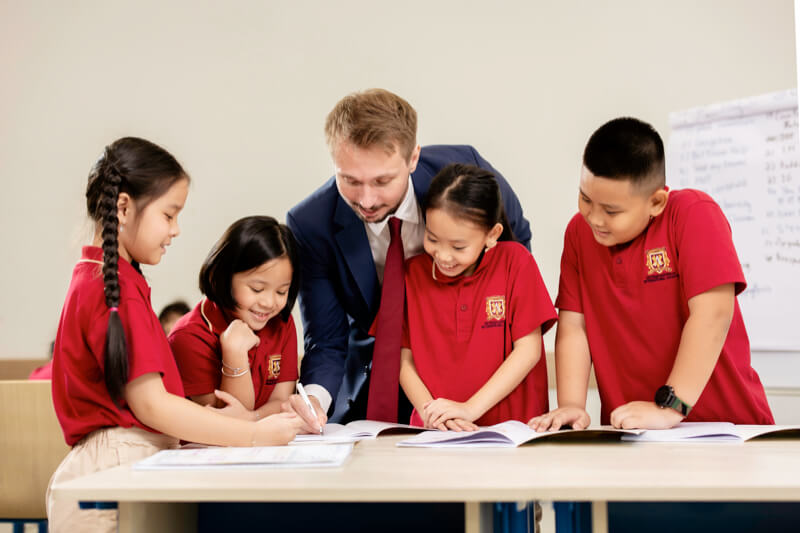
Preschool children should spend more time playing than taking traditional lessons
Preschool environments may be more beneficial when their programmes match children’s developmental needs. The source highlights two considerations:
- Preschool activities should not focus too heavily on formal reading and writing. Play and social interaction should remain important parts of the programme so children can develop age-appropriate skills.
- Screen-based activities, including television, computer programmes, and games, should be used in moderation rather than as the primary mode of learning.
Overall, the preschool environment should be appropriate for children’s stage of development and existing communication abilities.
2. How Can Parents Encourage Children to Start Preschool?
The first days of preschool can feel unfamiliar and overwhelming for children as they adjust to new teachers, classmates, routines, and surroundings. Parents can make this transition easier by helping children become familiar with what to expect before their first day of preschool.
About two weeks before school starts, parents can talk to their child about common classroom activities, such as playing with toys, meeting teachers, and making new friends. If possible, parents can also take their child on a school visit so they can explore the environment and gradually become more familiar with the classroom atmosphere.
Parents can also help children prepare by:
- Encouraging them to share toys with friends or family members during playtime.
- Practising simple self-care tasks such as getting dressed, brushing their teeth, and preparing the items they need to bring to school.
- Avoiding arriving too early when teachers and classmates have not yet arrived.
- Keep goodbyes calm and brief rather than prolonging the separation.
- Leaving calmly after saying goodbye rather than extending the separation for too long.
3. Current early childhood education approaches for preschool children
In Vietnam, a number of internationally recognised early childhood education approaches are now used in preschool settings. Some common examples include:
- Steiner method: This approach uses stories, situations, and imaginative activities to help children understand ideas such as appropriate behaviour and the difference between right and wrong.
- Montessori method: Children develop motor skills and cognitive development through hands-on activities, learning materials, and age-appropriate tools that encourage curiosity, independence, and creativity.
- Reggio Emilia method: Teachers guide children through small projects suited to their abilities, encouraging them to explore, investigate, and solve problems. For example, children may plant a small garden, sow seeds, and water plants to learn more about nature and the world around them.
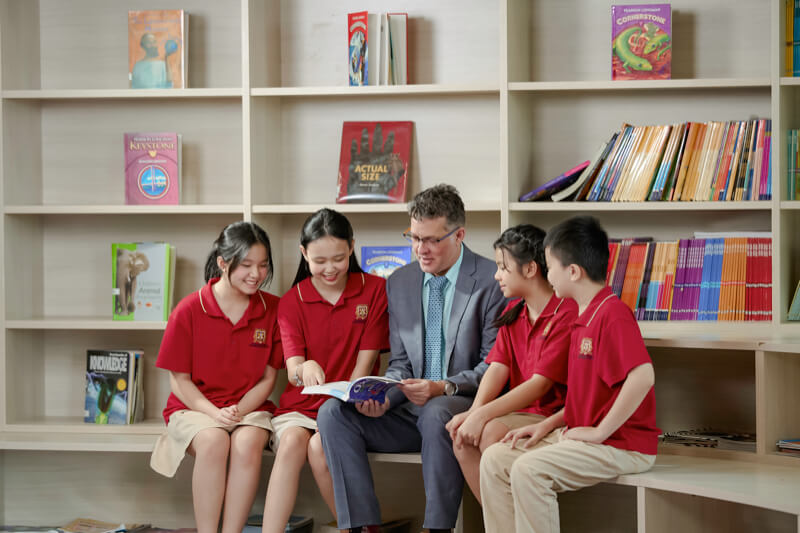
Choosing the right educational method helps children develop holistically
There is no single early childhood education method that is best for every child. What matters most is whether the approach is appropriate for the child’s needs, developmental stage, interests, and learning preferences.
Before choosing a preschool, parents can learn about the educational approach used by the school and observe the classroom environment, facilities, and learning equipment to assess whether the setting is safe and suitable for their child.
If possible, parents can also take their child to visit the school or attend a few trial sessions. This gives them an opportunity to observe how the child plays, communicates, and responds to the new environment before making a decision.
If a child continues to cling strongly to parents, rarely joins activities or plays with other children, has limited language skills, or still needs substantial support with basic daily needs, parents may consider giving the child more time before starting preschool. The source suggests waiting around 2–3 months and reassessing the child’s readiness.
4. Benefits of sending children to preschool
There is no single starting age that is appropriate for every child. The source describes the period from 10 to 18 months as an important stage for personality and social communication development and suggests that starting preschool early may offer several benefits.
4.1. Children receive structured care and education
Preschool can provide children with a structured environment that supports their transition into formal schooling. Through planned routines and age-appropriate educational activities, children have opportunities to become familiar with learning and interacting in a school setting.
Preschool teachers are generally trained in childcare and early childhood education, allowing them to support children’s daily learning, development, and well-being. The source also highlights the role of school meal programmes in providing children with nutritious daily meals and maintaining food hygiene and safety.
4.2. Supporting children’s learning and social interaction
A preschool environment can give children regular opportunities to learn through age-appropriate activities, observation, play, and interaction with teachers and classmates. Through these experiences, children may gradually develop language, movement, and early cognitive skills, such as recognising numbers, letters, objects, and colours.
Playing and participating in activities with other children can also help them practise sharing, cooperating, and working with others—skills that may support teamwork later on.

Well-structured educational approaches can support children’s cognitive development
4.3. Supporting independence and adjustment to the preschool environment
Preschool can give children opportunities to spend time away from their family, interact with teachers and classmates, and gradually become more familiar with a structured daily routine.
The source specifically discusses children aged 16–24 months, suggesting that some children at this stage may find the transition to preschool easier as they begin developing greater independence.
Through everyday classroom routines, play, and interaction with others, children can practise skills such as independence, self-management, and social participation. A supportive preschool environment may also help children become more comfortable with going to school and building relationships with teachers and classmates.
5. Practical tips parents should know before sending children to preschool
5.1. Preparing children emotionally
Emotional preparation can help children feel more secure when starting preschool. During the first few days, some children may feel shy, anxious, or reluctant to attend because they are entering an unfamiliar environment.
Before school starts, parents can talk with their child about enjoyable classroom activities, teachers, friends, and daily routines. This can help the child become more familiar with what to expect.
On the first school day, parents can also arrange their schedule so they have enough time to accompany their child and support them during this important transition.
5.2. Helping children become familiar with the school routine
Parents can help children become familiar with preschool routines through simple role-play activities at home, such as pretending to get ready for school, packing a bag, or preparing personal belongings. This can also help children practise becoming more independent when getting ready for class.
Depending on the school’s requirements, parents may need to prepare personal items such as:
- 4–5 sets of clothes
- diapers
- milk
- a drinking cup
- a toothbrush
- other daily essentials requested by the school.
If possible, visiting the school before the first day can also help children become more familiar with the environment and develop greater interest in going to school.
Taking children on a school school tour can help inspire their interest in going to school
5.3. Important Notes for Parents
During the first few weeks of preschool, parents can support both the child and the school by keeping important information organised and maintaining regular communication with teachers.
Parents should consider the following:
- Share important information with teachers: Inform the school about food allergies, medication, health concerns, or other needs that teachers should be aware of.
- Save school contact details: Keep the teacher’s and school’s phone numbers, email addresses, and other necessary contact information easily accessible.
- Consider an earlier pick-up time at first: During the initial adjustment period, parents may choose to pick their child up earlier so the school day does not feel too long.
- Talk with the child after school: Ask what they enjoyed, what they did not enjoy, and how they felt during the day. Parents can also provide reassurance and affection when the child feels upset.
- Prepare emotionally as a parent: Hearing a child cry during the first days of preschool can be difficult, so parents may also need time to adjust to the separation.
6. How VAS supports preschool children’s early development
VAS provides education from preschool through high school and, according to the source, has more than 20 years of experience in education. At preschool level, the school structures its programme around six areas of development designed to support children’s overall learning and growth.
6.1. Cognitive development for preschool children
VAS supports children’s cognitive development through activities in science, mathematics, and social awareness.
- Science: Children explore topics through theme-based learning projects, including the human body, animals, plants, and natural phenomena.
- Mathematics: Children become familiar with basic concepts such as ordinal numbers, counting, puzzles, comparison, measurement, and different shapes.
- Social relationships: Children learn about relationships within their family and the wider community.
Children also take part in age-appropriate science experiments designed to help them observe, explore, and learn more about the world around them.
6.2. Physical development and health
In addition to physical education classes included in the regular timetable, children have opportunities to take part in outdoor and experiential activities, such as visits to farms and other learning locations. They may also participate in school activities such as the VAS Olympics.
These experiences give children opportunities to stay active while learning through direct observation and participation.
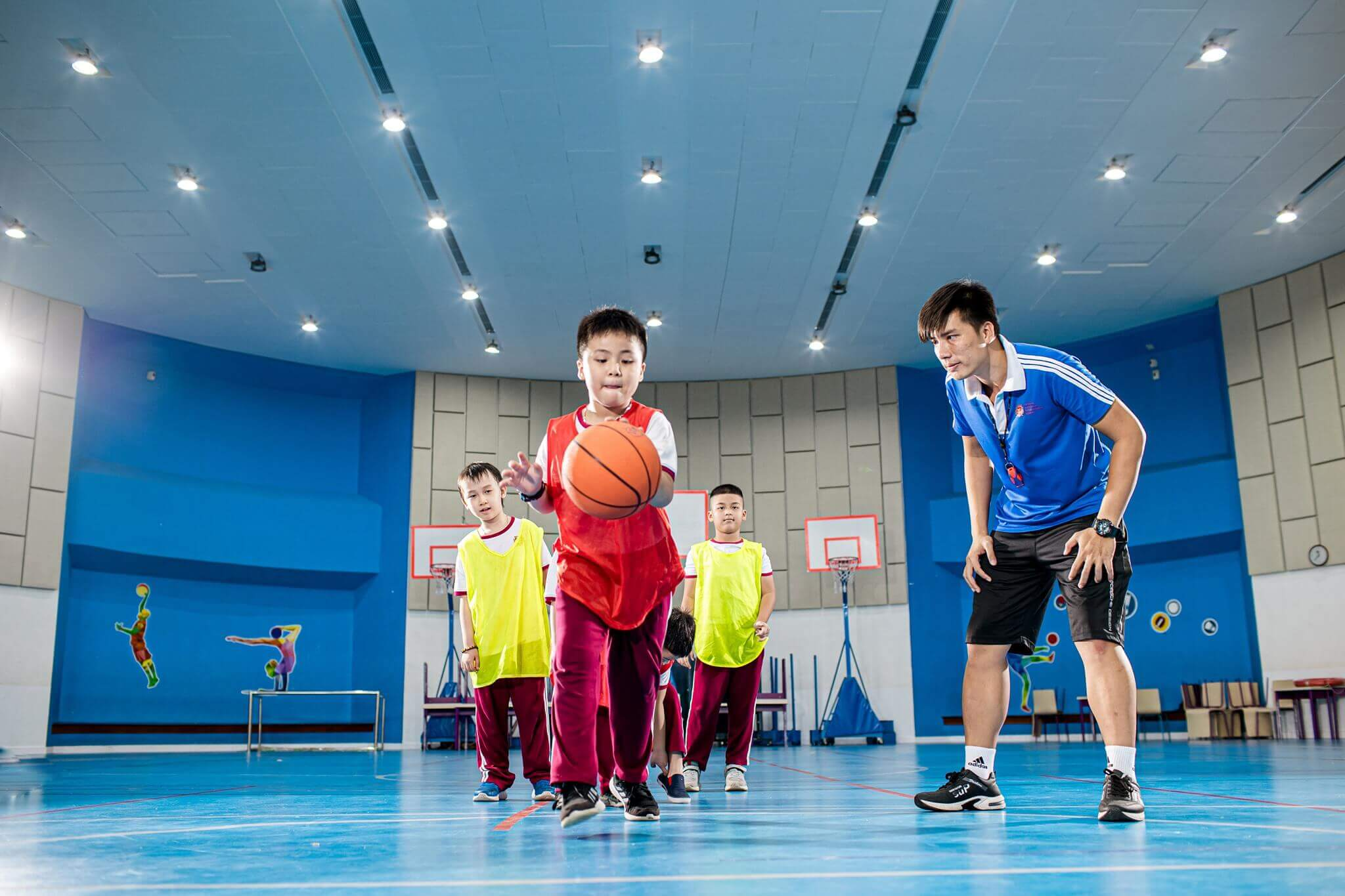
Children develop physically through PE classes at VAS
6.3. Language development for children
Preschool children at VAS are introduced to the Pre-Primary Programme, where they practise listening, speaking, reading, and writing in both English and Vietnamese. The programme is intended to help children become familiar with the language skills they will continue developing in the Cambridge programme at primary level.
According to the source, children have around 10–20 English lessons per week with teachers from countries such as the UK, the US, and Australia. English lessons are combined with Vietnamese learning so children have regular opportunities to develop reading, pronunciation, and the ability to express ideas in both languages.
6.4. Emotional and social skills development
At VAS, children are encouraged to develop self-awareness and learn how to recognise and express emotions in their relationships with family members, teachers, and friends. They are also introduced to age-appropriate behaviour and basic life skills that can support independence, self-management, and responsible interaction with others.
6.5. Aesthetic development in children
VAS organises talent and creative activities that give children opportunities to express themselves through art and other forms of performance. The source mentions activities and competitions such as VAS’s Got Talent, VAS Olympic, and the Painting Contest, which encourage children to participate in creative experiences and explore their interests.
6.6. Introduction to ICT – Information and Communication Technology
In addition to language, cognitive, and physical development, VAS introduces preschool children to Information and Communication Technology (ICT).
Through these activities, children become familiar with computers and basic keyboard use. This early exposure can help them become more comfortable with digital tools that may later be used for learning and finding information.
>>> Read more: Explore the detailed tuition fee schedule at VAS International School
Currently, VAS has six campuses offering preschool programs, including:
Vietnam Australia International Preschool – Sala Campus
- Address: Sala Urban Area, 1 Bui Thien Ngo Street, An Khanh Ward, Ho Chi Minh City
- Phone number: (028) 3622 0833
- Email: info.sl@vas.edu.vn
- Website: https://www.vas.edu.vn/en/sala-campus
Vietnam Australia International Preschool – Riverside Campus
- Address: 99 Nguyen Thi Thap Street, Tan My Ward, Ho Chi Minh City
- Phone number: (028) 3622 0898
- Email: info.rs@vas.edu.vn
- Website: https://www.vas.edu.vn/en/riverside-campus
Vietnam Australia International Preschool – Garden Hills Campus
- Address: 168 Phan Van Tri Street, An Nhon Ward, Ho Chi Minh City
- Phone number: (028) 3588 3088
- Email: info.gh@vas.edu.vn
- Website: https://www.vas.edu.vn/en/garden-hills-campus
VAS International Bilingual High School, Hoang Van Thu Campus (No Preschool Programme)
- Address: 202 Hoang Van Thu Street, Duc Nhuan Ward, Ho Chi Minh City
- Phone number: (028) 3999 0112
- Email: info.hvt@vas.edu.vn
- Website: https://www.vas.edu.vn/en/hoang-van-thu-campus
Vietnam Australia International Preschool – Sunrise Campus
- Address: 1 Street 20, Him Lam Area, Tan Hung Ward, Ho Chi Minh City
- Phone number: (028) 3622 6611
- Email: info.sur@vas.edu.vn
- Website: https://www.vas.edu.vn/en/sunrise-campus
Vietnam Australia International Preschool – Ba Thang Hai Campus
- Address: 594 Ba Thang Hai Street, Dien Hong Ward, Ho Chi Minh City
- Phone number: (028) 3864 1770
- Email: info.bth@vas.edu.vn
- Website: https://www.vas.edu.vn/en/ba-thang-hai-campus
With the information above, parents may now have a clearer answer to the question: “What is the right age to send a child to preschool?” To learn more about exciting learning methods at VAS, parents and students can contact us at www.vas.edu.vn or call 0911 26 77 55.
>>>> Read more:
7 Key criteria for choosing the right kindergarten for your child
Top 20 bilingual kindergartens in Ho Chi Minh City that parents should consider