


23 Essential Skills Children Should Learn Before First Grade
- Why do Parents Need to Prepare Their Children for First Grade?
-
Top Things Parents Need to Prepare When Sending Their Child to First Grade
- 2.1 Prepare School Supplies
- 2.2 Helping Children Get Familiar with School
- 2.3 Tell Stories about Elementary School
- 2.4 Equipping Children with Vietnamese Language Skills in Preparation for First Grade
- 2.5 Equip Children with Math Skills
- 2.6 Parents Should Be Patient and Avoid Forcing Children to Study
- 2.7 Concentration Skills
- 2.8 Understanding Time
- 2.9 Questioning Skills
- 2.10 Guide Children in Using Computers
- 2.11 Sharing Skills
- 2.12 Help Children Learn Children’s Songs
- 2.13 Learn Self-Care Skills
- 2.14 Responsibility Skills
- 2.15 Understanding the Surrounding World
- 2.16 Communication Skills
- 2.17 Teamwork Skills
- 2.18 Become Your Child’s Friend
- 2.19 Encourage Creativity
- 2.20 Encourage Daily Physical Activity
- 2.21 Identify Foods That Are Good and Unhealthy for the Body
- 2.22 Spend Time with Children on Their First Day of School
- 2.23 Give Children a Small Gift Encourage the child's spirit
- What Is the Primary School Environment Like at Vietnam Australia International School (VAS)?
Starting first grade is an important stage for children as they move from preschool to primary school. Many parents worry about whether their children can adapt well to a new learning environment and what they should prepare before school starts. Below are important skills and preparations that can help children become more familiar with primary school life.
1. Why do Parents Need to Prepare Their Children for First Grade?
Children’s emotions and behavior change rapidly at this age. This is an important transition period because children move from a preschool environment focused mainly on eating, playing, and sleeping to a primary school environment with homework, study schedules, and more structured learning activities.
At this age, children also begin expanding their social relationships, which can affect personality development later in life. Therefore, preparation during this period is very important.
In addition, 6-year-old children are often curious and active because they want to explore the world around them. Their awareness becomes clearer, and they gradually begin developing a stronger sense of self. As a result, adapting to a more disciplined learning environment can sometimes make children feel uncomfortable or difficult to adjust at first. At this stage, parental support plays an important role in helping children become more familiar with the new environment.
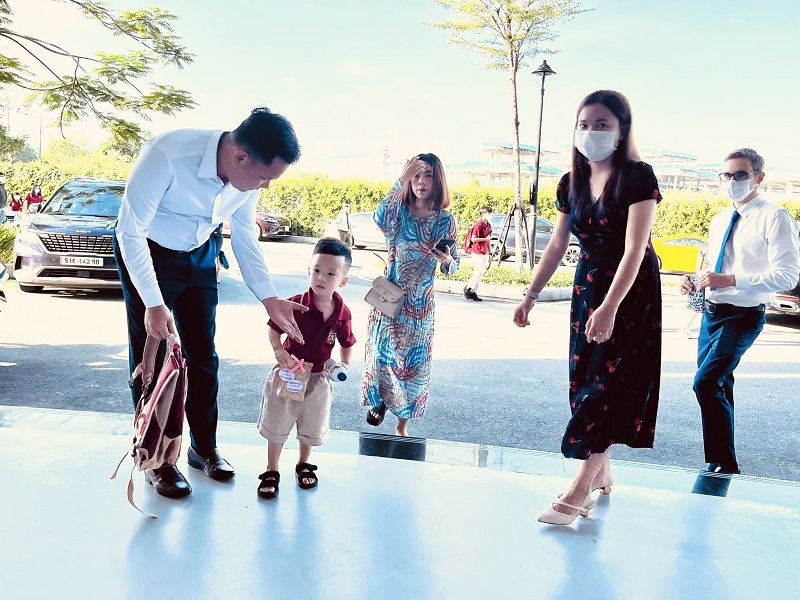
What should parents prepare for their kids entering 1st grade?
2. Top Things Parents Need to Prepare When Sending Their Child to First Grade
Preparing children for first grade is not only about buying school supplies or teaching children how to write and count. It is also a process of helping children prepare mentally, build daily habits, and develop academic and social skills before entering primary school.
2.1. Prepare School Supplies
School supplies such as textbooks, notebooks, pencils, erasers, rulers, crayons, and school bags are necessary items parents should prepare before children start first grade.
However, at many international schools, these items are usually included in the school supply fees and are prepared by teachers for students.
2.2. Helping Children Get Familiar with School
When children are around 5 years old, parents should begin helping them become familiar with their future primary school. Parents can take children to visit the school or introduce the school whenever passing by.
Simple sentences such as “This is the school you will attend when you are 6 years old” can help children become more curious and interested in the new environment. Seeing older students in uniforms going to school may also help children feel less unfamiliar with primary school later on.
2.3. Tell Stories about Elementary School
Before entering a completely new environment, children may feel worried or nervous. Therefore, stories about primary school from parents can help children better imagine the environment they will study in later.
Parents can share stories such as:
- Descriptions of the school they attended.
- Fun memories from primary school.
- Memories with teachers.
- Memories with friends.
- Games played during primary school years.
Besides sharing old memories, parents can also talk about their children’s future school or register for school tours so children can experience the environment directly.
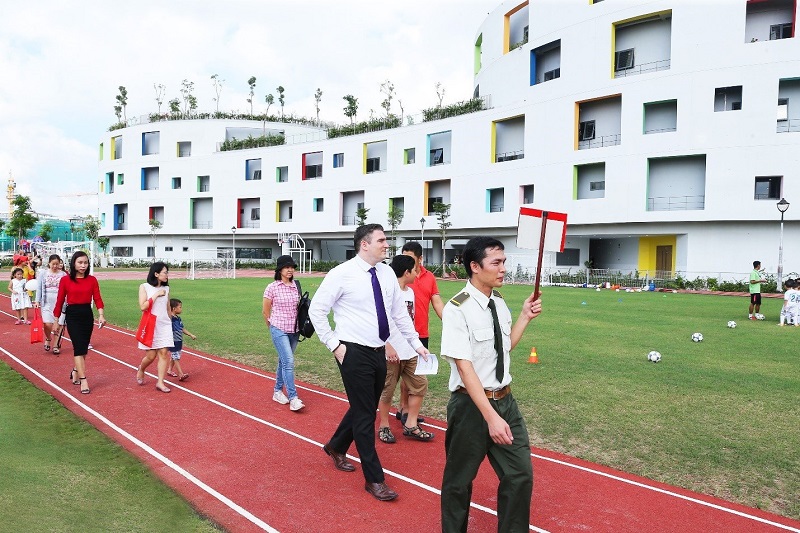
Take your child on a school tour so they feel excited and curious about their new school
2.4. Equipping Children with Vietnamese Language Skills in Preparation for First Grade
2.4.1. The Alphabet
- Teach children to read the alphabet in both forward and reverse order to help them remember letter forms.
- Start by teaching children to recognize vowels such as: o, ô, ơ, a, ă, â, e, ê, i, u, ư, y.
- Teach children to read letters together with tone marks such as: a, à, á, ả, ạ, ã. Parents should guide children through the tone marks from top to bottom and left to right before moving on to blending sounds and forming words.
- Reviewing lessons 5–6 times a day can help children remember longer.
2.4.2. Blend Simple Vowels
- Guide children to combine consonants and vowels to create simple words. For example: B + A = BA.
- Parents should avoid teaching meaningless combinations such as “by” or “cy” and focus only on meaningful words.
- After children form a simple word, parents should provide examples so children can better understand how the word is used. For example: “ca” appears in “cái ca”.
- Frequently asking open-ended questions can help children expand vocabulary. For example: “Can you tell me which words contain the sound ‘ngon’?”
2.4.3. Blend Double Vowels
- Combine consonants with double vowels and tone marks to form words and sounds.
- Adding objects, situations, or examples related to the words can help children remember more easily.
2.4.4. Single Words with Tone Marks
- After children know how to spell simple words, parents can add tone marks to create new words. For example: “ba” becomes “bà”.
- Parents should use different tone marks with one word so children can better understand pronunciation differences.
- Encourage children to identify which words have meaning and which do not to support spelling skills later.
- Priority should be given to words commonly used in daily communication.
2.4.5. Writing Practice Before First Grade
- Teach children how to hold pencils correctly for coloring and writing.
- Once children become familiar with holding pencils, parents can guide them in practicing basic strokes together with letters that contain those strokes.
- Practicing one stroke each day may help children learn writing more gradually.
2.4.6. Reading Comprehension Skills
- Parents should regularly tell stories or read books to children and ask simple questions related to the content to check understanding.
- This method can also help children improve vocabulary and concentration skills.
- After children know how to spell words, parents can guide them in reading meaningful words and short sentences while learning how to pause correctly at commas and periods.
2.5. Equip Children with Math Skills
Teaching children simple addition and subtraction before first grade can help them feel less unfamiliar and follow classroom lessons more easily later. Below are 5 simple steps parents can apply:
- Step 1: Teach children to count from 1 to 10, then gradually increase to 100 while helping them recognize numbers.
- Step 2: Teach children skip counting such as 2, 4, 6, 8, 10 and explain that adding 2 creates the next number in the sequence. This method can also be applied to subtraction.
- Step 3: Use objects such as counting sticks, marbles, or other household items to help children understand calculations more visually.
- Step 4: Guide children through simple calculations such as 1+1 or 9+0 within a small number range.
- Step 5: After children understand basic calculations, parents can encourage thinking with questions such as: “How many ways can we make the number 9?” or “How can we create the number 5?”
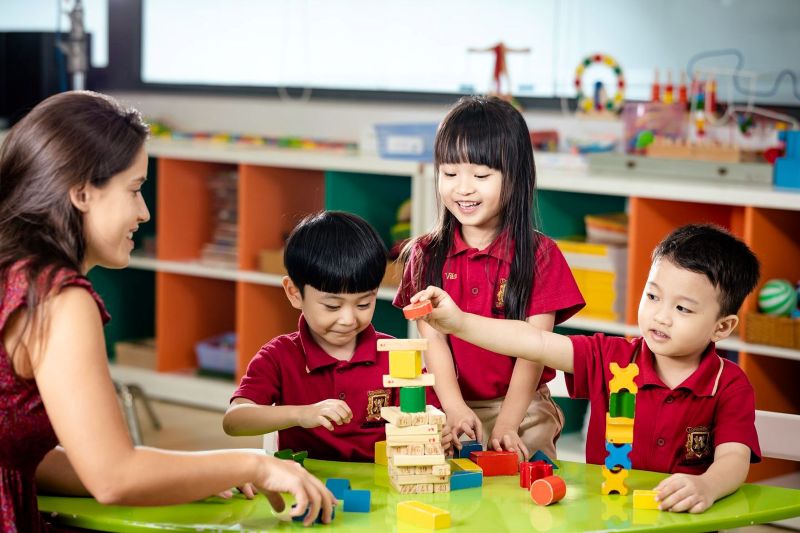
Using mathematical toy sets to make math more engaging
These simple methods can help children become more familiar with basic first-grade math. Parents can also combine math learning with daily activities. For example, while shopping or going to the market, parents can ask questions such as:
- “Can you help me put 3 tomatoes into the basket?”
- “If I buy 4 cucumbers and 5 tomatoes, how many vegetables will we have?”
Practical activities like these can help children feel more interested and remember lessons more easily than passive learning alone.
2.6 Parents Should Be Patient and Avoid Forcing Children to Study
During the transition from preschool to primary school, forcing children to study too much or using punishment may create negative feelings toward learning.
Children may become stressed, lose interest in studying, or have difficulty concentrating. Therefore, parents should patiently support children and create a comfortable learning environment during this stage.
2.7 Concentration Skills
At preschool age, children often act more freely based on emotions, while primary school requires more discipline and routines.
After children understand how to complete an assignment, parents can allow them to work independently for a period of time before checking the results later. A quiet personal space may help children focus better and complete assignments more effectively.
2.8 Understanding Time
Parents should help children understand basic time concepts such as yesterday, today, tomorrow, last week, and next week. At the same time, children should also learn how to read clocks and identify different times of the day.
These skills can help children become more familiar with school schedules and daily routines. Knowing how to tell time may also help children become more aware of when they need to complete certain activities.
2.9 Questioning Skills
Children are naturally curious and enjoy exploring the world around them, but they may not always know how to express their questions clearly.
Therefore, parents should guide children to ask simple questions such as “why,” “when,” or “how” so they can better communicate what they want to know.
Parents should also encourage children to ask questions regularly or ask questions back to children to encourage curiosity and thinking. This can help children become more confident when expressing opinions or speaking in class later.
2.10 Guide Children in Using Computers
With current educational changes, primary school students are introduced to ICT (Information and Communication Technology) skills at an early stage. Therefore, parents can gradually help children become familiar with basic computer use before first grade.
For example, parents can guide children in using a mouse through simple games or teach them how to turn computers on and off. Children usually learn these skills quickly and may feel more comfortable when using computers at school later.
2.11. Sharing Skills
Some children may become used to being cared for closely at home and may not learn how to share with others. When entering a school environment, this can sometimes create difficulties in social interactions with teachers and classmates.
Therefore, parents should teach children how to share and care about people around them so children can better understand fairness and develop positive social behavior.
Parents can also encourage children to participate in charity activities or donation programs and explain why sharing with others is important.
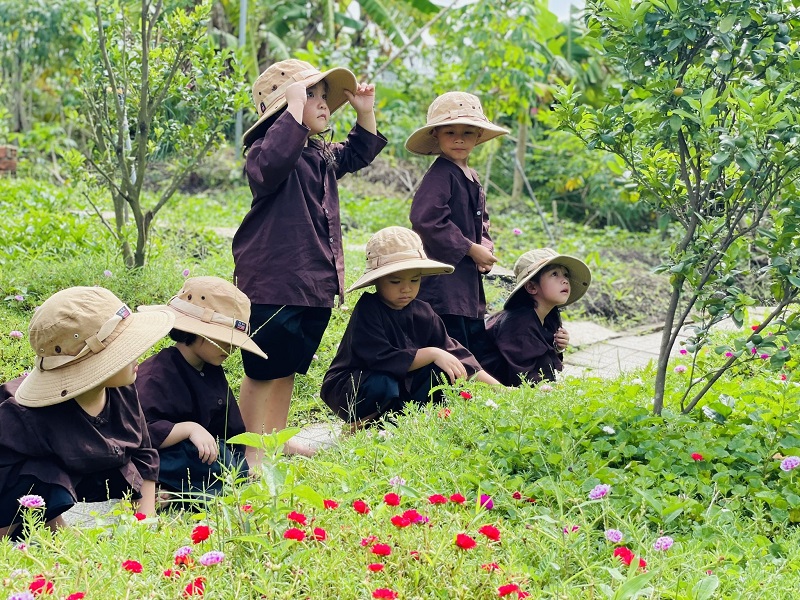
Encourage children to participate in volunteer activities
2.12. Help Children Learn Children’s Songs
Children’s songs with simple melodies and lyrics are often attractive to young children. Therefore, parents can let children listen to or sing children’s songs regularly.
This may help children improve language skills and feel more confident when participating in music activities at school later.
2.13. Learn Self-Care Skills
At preschool age, children are often supported closely by teachers and caregivers. However, when entering primary school, children need to become more independent in daily activities.
Parents should teach children skills such as dressing themselves, preparing shoes, or tying shoelaces. These habits can help children gradually become more independent before starting first grade.
2.14. Responsibility Skills
Parents can help children build responsibility by creating simple daily habits such as setting study times, completing assignments before bedtime, or joining meals on time without reminders.
These small habits can help children become more responsible for their own tasks and activities.
2.15. Understanding the Surrounding World
Helping children recognize animals, plants, objects, school supplies, and daily activities may improve their understanding of the world around them.
These experiences can also support learning later because children may remember information more easily when they encounter familiar things in books or classroom lessons.
Parents can create more opportunities for children to explore by taking them to places such as parks, zoos, supermarkets, or family trips.
2.16. Communication Skills
Parents should encourage children to express their feelings and opinions, especially when they need help from adults.
Simple conversations, role-playing activities, or open-ended questions at home can help children practice introducing themselves and communicating with others more naturally.
These activities may help children feel more confident when talking with teachers and classmates after entering first grade.
>>> Read more: 7 effective ways to develop communication skills in children
2.17. Teamwork Skills
In primary school, children will participate in more group activities and assignments with classmates. Therefore, teamwork skills are important before entering first grade.
Parents can create simple activities at home where children work together with family members to complete a task. During these activities, parents should observe children’s emotions and guide them in expressing feelings, listening to others, and controlling negative reactions when disagreements happen.
Developing teamwork skills early may help children adapt more easily to modern learning environments where group activities are common.
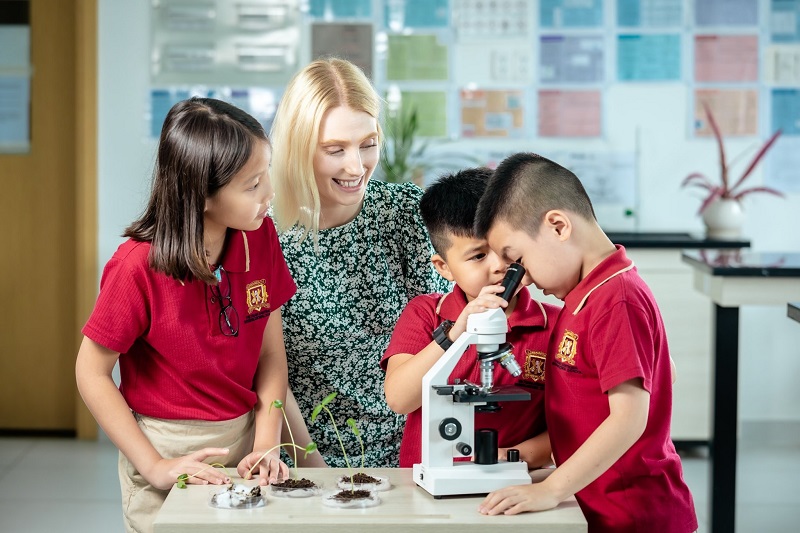
Encourage children to participate in group games to work together in teams
2.18. Become Your Child’s Friend
In any environment, children need people they can trust and share their feelings with. Parents should pay attention to their children’s friendships and daily experiences at school.
Talking with children about classmates or school activities can help children feel closer to their parents and become more willing to share their thoughts or difficulties.
This may also help parents understand their children better and support them more effectively when problems occur.
2.19. Encourage Creativity
Children often have strong imagination and creativity. Therefore, parents should pay attention to what children enjoy and create opportunities for them to develop those interests.
For example, if children enjoy listening to stories, parents can encourage them to create their own stories based on imagination.
For children who show interest in activities such as drawing, singing, or dancing, parents may also consider extracurricular classes to help children continue developing those skills.
2.20. Encourage Daily Physical Activity
Compared to preschool, primary school schedules are often longer and require children to maintain concentration for extended periods. Therefore, physical health is important before entering first grade.
Parents can help children build exercise habits through activities such as morning exercise, cycling, or outdoor games. These activities may support both physical health and family bonding.
2.21. Identify Foods That Are Good and Unhealthy for the Body
When children begin primary school, they have more opportunities to buy snacks or food during breaks without close supervision from parents or teachers. Therefore, helping children understand which foods are healthy and which are not is very important.
Parents can guide children while preparing meals at home by explaining which foods are good for health and which foods should be limited.
Parents may also use pictures or simple examples to explain the effects of eating too much candy or sweet food so children can gradually build healthier eating habits.
2.22. Spend Time with Children on Their First Day of School
The first day of school is often an important memory for children. Therefore, parents should try to spend time attending the opening ceremony or accompanying children to school on the first day.
Having parents nearby may help children feel more comfortable and less nervous when entering a new school environment.
2.23. Give Children a Small Gift Encourage the child's spirit
To encourage children during this important stage, parents can prepare a small gift after the first day of school.
The gift does not need to be expensive. It can simply be:
- Candy or snacks children enjoy.
- A small stuffed toy.
- Stickers for school bags.
- A family meal with favorite foods.
These small activities may help children feel more encouraged and excited about going to school.
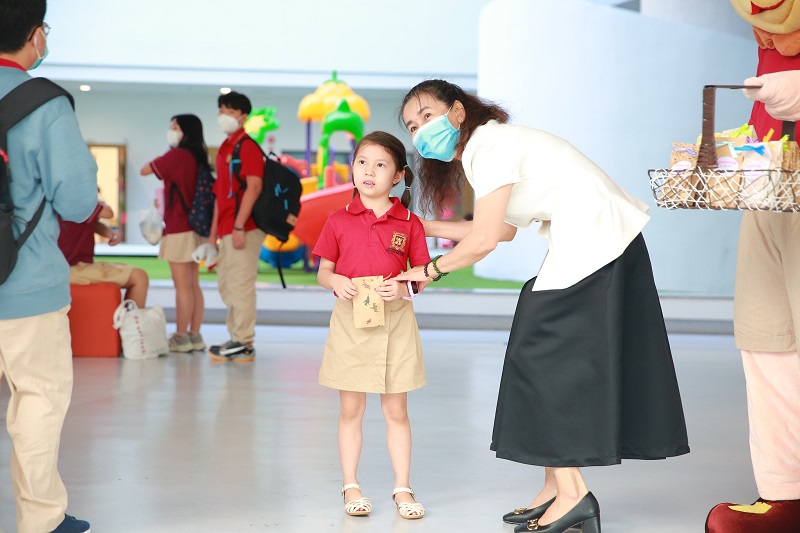
Give a small gift on the first day of school to encourage the child's spirit
3. What Is the Primary School Environment Like at Vietnam Australia International School (VAS)?
Understanding the anxiety parents face during school transitions, VAS frequently hosts specialized seminars titled "Confidently Preparing Your Child for First Grade with VAS." These sessions empower parents with the essential knowledge needed to support their children during this pivotal stage.
Preparing children with confidence for grade 1 together with VAS
As a Cambridge-standard international school catering to students from Preschool to High School, VAS brings over 16 years of experience in nurturing elite generations. Our success is built on four key pillars:
3.1 Cambridge International Academic Programs
VAS provides three learning pathways that combine the Vietnamese national curriculum with Cambridge programs.
- CEP Pathway: Combines the national curriculum with the Cambridge English Program to help students improve English skills.
- CAP Pathway: Combines the national curriculum with the Cambridge Academic Program.
- CAPI Pathway: Students study subjects mainly in English while following Cambridge academic content together with selected subjects from the Vietnamese national curriculum.
After graduation, students receive corresponding international certificates and qualifications from these programs.
>>> Discover more: A guide to the Cambridge program and key considerations
3.2 Modern & Green Facilities
VAS has campuses in several districts in Ho Chi Minh City such as District 10, District 7, and Phu Nhuan District.
The school system includes facilities such as:
- High-speed internet for teaching and learning activities.
- Classrooms with projectors, screens, and computers.
- Indoor sports areas.
- Swimming pools and sports fields.
- Music rooms, art rooms, libraries, and laboratories.
VAS is also a member of the Cambridge school system and regularly participates in evaluations from Cambridge Assessment International Education (CAIE).
3.3 Teaching Staff
VAS has both Vietnamese and international teachers from countries such as the United Kingdom, the United States, France, Australia, Canada, and New Zealand.
Teachers are selected based on qualifications, teaching experience, communication skills, and classroom management abilities. Teachers also participate in training programs and professional development activities organized by Cambridge Assessment International Education (CAIE).
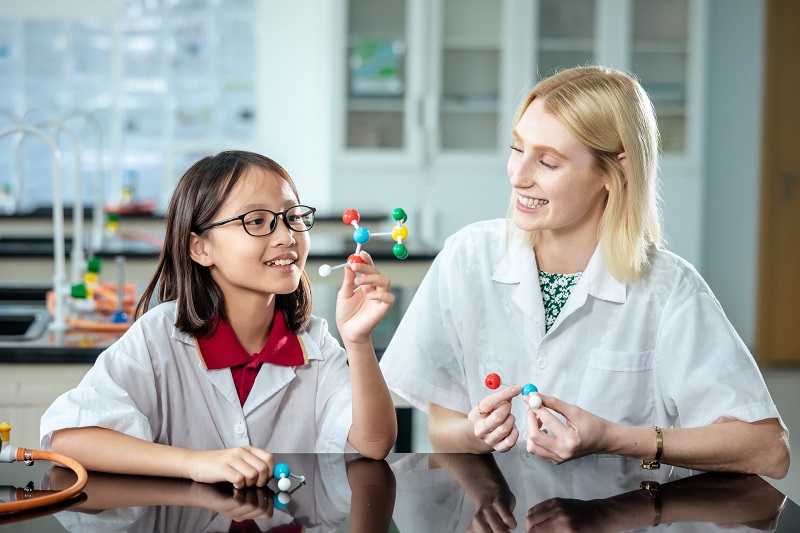
The teaching staff at VAS is experienced, enthusiastic, and passionate about their profession
3.4 Extracurricular Activities
Besides academic programs, VAS also organizes extracurricular activities to support students’ learning and daily experiences.
These activities include:
- Field trips and cultural activities.
- Talent programs such as VAS’s Got Talent, VAS Olympics, and English speaking competitions.
- Community and environmental activities such as tree planting, recycling activities, and volunteer programs.
- These activities help students participate in more social and practical experiences outside the classroom.
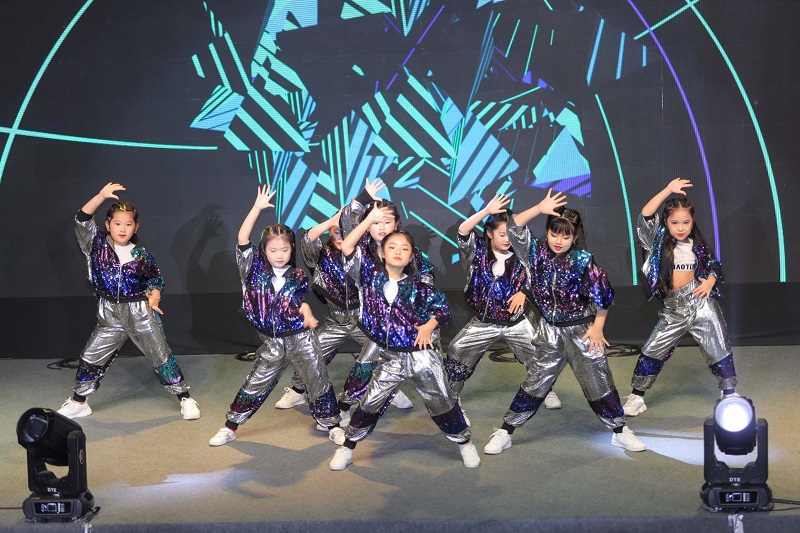
VAS students have many opportunities to participate in student events and competitions organized by the school
>>> Read more: Detailed updates on the VAS international school tuition fee schedule
Preparing children for first grade requires time, patience, and support from parents. Early preparation may help children become more familiar with the primary school environment and daily routines.
Parents who would like to learn more about the primary school program at Vietnam Australia International School (VAS) can contact the school directly or visit the VAS website for more information.
>>> Read more: A complete list of 16 essential life skills for children that parents should know