


10+ Benefits of Teaching Children English Early
- Why should children learn English?
-
Benefits of teaching children English early
- 2.1 Helping children acquire English naturally
- 2.2 Helping children develop listening and pronunciation from an early age
- 2.3 Supporting cognitive development and flexible thinking
- 2.4 Helping children become more confident in communication
- 2.5 Giving children more time to build their English skills
- 2.6 Broadening children’s understanding of world cultures
- 2.7 Expanding future study and career opportunities
- 2.8 Supporting analytical and critical-thinking skills
- 2.9 Supporting learning in other academic subjects
- 2.10 Supporting awareness of the mother tongue
- Developing English skills for preschool children through the EYFS-based programme at VAS
- Conclusion
As globalisation continues to connect people across countries and cultures, being able to use more than one language-especially English-can provide advantages in communication, education, and future career opportunities.
For this reason, many parents are interested in introducing English to their children from an early age. The ages of 3 to 5 are often described as a favourable period for early language exposure, although children can begin becoming familiar with English in age-appropriate ways at different stages of development.
Early exposure can help children become more familiar with the sounds and patterns of English without relying entirely on formal study. This article explores the key benefits of learning English early and how early language exposure may support children’s development.

Discover the benefits of learning English early for children
1. Why should children learn English?
1.1. English is widely used around the world
English is one of the most widely used languages in the world. Although it ranks behind Chinese in terms of the total number of speakers, English is used across a large number of countries and international contexts. The source states that around 60 out of 196 countries recognise English as an official language. It also cites approximately 1.5 billion people who speak or use English worldwide, with around 1 billion more people learning the language.
English is also widely used in international diplomacy and by organisations such as the United Nations, the European Union, the European Free Trade Association, and NATO. Its widespread international use gives children more opportunities to use English for communication, education, travel, and access to information in the future.
1.2. English supports cultural exchange and access to global knowledge
In countries where English is not an official language, it is often used as a lingua franca - a common language that allows people from different linguistic and cultural backgrounds to communicate.
A strong foundation in English can therefore help children communicate with people from different countries. In the future, whether they travel, study abroad, or work internationally, English can support communication, cultural exchange, and a better understanding of local communities.
English can also give children access to a wide range of global information and knowledge. Many software programs, social media platforms, online resources, and digital services use English, and the source notes that more than 1 billion websites worldwide contain English-language content. For this reason, English can serve as a bridge to international knowledge and help children explore information from a wider range of sources.

English is a tool for cultural exchange and access to global knowledge
1.3. English can expand access to international universities
English is widely used in higher education, particularly at universities in English-speaking countries. Many universities require international applicants to demonstrate a certain level of English proficiency, and qualifications such as IELTS may form part of their admission requirements.
Strong English skills can therefore support students who plan to apply to universities abroad. English-language qualifications may also be useful when students compete for scholarships that require evidence of language proficiency.
For parents considering international higher education for their children, developing English systematically from an early stage can provide useful preparation for future study-abroad plans.
1.4. English can support future career opportunities
English is used in many workplaces that cooperate with international partners, clients, or organisations. In some industries and positions, English proficiency may be an important recruitment requirement rather than simply an additional advantage.
A strong foundation in English may support future career opportunities, particularly in roles that involve international communication. English skills may also broaden children’s future career options and support professional development in positions where the language is regularly used.
1.5. English can support participation in international events
As international events and cultural exchanges become more common, English is often used as a shared language among participants from different countries. Developing English skills can help children feel more comfortable participating in international activities and communicating with people from different backgrounds.
These experiences may also give children more opportunities to learn about other cultures, build communication skills, and explore interests that could support their personal development in the future.
>>> Read more: At what age should children start learning english? what parents need to know
2. Benefits of teaching children English early
Early exposure to English may support children’s language development, cognitive development, communication abilities, and broader learning experiences. The following sections highlight some of the key benefits discussed in the source.
2.1. Helping children acquire English naturally
At a young age, children can become familiar with a foreign language through listening, imitation, and repeated exposure. They may first learn by listening, then practise speaking by repeating words and phrases before gradually developing reading and writing skills.
Through regular exposure, children can begin to notice patterns in the language and become familiar with how it is used. This can make the learning process feel more natural than relying mainly on formal study.
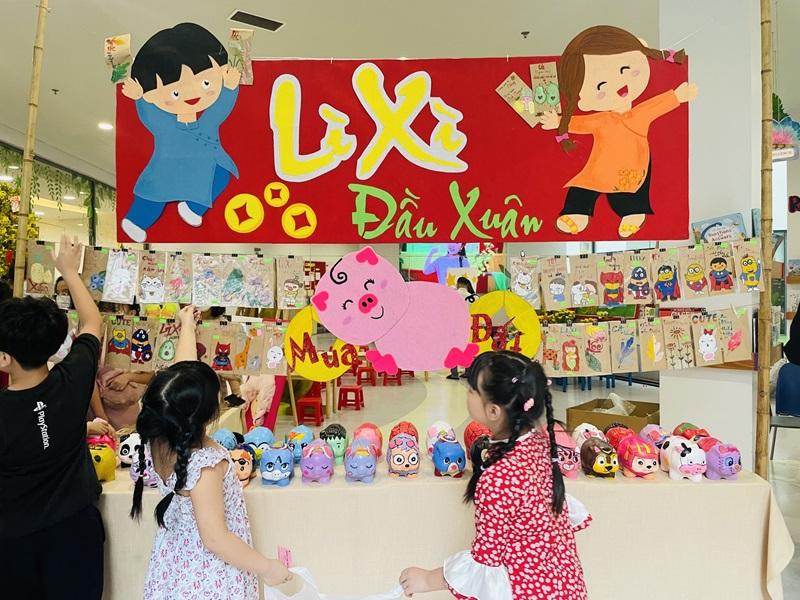
Learning English early helps children acquire the language naturally
2.2. Helping children develop listening and pronunciation from an early age
Young children can be highly responsive to the sounds, rhythm, and intonation of language. Through repeated listening and imitation, they can gradually become more familiar with English pronunciation and become more comfortable understanding and responding to spoken English.
For example, children may remember and reproduce parts of a song after hearing it several times, even before they can read the lyrics.
With appropriate and consistent guidance, early exposure can give children more opportunities to practise listening, pronunciation, and intonation from the beginning.
2.3. Supporting cognitive development and flexible thinking
Learning and using more than one language may support cognitive flexibility because children need to recognise, process, and switch between different language systems.
The source refers to research associated with Dr Viatcheslav Wlassoff and Dr Ellen Bialystok, suggesting that using two languages may exercise cognitive processes involved in switching, reasoning, and problem-solving.
Based on these findings, early English learning may support not only communication but also aspects of children’s thinking and cognitive development.

Learning English early supports children’s cognitive development
2.4. Helping children become more confident in communication
Early English learning can give children more opportunities to become familiar with the language in a relaxed and engaging environment.
For young children, activities that combine learning and play can make English feel more enjoyable and less intimidating. As they gain more experience using the language, children may become more comfortable communicating in English and expressing their thoughts and ideas.
2.5. Giving children more time to build their English skills
Starting English earlier gives children more time to become familiar with and practise the language over the course of their education.
For example, children who begin in kindergarten and continue learning English through Grade 12 have many years of exposure and practice. Children who start later naturally have a shorter period in which to develop the same language skills.
As students move into higher grades, they also need to divide their time among subjects such as Mathematics, Physics, and Chemistry. Beginning earlier may therefore give children more opportunities to build a foundation in English before their academic workload becomes heavier.
2.6. Broadening children’s understanding of world cultures
Learning a foreign language involves more than developing listening, speaking, reading, and writing skills. It can also introduce children to the people, cultures, and everyday life associated with that language.
Because English is widely used internationally, children learning English can access books, films, music, games, learning materials, and other sources of information from different countries. Exposure to these materials can help children discover new cultural perspectives and gradually broaden their understanding of the world.
2.7. Expanding future study and career opportunities
English is widely used in areas such as business, science, technology, and tourism. Developing strong English skills from an early age may therefore give children more options when they study, work, or communicate internationally in the future.
English proficiency can support access to specialised materials and reports, communication in international environments, and career opportunities in organisations where English is regularly used. Over time, these skills may broaden children’s future education and career choices.
2.8. Supporting analytical and critical-thinking skills
Using two languages requires children to recognise different vocabulary, structures, and ways of expressing ideas. Moving between languages can give them opportunities to compare information and practise flexible thinking.
English can also expose children to information from a wider range of sources. When listening, speaking, reading, and expressing ideas in another language, children need to interpret meaning and organise information clearly. These experiences may gradually support analytical and critical-thinking skills.
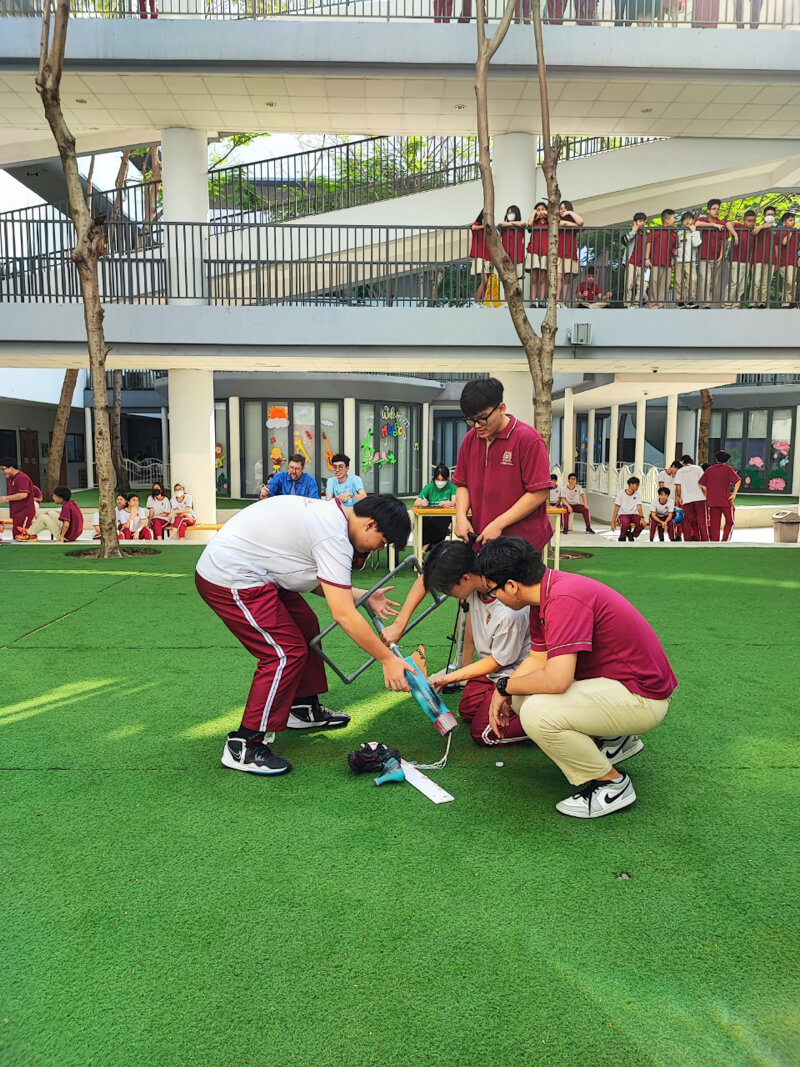
One of the benefits of learning English early is that it helps enhance children’s analytical and thinking skills
2.9. Supporting learning in other academic subjects
Some parents worry that learning a foreign language early may take time away from other school subjects. However, the source refers to research suggesting that foreign-language learning may also support skills involved in academic learning, including analysis and logical reasoning.
The source cites the University of Maine and a 2007 College Board report, noting that students with longer periods of foreign-language study showed stronger results in areas including Mathematics, Science, and essay writing.
These findings suggest a possible association between foreign-language learning and academic skills, rather than proving that learning English alone directly leads to better grades.
2.10. Supporting awareness of the mother tongue
Learning two languages does not necessarily mean that children will become confused or lose their ability to use their mother tongue effectively. The source refers to research from the University of Texas, suggesting that bilingual learning does not automatically disrupt children’s communication.
When children learn a foreign language, they encounter different grammar structures and ways of expressing ideas. This can give them opportunities to compare English with Vietnamese and become more aware of how both languages work. Through this comparison, children may gradually develop greater awareness of vocabulary, sentence structure, and expression in their mother tongue.
3. Developing English skills for preschool children through the EYFS-based programme at VAS
VAS believes that introducing English during the early years can help children build a foundation for future learning and development. From kindergarten, VAS supports children’s language awareness and English skills through the following programme features:
- An international bilingual programme based on the UK Early Years Foundation Stage (EYFS) framework: The programme combines age-appropriate learning experiences with opportunities for children to become familiar with English from an early stage.
- Visual and interactive learning experiences: Learning is supported by facilities such as cinema rooms and labs, as well as online learning programmes. Outdoor learning projects also give children opportunities to explore and develop greater interest in learning.
- Regular exposure to academic English: According to the source, preschool children receive around 10–20 English lessons per week with international teachers, giving them regular opportunities to practise expressing themselves and sharing ideas in English.
- Play-based learning: VAS incorporates play-based learning to help children become familiar with English through enjoyable and age-appropriate activities while gradually building their interest in the language.
- Field trips, extracurricular activities, and English practice: These activities provide children with opportunities to use English in different contexts while exploring the world around them.
- Class sizes of around 20–25 students: The source states that this class size gives teachers more opportunities to pay attention to each child’s learning and well-being.

VAS’s play-based learning method helps children become familiar with English naturally
Through these learning experiences, children can have opportunities to develop skills such as:
- Communicating more confidently and interacting with international teachers from an early age.
- Expanding their English vocabulary and developing clearer, more natural pronunciation.
- Developing confidence and responsiveness when communicating in English.
- Exploring the world through engaging learning activities.
- Developing positive values, emotional awareness, and personal character.
>>> Read more: What do VAS international school tuition fees include?
Through these approaches, VAS aims to provide preschool children with regular opportunities to develop their English skills alongside the National Education Programme, helping them prepare for the Cambridge International Primary Programme. The learning environment also gives children opportunities to build a language foundation and become more confident as they explore the world around them.
VAS English Speaking Contest — an English playground for students at the school
>>> Read more: Top Preschool Education Programs That Help Children Enjoy Going to School
Conclusion
Early English exposure can support children’s communication, language awareness, thinking skills, and long-term learning opportunities when it is introduced in a natural and age-appropriate way. Parents should focus on consistency, enjoyment, and a suitable learning environment rather than placing unnecessary pressure on young children.
Parents interested in the international education programmes at VAS can review the VAS admissions process or contact the school via the hotline at 0911 26 77 55 for further information and guidance.