


At What Age Should Children Start Learning English? What Parents Need to Know
- At what age should children start learning English?
- Benefits of early English learning for children
-
Risks of pressuring children to learn English too early
- 3.1 Psychological pressure when children are not emotionally ready
- 3.2 An imbalanced approach can weaken the mother-tongue foundation
- 3.3 Inappropriate methods can cause fear and loss of interest
- 3.4 Poor learning methods can reinforce incorrect pronunciation and language habits
- 3.5 Ways to help children learn English naturally and effectively at home
- 3.6 Create a fun English-learning environment
- 3.7 Teach English through familiar topics
- 3.8 Integrate English into daily routines
- 3.9 Accompany your child throughout the learning journey
- 3.10 Set small tasks and rewards to maintain motivation
- How VAS supports children in learning English from an early age
-
Frequently asked questions
- 5.1 Should children learn English if their Vietnamese pronunciation is not yet clear?
- 5.2 How can parents develop their child’s listening and speaking skills?
- 5.3 How can parents help their child learn English grammar?
- 5.4 Is it necessary to hire an English tutor for children under six?
- 5.5 How can parents support children who struggle to remember vocabulary?
- 5.6 Which foreign-language learning methods are suitable for children?
- 5.7 What should parents do if their child loses interest in learning English?
- Conclusion
In today’s globalized world, English can help children expand their knowledge and access more opportunities in the future. However, many parents still wonder: At what age should children start learning English for the best results?
Choosing an appropriate time can help children absorb the language naturally without feeling pressured. This article explores the characteristics of each developmental stage, the benefits of early English exposure, and important considerations for parents when supporting their children’s learning.
1. At what age should children start learning English?
Children’s language-learning abilities develop as they grow. Therefore, parents should consider their child’s age, developmental stage, and readiness when deciding how and when to introduce English. Choosing an appropriate time can help parents avoid pushing children into formal learning too early while also making the most of the “golden period” for language development.

At what age should parents let their children learn English?
1.1. Ages 0–3: early exposure to English
Between the ages of 0 and 3, children can become familiar with English naturally through repeated listening and imitation. They may gradually pick up sounds, intonation, and basic language responses without consciously studying them. However, this is not yet the stage for formal lessons in complex grammar or vocabulary.
Parents can introduce English by:
- Playing nursery rhymes, reading short stories, or showing short animated videos in English.
- Focusing on listening and imitation rather than formal instruction.
- Connecting English with affectionate interactions, such as holding their child while singing, to make the language feel familiar and enjoyable.
1.2. Ages 4–6: often considered a golden period for learning English
When considering the best age for children to start learning English, the period between 4 and 6 years old is often viewed as particularly suitable for more structured learning.
At this stage, children are developing their language awareness, memory and ability to communicate. They can imitate pronunciation with increasing accuracy and gradually learn to use simple vocabulary in everyday communication.
Parents can support children by:
- Introducing English in a more structured but still age-appropriate way.
- Helping them explore familiar topics such as colors, animals, and everyday objects through games, songs, and group activities.
- Encouraging regular listening and speaking practice to build natural language responses and prepare for more academic English learning later on.
1.3. After age 6: more structured learning and logical thinking
Once children enter primary school, they generally have a longer attention span and greater capacity for structured learning and logical thinking. This makes it a suitable stage for more structured English learning, including vocabulary, grammar, reading, and writing.
At this age:
- English learning can gradually expand beyond listening and speaking to include literacy skills and language awareness in both English and the child’s mother tongue.
- Children can join academic English courses, practise completing exercises and writing sentences, and build a broader vocabulary.
- Parents should avoid placing too much emphasis on grades or achievement. Instead, they can encourage children to see English as a tool for learning, communication, and connecting with the wider world.
2. Benefits of early English learning for children
Early exposure to English can expand children’s learning opportunities and support their development across cognitive, emotional, and social areas.
2.1. Developing greater flexibility in language use
Young children can often distinguish and learn new speech sounds through repeated exposure. Early exposure to English can help them develop greater flexibility in language use and move more naturally between their mother tongue and a foreign language.
Early exposure gives children more opportunities to hear and process English alongside their first language, which may reduce barriers when children continue learning languages later on. Therefore, understanding when to introduce English can help parents make better use of this stage of language and brain development.

Learning English early helps children develop thinking, memory, and communication skills
2.2. Enhancing memory and information-processing skills
Research suggests that children who begin learning a foreign language at an early age may develop stronger short-term and long-term memory. Learning English requires them to remember vocabulary, sentence patterns, and how language is used in different contexts.
Through this process, children may also strengthen their ability to process and analyse information, which can support learning in other subjects, including Mathematics and Science.
2.3. Building confidence and international communication skills
English can help children communicate with friends from different countries and become more confident in expressing their thoughts and feelings.
Using a second language from an early age may also help children adapt more easily when participating in international learning activities or summer camps. This growing confidence can provide a useful foundation for developing communication abilities and other soft skills later on.
2.4. Expanding future learning and career opportunities
Foreign-language skills, especially English, can provide children with greater access to knowledge from around the world.
English proficiency can give students access to a wider range of international learning resources and, later, study and career opportunities. A clear education pathway can help families connect early language learning with longer-term academic goals. In this sense, early English learning can be viewed as a long-term investment in a child’s education and future.
2.5. Supporting intellectual and emotional development
Learning a foreign language can support more than children’s academic development. It may also encourage flexible thinking and help them express their emotions more effectively.
When children learn English through songs, games, and group activities, they can absorb the language naturally while practising how to share, cooperate, and communicate their feelings. These experiences can support a more balanced development of cognitive abilities and emotional intelligence.
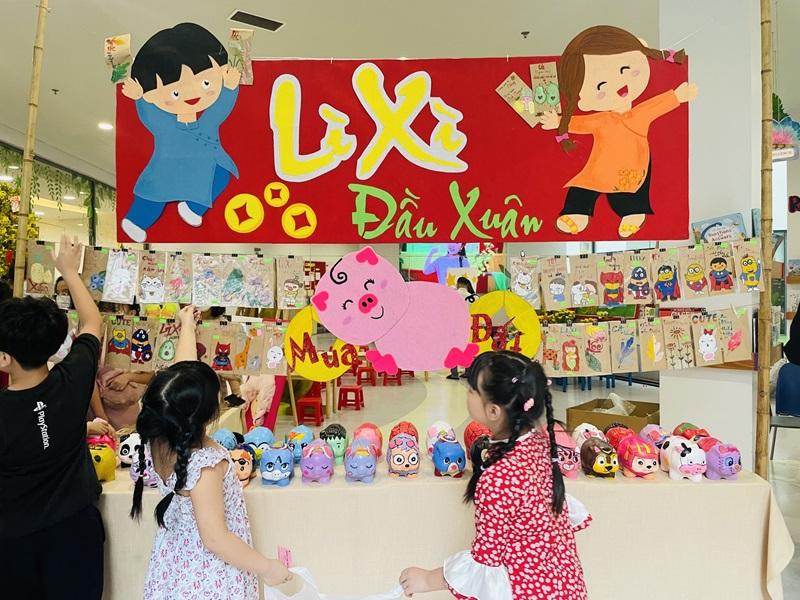
Children develop intellectual and emotional balance when learning English through play and group activities
3. Risks of pressuring children to learn English too early
Although early exposure to English can offer many benefits, it may have the opposite effect if parents become impatient or place excessive pressure on their children.
Introducing English in an overly demanding or inappropriate way can cause stress, reduce children’s interest in learning, and affect their emotional and language development.
3.1. Psychological pressure when children are not emotionally ready
If children are too young or not emotionally ready, a demanding learning schedule may leave them feeling anxious, tired, or afraid of studying. Over time, this pressure can reduce their interest in English and may even cause them to develop a negative attitude towards learning in general.
3.2. An imbalanced approach can weaken the mother-tongue foundation
A child’s mother tongue remains an important foundation for thinking and communication. If parents focus too heavily on English while giving insufficient attention to Vietnamese, children may have fewer opportunities to strengthen their first-language skills.
This imbalance can make it more difficult for them to express their ideas clearly and may affect the development of logical thinking later on.
3.3. Inappropriate methods can cause fear and loss of interest
Some parents enrol their children in exam-oriented classes or use demanding learning materials before the children are developmentally ready.
When the content and pace do not match a child’s abilities, the child may feel overwhelmed, struggle to keep up, and gradually lose interest in English. This common mistake can prevent children from fully benefiting from a favourable stage of language development.

Building a comfortable and fun environment helps children become more interested in learning English
3.4. Poor learning methods can reinforce incorrect pronunciation and language habits
If children mainly learn from unsupervised videos or from teachers without appropriate qualifications, they may imitate inaccurate pronunciation or unnatural intonation. When repeated over time, these errors can become habits that are difficult to correct and may affect children’s progress at more advanced stages of English learning.
4. Ways to help children learn English naturally and effectively at home
Parents do not need to wait until their children attend an international school or begin lessons with a private tutor to create a friendly and natural English-learning environment at home. Once parents understand when to introduce English, the next step is to choose age-appropriate methods that allow children to learn through play, avoid unnecessary pressure, and absorb the language effectively.
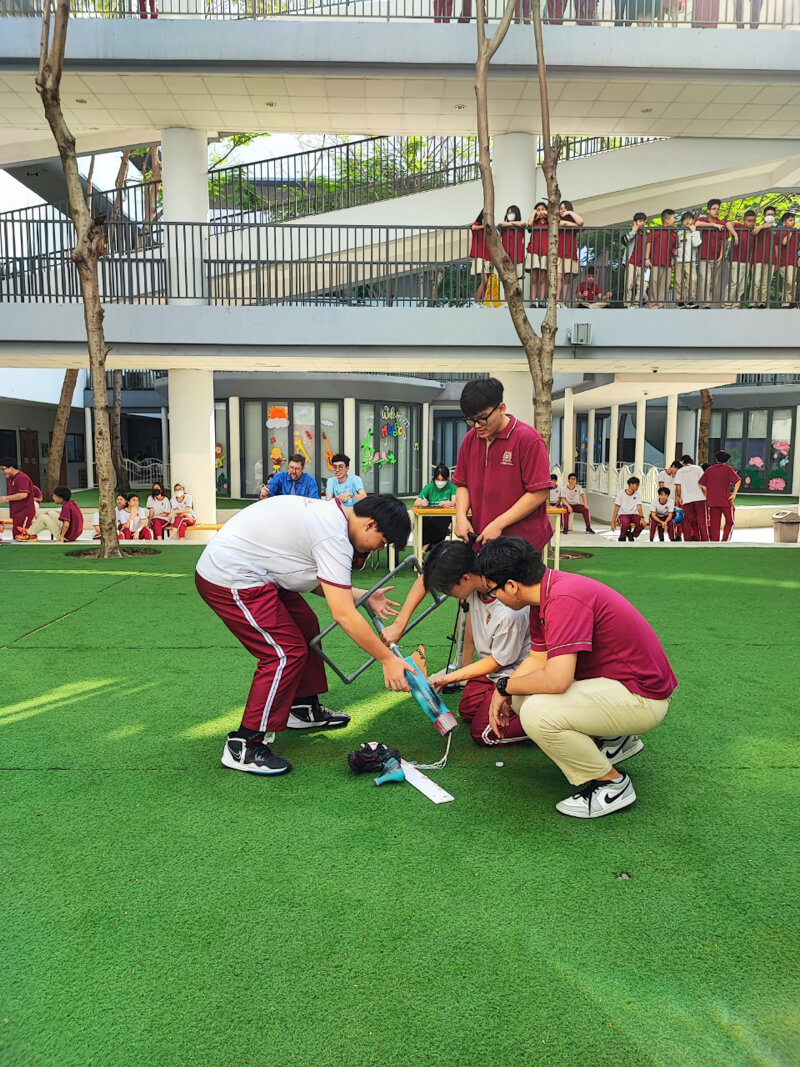
Parents can accompany their children and turn English into a daily habit
4.1. Create a fun English-learning environment
Young children learn best through play and exploration. Parents can make English part of playtime through flashcards, songs, role-playing activities, or interactive learning apps. When children experience English as an enjoyable activity rather than a formal lesson, they are more likely to participate actively and maintain their interest over time.
4.2. Teach English through familiar topics
Instead of teaching individual words in isolation, parents can organise vocabulary into familiar topics such as colours, family, animals, and food. Learning vocabulary by topic helps children connect information, remember words for longer, and apply them in everyday situations. For example, when learning about family, children can learn words such as “mother,” “father,” and “sister,” and then use them in daily conversations.
4.3. Integrate English into daily routines
One effective approach is to include English in children’s everyday routines. Parents can use simple English phrases during meals, cleaning, or family outings. For example, alongside saying “Con ăn cơm đi,” parents can add, “Let’s eat!” Short phrases that are repeated regularly can help children remember English naturally without having to memorise it mechanically.
4.4. Accompany your child throughout the learning journey
Parents should not rely entirely on teachers or learning apps. Instead, they can actively support their children by learning, playing, and offering encouragement. When children feel supported, they may become more confident and engaged in learning. This involvement can also strengthen the relationship between parents and children.
4.5. Set small tasks and rewards to maintain motivation
To maintain children’s interest, parents can set simple and achievable tasks, such as learning five new words a day, listening to an English song, or sharing what they remember after listening.
After completing a task, children can receive a small reward, such as a sticker, outdoor playtime, or a favourite item. This approach can help children develop discipline, experience a sense of achievement, and maintain their motivation over time.
5. How VAS supports children in learning English from an early age
Not all parents have the time or specialist knowledge needed to support their children throughout the English-learning process. For families considering when their children should begin learning English, an educational environment such as Vietnam Australia International School (VAS) may be worth exploring. VAS provides a structured and age-appropriate English-learning pathway designed to support children at different stages of development.

VAS teachers personalize the English learning pathway for each student
5.1. Children are introduced to English from 18 months of age
From the nursery level, children at VAS are introduced to English through everyday activities such as music, movement, and storytelling. This approach allows children to become familiar with the language, gradually build natural listening and speaking responses, and learn without feeling forced or pressured.
5.2. The Cambridge and Vietnamese programmes are integrated from an early age
VAS delivers the Cambridge International Programme alongside the Vietnamese National Education Programme. This allows students to build a foundation in the national curriculum while developing their English skills within an international learning framework.
From the kindergarten level, students are introduced to international learning materials and have opportunities to practise listening and speaking with accurate pronunciation and intonation.
5.3. Learning pathways are adjusted according to age and individual ability
VAS regularly assesses students’ English proficiency and adjusts teaching methods according to their age, learning progress, and individual ability. As students progress into Primary School, internationally recognised Cambridge English certificates also provide clear milestones for evaluating listening, speaking, reading, and writing development.
This personalized approach helps students learn at an appropriate pace, reducing the risk of feeling left behind or overwhelmed during the learning process.
>>> Read more: Detailed updates on the VAS international school tuition fee schedule
6. Frequently asked questions
6.1. Should children learn English if their Vietnamese pronunciation is not yet clear?
Children can still have moderate exposure to English. However, parents should prioritise helping them build a strong foundation in Vietnamese while introducing English gradually through simple activities such as listening to songs and singing along.
A balanced approach can help children become familiar with English without creating unnecessary confusion or pressure.
6.2. How can parents develop their child’s listening and speaking skills?
Parents can play English songs, show age-appropriate bilingual cartoons, use interactive games, and encourage children to imitate short phrases. Regular listening combined with brief but consistent speaking practice can help children gradually develop more natural responses in English.
6.3. How can parents help their child learn English grammar?
Young children do not need to begin with complex or abstract grammar rules. Instead, parents can introduce grammar through simple sentence patterns and everyday situations. As children gain more exposure to English, they can gradually recognise how common grammatical structures are used.
6.4. Is it necessary to hire an English tutor for children under six?
In most cases, formal tutoring is not necessary for children under six. At this age, children generally learn more naturally through play, interaction, songs, stories, and everyday communication rather than through intensive textbook-based lessons.
When additional support is needed, parents can consider enjoyable extracurricular classes that focus on communication and age-appropriate activities.
6.5. How can parents support children who struggle to remember vocabulary?
Parents can turn vocabulary practice into a game by combining words with images, sounds, movement, and real objects. For example, they can attach English labels to familiar objects around the home or play a “find the object” game in English. These activities can help children connect new words with practical contexts.
6.6. Which foreign-language learning methods are suitable for children?
Experiential and interactive approaches, often described as learning by doing, are particularly suitable for young children. Children may absorb language more naturally when English is connected to real-life activities, play, movement, and communication rather than memorisation alone.
6.7. What should parents do if their child loses interest in learning English?
Parents should first identify the possible reason. The lessons may be too difficult, the learning environment may not suit the child, or the child may be feeling pressured. They can then slow down the learning pace, introduce more games, or change the activity format to help rebuild the child’s interest.
Conclusion
This article has provided parents with a clearer answer to the question: At what age should children start learning English? Early English exposure can offer several benefits, including supporting children’s thinking, memory, communication skills, and future learning and career opportunities. However, parents should choose an age-appropriate method and learning environment to avoid unnecessary pressure or approaches that may cause children to lose interest.
English should become a natural part of a child’s development rather than a burden. With appropriate guidance and support, children can gradually build a strong language foundation and become more confident in international learning environments.
Parents interested in the international education programmes at VAS can contact the school via the hotline at 0911 26 77 55 or visit www.vas.edu.vn for further information and guidance.
>>>> Read more:
How parents can choose the right international programme for their child
Top preschool education programs that help children enjoy going to school