


Top 20 Essential Life Skill Groups for Preschool Children
- Why is it important to teach life skills to preschool children?
-
Top 20 essential life skills for preschool children
- 2.1 Eating independently
- 2.2 Self-care skills
- 2.3 Communication skills
- 2.4 Putting toys away neatly
- 2.5 Logical thinking skills
- 2.6 Self-learning skills
- 2.7 Recognising and avoiding danger
- 2.8 Building confidence in front of a crowd
- 2.9 Teamwork skills
- 2.10 Showing love and helping others
- 2.11 Admitting mistakes and being honest
- 2.12 Living close to nature
- 2.13 Dealing with negative peer influence
- 2.14 Asking about grandparents’ well-being
- 2.15 Expressing needs and wishes to adults
- 2.16 Getting along with friends
- 2.17 Managing emotions
- 2.18 Swimming skills
- 2.19 Time Management Skills
- 2.20 Traffic safety when walking
- Life skills for children at different stages
- What life skill sets does VAS equip children with?
Equipping preschool children with life skills is an important part of their development. These skills help children gain more knowledge and experience to handle different situations in their future lives. Understanding this importance, many international schools in Ho Chi Minh City have integrated essential life skills into their teaching programmes.
Below are 20 essential life skill groups for preschool children that parents can refer to. Let’s explore them with VAS.
1. Why is it important to teach life skills to preschool children?
Preschool children are often curious and quick to learn new things. This is a “golden period” for parents to help children practise essential life skills, build character, and form a basic foundation for later life.
In addition, teaching life skills brings many other benefits, such as:
- Helping children adapt more easily to different situations
- Helping children become more independent when parents are not around
- Helping children get along with people around them
- Creating a strong foundation for children’s development
- Making it easier for parents to support and nurture their children
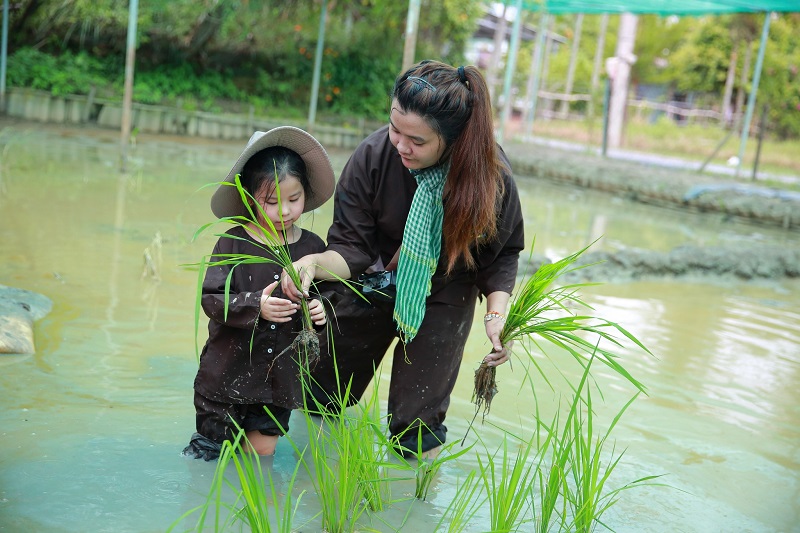
Life skills guidance helps parents support children more effectively
2. Top 20 essential life skills for preschool children
2.1. Eating independently
Health and nutrition experts suggest that preschool children should learn to eat independently from an early age. This helps children form good habits, build independence, and develop healthier behaviours.
In the beginning, practising this skill may be challenging because children may not cooperate. However, once children learn to eat by themselves, daily routines can become easier for parents, especially when children start going to school.
2.2. Self-care skills
In many Western parenting approaches, children are encouraged to build independence from preschool age. This means allowing children to do simple tasks within their ability and only helping them when necessary.
This approach can bring positive results because children have more opportunities to explore and do simple tasks by themselves, such as brushing their teeth, changing clothes, maintaining personal hygiene, and going to bed on their own.
Even when children fall lightly, parents can encourage them to stand up by themselves instead of immediately picking them up and comforting them. This helps children gradually build independence and confidence from an early age. In the long term, children can become more self-reliant and less dependent on others.
2.3. Communication skills
At preschool age, children often learn communication by imitating adults’ words, gestures, and behaviours. Therefore, parents should model polite behaviour and guide children in basic communication skills. These skills include greeting others politely, saying thank you and sorry, learning to give way to younger children, and respecting adults.
Good communication skills help children build a positive attitude toward others as they grow up. Even at a young age, these skills can also help children make a good impression on the people around them.
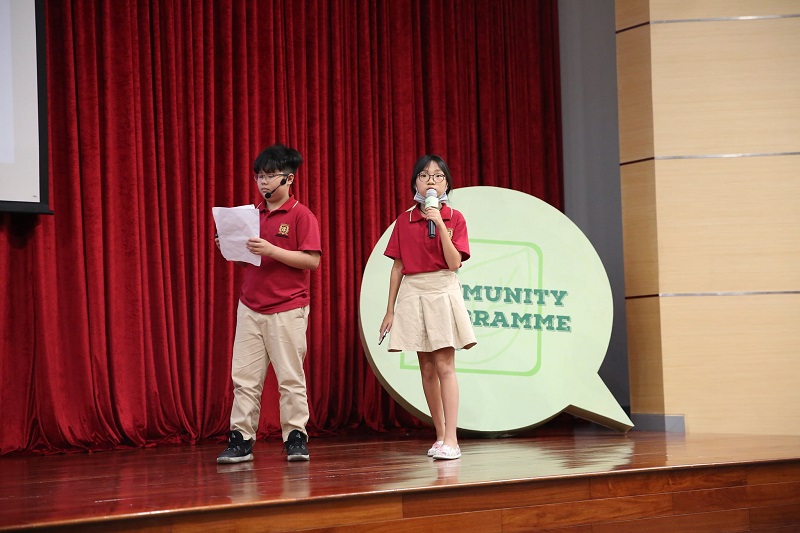
Good communication skills help children confidently express their ideas
>>> Read more: 7 ways to develop communication skills for children
2.4. Putting toys away neatly
At preschool age, children often learn communication by imitating adults’ words, gestures, and behaviours. Therefore, parents should model polite behaviour and guide children in basic communication skills.
These skills include greeting others politely, saying thank you and sorry, learning to give way to younger children, and respecting adults. Good communication skills help children build a positive attitude toward others as they grow up. Even at a young age, these skills can also help children make a good impression on the people around them.
2.5. Logical thinking skills
Children’s curiosity, desire to explore, and habit of asking “why” are important factors that help them gradually develop thinking, analysis, and learning skills.
Parents can support this ability by:
- Reading books to children on different topics
- Joining healthy recreational activities with them
- Watching age-appropriate talent shows or programmes
- Trying to answer children’s “why” questions, or finding the answers together
When parents accompany children in this process, children can feel more excited and interested in exploring the world around them.
2.6. Self-learning skills
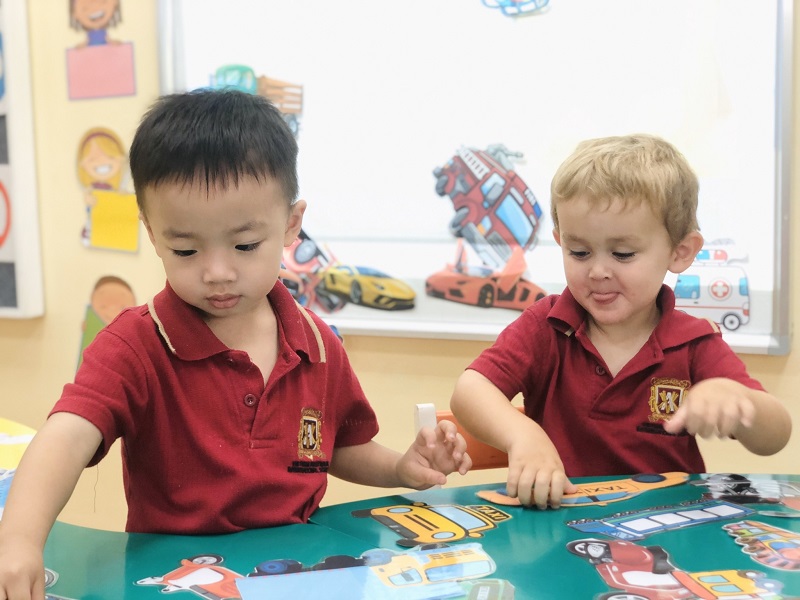
To encourage self-learning in preschool children, many schools today, including Vietnam Australia International School (VAS), equip classrooms with modern learning tools such as projectors, boards, pens, drawing books, and other learning materials.
These tools help stimulate children’s listening, observation, creativity, and interaction. They also encourage children to explore the world around them, focus better during lessons, and gradually develop self-learning skills.
2.7. Recognising and avoiding danger
Because young children may not fully understand dangerous situations around them, parents should help them learn how to recognise and avoid risks both at home and in public places.
For example, parents can:
- Explain why children should not go near electrical outlets, the kitchen, or the balcony without an adult
- Teach children not to follow strangers
- Teach children not to accept things from strangers without family permission
- Remind children not to go anywhere alone
Guiding and explaining each specific situation can help children increase their awareness and reduce potential risks.
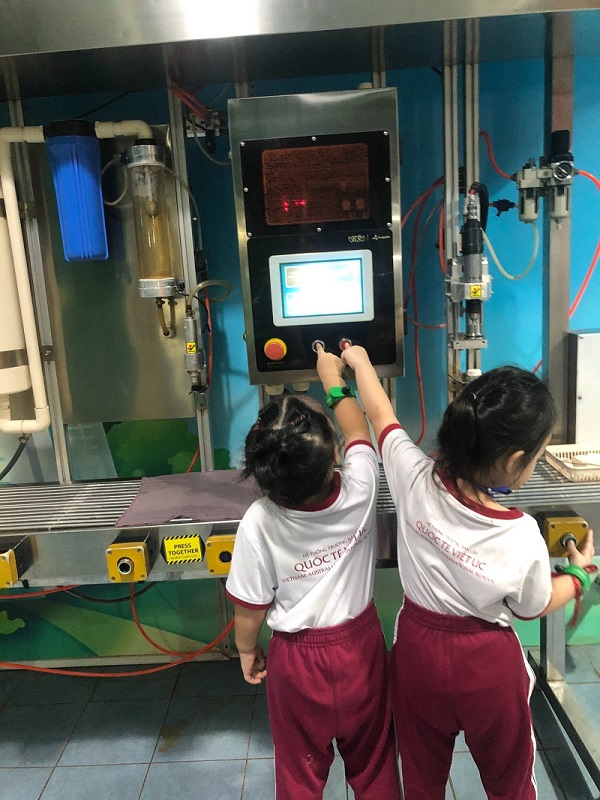
Children can learn to recognise danger through practical lessons
2.8. Building confidence in front of a crowd
Many children are naturally expressive, whether they are alone or in front of others. However, some children may feel shy or timid, especially when many people are around.
Parents can help children build confidence by encouraging them to join English clubs, music classes, dance classes, or talent clubs. These activities can help children become less shy and more confident when expressing themselves.
Building confidence from an early age can also support children in their future learning and development.
2.9. Teamwork skills
Parents should guide children in teamwork from an early age to help them get along with people around them. Through teamwork, children can become more open, discover their strengths, and understand the benefits of working with others to achieve better results in learning and daily life.
At home, parents can play with children or join activities such as cooking, taking care of plants, or bathing pets. These activities help children understand teamwork and the positive results of working together. Teamwork is an essential skill in today’s constantly developing society.
2.10. Showing love and helping others
Compassion and mutual support are important values that families should nurture in children. Parents can teach children to love, care for, and help others through small actions, such as helping elderly people cross the street, joining volunteer activities with family or school, or picking up litter and putting it in the right place.
Every small action can help nurture kindness, compassion, and positive values in children.
2.11. Admitting mistakes and being honest
Young children may start lying because they are afraid of being scolded. If this happens often, it can gradually become a negative habit as children grow up.
When children make mistakes, parents should calmly talk to them, find out the reason, and explain what they should do differently next time. At the same time, parents should teach children to be honest and brave enough to apologise when they do something wrong. This helps children learn responsibility from an early age.
2.12. Living close to nature
Parents can encourage children to plant trees at home or in the garden, or let them play with pets. These activities can help children build a closer connection with nature and develop warm, positive emotions.
Caring for plants and animals also helps children become more aware of environmental protection and learn to share love from an early age.
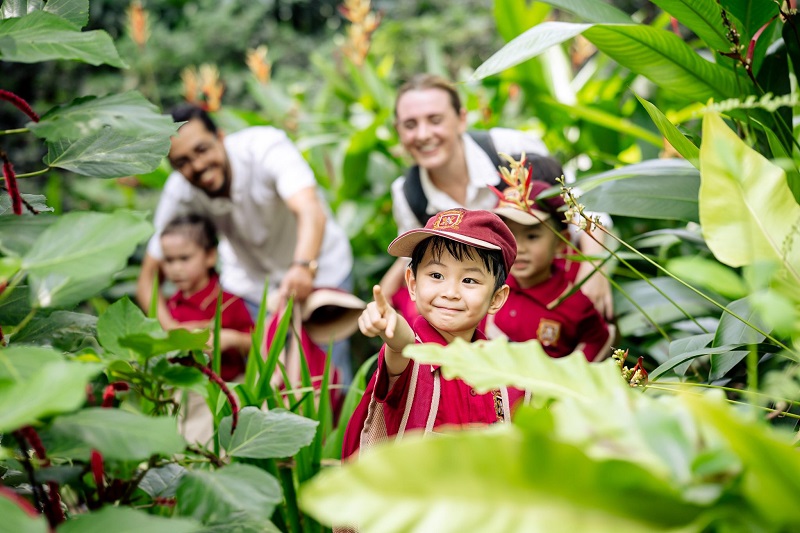
Children can connect with nature through outdoor activities
2.13. Dealing with negative peer influence
Even when parents teach children many good values, children may still meet friends who behave negatively. When children start school, parents should observe their behaviour at home.
If a normally active child becomes quiet and timid, often has nightmares, or wakes up crying, parents should gently ask questions and listen to understand the cause.
If the child is being bullied or negatively affected by peers, parents can guide them to:
- Limit contact with unkind friends
- Tell teachers or parents when they are bullied
- Understand why they should not imitate negative behaviour
- Recognise the harmful effects of such behaviour
2.14. Asking about grandparents’ well-being
In modern life, grandparents may not live with their children and grandchildren as often as before. Many parents live and work in big cities and only occasionally return to their hometowns to visit grandparents and relatives. This can make the bond between children and grandparents less close.
Parents should teach children to ask about their grandparents’ well-being and show respect to older family members. For families living far away, regular video calls or phone calls can help children express family affection. Parents can also tell children stories about their grandparents so that their image stays clear and familiar in children’s minds.
2.15. Expressing needs and wishes to adults
Expressing needs and wishes is an important communication skill that can help children build better relationships in the future. Parents can teach children how to express what they want through polite and clear questions.
Before teaching this skill, parents can model it first. For example, when parents want children to stop playing and have dinner, they can say: “Let’s clean up the toys together, and then we can have dinner.”
When children hear this kind of expression regularly, they can gradually learn how to communicate their own needs in other situations. Encouraging open communication, listening to children, and praising them at the right time can help children become better at expressing themselves as they grow up.
2.16. Getting along with friends
Good communication does not always mean children can easily get along in a new environment. To help children develop social skills, parents should encourage them to play with friends and observe how they interact.
If children behave inappropriately with their friends, parents should spend time talking to them, explaining the situation, and guiding them to communicate and get along better with peers.
For example, children can learn to:
- Keep promises to friends
- Not lie
- Say “thank you” and “sorry” to friends
- Join school activities with friends
- Share toys with others
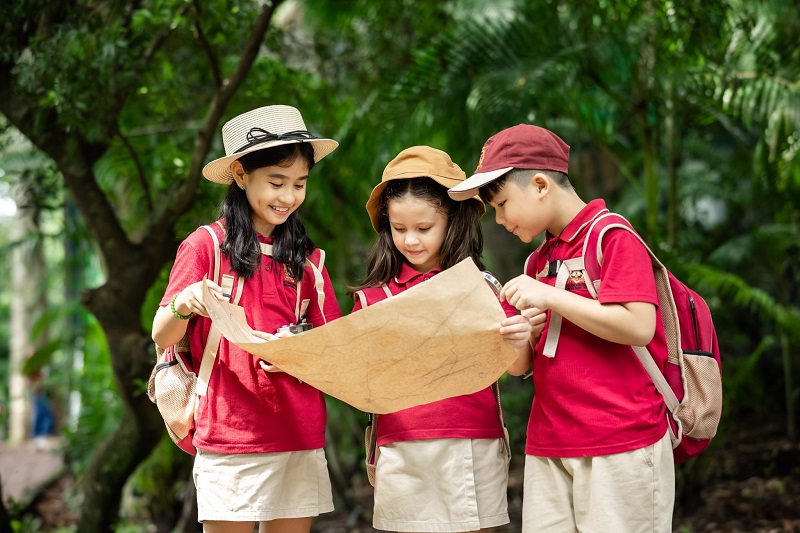
Getting along with friends helps children build positive relationships
2.17. Managing emotions
Managing emotions is an important life skill that parents should teach children from an early age.
Parents can support children by:
- Recognising children’s emotions when they cry or feel upset, then responding appropriately in each situation.
- Gradually guiding children to recognise their own emotions and express them at the right time and in a suitable way.
- Teaching children to listen carefully and pay attention to what others are saying, because good listening can help children handle situations better and avoid becoming easily irritated in communication.
- Showing children the consequences of losing emotional control through real-life situations or stories.
- Modelling calm behaviour in daily life so children can learn from parents’ example.
- Encouraging children to join sports or physical activities to release negative energy.
2.18. Swimming skills
During summer holidays or family trips, many families choose to visit hometowns or travel to places near rivers, lakes, or beaches. As child drowning incidents have increased in recent years, swimming has become an essential life skill for children.
Parents can take children to swimming centres or let them learn at school with teachers. However, parents should make sure children learn basic swimming and water safety skills, such as:
- Warming up before entering the water
- Learning basic swimming techniques
- Knowing how to handle cramps
- Knowing how to respond to whirlpools or strong currents
- Learning basic survival skills when sinking
- Handling other dangerous situations in the water
Parents should also supervise children carefully when taking them to places near water.
2.19. Time Management Skills
Parents should not assume that young children cannot learn time management. They can gradually help children build the habit of being on time by giving them a clock and teaching them how to read it.
At first, children may not fully understand what time means, but they are often interested in colourful and interesting objects. A wristwatch or desk clock can be the first step in introducing children to time management.
Parents can also tell short stories about time. This helps children feel entertained while gradually understanding the value of time. In addition, families can create a simple schedule and place it somewhere easy to see at home. With clear time points and priorities for daily tasks, children can gradually learn how to balance activities and time.
2.20. Traffic safety when walking
Teaching children traffic safety helps reduce risks when they are on the road. Parents should explain why children need to follow traffic rules and guide them on how to walk safely, such as:
- Walk only on the sidewalk
- Cross the street only when the pedestrian light turns green
- Do not read books or look at a phone while walking
- Do not play with friends while walking on the road
- Do not carry bulky or easy-to-drop items, such as balls or objects that are too large for children to hold safely
- Always cross the street with an adult
Teaching children traffic safety skills
3. Life skills for children at different stages
In addition to the basic skills above, families and schools should work together to help children develop age-appropriate life skills at each stage.
3.1. Essential life skills for preschool children
For preschool children, important life skills include:
- Communication skills
- Self-care skills
- Self-protection and danger prevention skills
- Organising belongings neatly
- Perseverance and overcoming simple difficulties
3.2. Essential life skills for primary school students
For primary school students, essential life skills include:
- Self-care skills
- Traffic safety skills
- Household cleaning skills
- Basic first-aid skills
- Reasonable spending skills
- Basic survival skills in the wild
- Swimming skills
3.3. Essential life skills for middle school students
For middle school students, important life skills include:
- Self-care and independence skills
- Goal-setting skills
- Time management and organisation skills
- Emotional management skills
- Self-awareness and self-evaluation skills
- Communication and behaviour skills
- Cooperation and sharing skills
- Public speaking skills
- Problem-solving skills in daily life
- Understanding and evaluating others
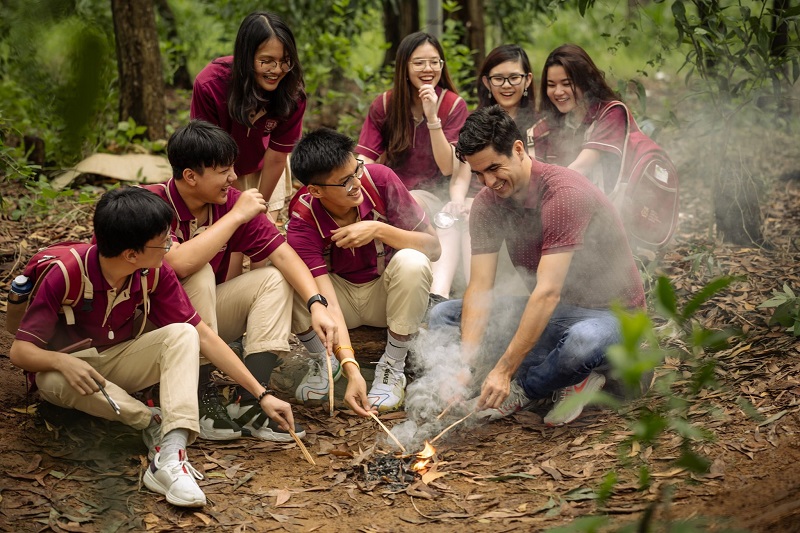
Middle school students learn basic survival skills
3.4. Essential life skills for high school students
For high school students, essential life skills include:
- Listening, observing, and expressing opinions
- Personal and community hygiene skills
- Teamwork skills
- Logical and creative thinking skills
- Behaviour and communication skills
- Emotional management skills
- Awareness of social behaviour
- Confidence in expressing and presenting ideas, as well as speaking in front of a crowd
- Survival skills in different situations
4. What life skill sets does VAS equip children with?
At VAS, the curriculum supports children’s holistic development, both physically and mentally. In addition to classroom learning, children develop life skills through extracurricular activities that are suitable for different age groups. These activities mainly focus on 3 key skill sets.
4.1. Physical development
At VAS, many classroom activities and extracurricular activities are designed to support both character building and physical development.
These activities help children become more flexible, resilient, and ready to overcome difficulties and challenges. A healthy body also helps children develop a more positive mindset and become more confident in taking opportunities in life.
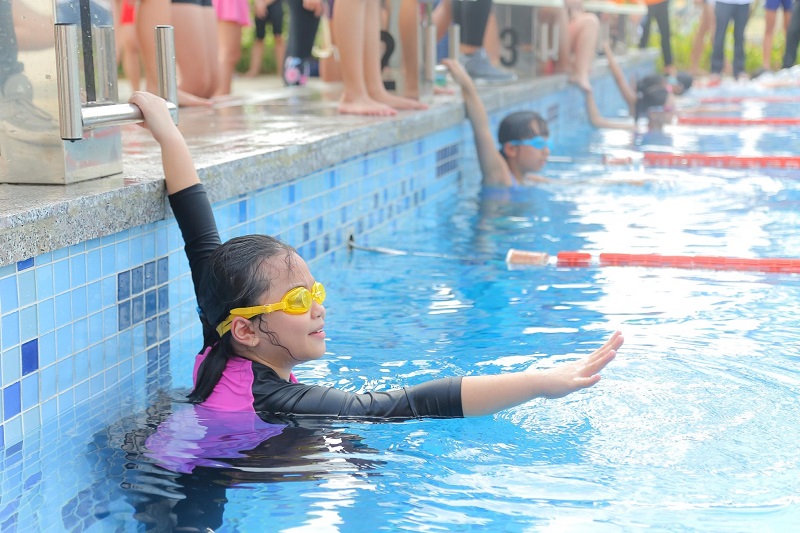
VAS students develop physical strength through swimming
4.2. Enhancing children’s cognitive abilities
Through life skills education at VAS, children learn how to overcome personal barriers, distinguish right from wrong, and view situations more objectively.
Improved cognitive ability helps children think logically, explore new knowledge, and stay motivated to learn. This foundation can inspire children to contribute positively to society in the future.
4.3. Supporting mental and emotional development
Physical development should go hand in hand with children’s mental and emotional development. At VAS, life skills lessons help children build a rich inner world through lessons about love, care, and respect for people, nature, and living things.
Children also develop a stronger sense of responsibility through lessons about gratitude toward grandparents, parents, teachers, and people around them. As a result, children can become more tolerant, gentle, and respectful in the way they communicate and behave.
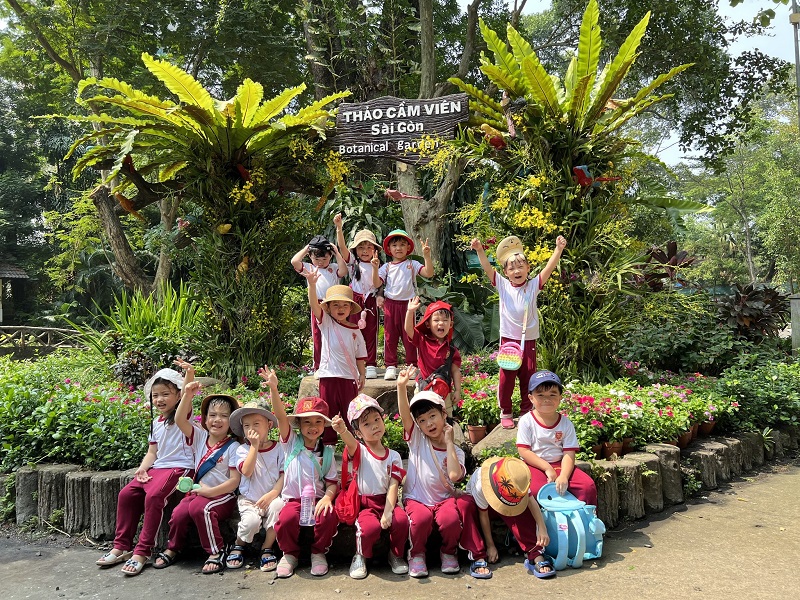
VAS students develop emotional well-being through extracurricular activities
In addition to the main skill sets above, VAS also helps children develop other essential life skills, such as:
- School behaviour skills
- Learning and self-learning skills
- Self-management and self-esteem
- Adaptability to new environments
- Goal-setting and motivation in learning and daily life
- Gender awareness and healthy school relationships
- Problem-solving skills
- Organisation skills
- Relationship-building skills in social interaction
- Presentation and information-sharing skills
- Teamwork skills
- Leadership skills, positive attitudes, and positive behaviour
>>> Read more: What do VAS international school tuition fees include?
Above are the essential life skill sets for preschool children at Vietnam Australia International School (VAS). Parents can also learn more about VAS educational methods through the website www.vas.edu.vn or hotline 0911 26 77 55.
>>> Read more:
Essential Life Skills Lessons for Children Every Parent Should Know
List of high-quality international schools in Ho Chi Minh City that parents should consider