



8 Effective Activities to Support Physical Development in Preschool Children
- What is physical development for preschool children?
- Benefits of early physical development for children
-
Top 8 activities to support physical development in preschool children
- 3.1 Swimming
- 3.2 Jump rope
- 3.3 Cycling
- 3.4 Basketball
- 3.5 Badminton
- 3.6 Martial arts
- 3.7 Football/ Soccer
- 3.8 Indoor rock climbing
Supporting physical development in preschool children is something all parents care about. However, at this age, which sports and activities are suitable for supporting children’s development? Below are the top 8 activities that can help preschool children develop physically, compiled by VAS International Preschool. Let’s explore them together.
1. What is physical development for preschool children?
Physical development for preschool children is the process of building and improving children’s motor skills, physical abilities, and body functions between the ages of 3 and 6.
This is an important stage that supports children’s growth not only in height and weight, but also in gross motor skills and fine motor skills. Suitable physical activities can help improve children’s health, increase body flexibility, and strengthen coordination between different body parts such as the hands, feet, and eyes.
Encouraging children to take part in physical activities from an early age helps them develop physically in a well-rounded way and creates a foundation for later stages of development.
In addition, physical development is closely connected to children’s cognitive, emotional, and social development. When children are healthy and flexible, they can adapt more easily to their surroundings and build relationships with friends.
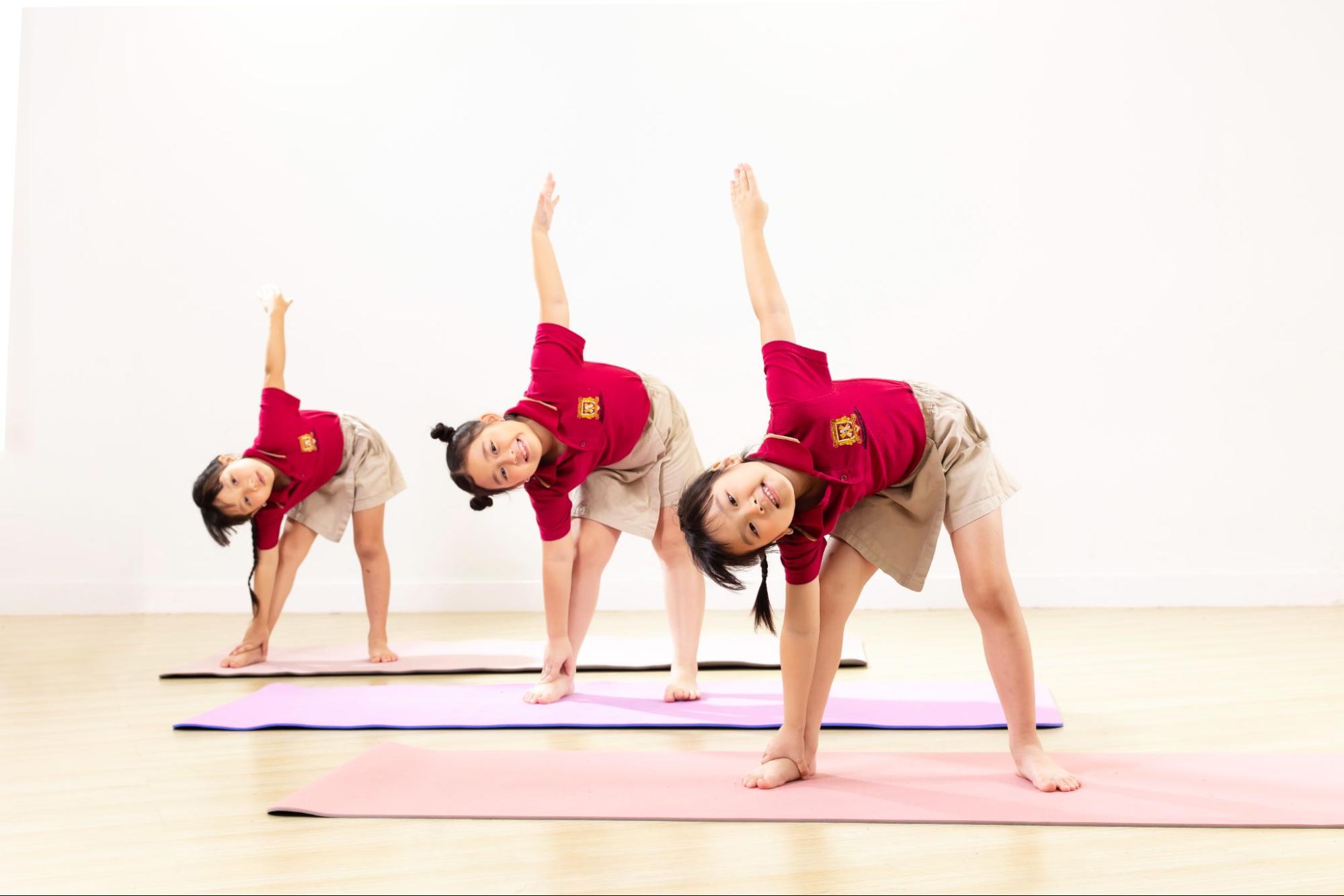
Physical development helps preschool children improve their health
2. Benefits of early physical development for children
Early physical development is an important factor that helps preschool children build a strong foundation for holistic development.
Physical activities not only improve children’s physical health but also positively support their cognitive development, emotional development, and life skills. Specifically:
2.1. Physical development
Early physical education helps children build a healthy and flexible body.
Taking part in regular physical activities not only improves children’s health and supports growth in height and weight, but also strengthens their immune system. This can help reduce the risk of health problems related to excess weight and lack of movement.
In addition, gross motor skills such as running and jumping, as well as fine motor skills such as grasping and holding objects, can also be improved. These skills help children become more flexible and better coordinated.
2.2. Cognitive development
Physical activities are not only good for the body but also support children’s cognitive development.
When joining games and movement-based activities, children need to follow rules, remember instructions, and think quickly. These experiences help improve their concentration and logical thinking.
Physical movement also stimulates brain development, creating favorable conditions for children to learn, explore, and develop creativity in other areas.
2.3. Emotional development
By supporting physical development in preschool children, parents also help them learn how to manage their emotions.
When children take part in games or sports, they learn how to face failure, winning, and losing. From there, they gradually develop patience and the ability to overcome difficulties.
Small achievements in physical activities can also help children become more confident. This supports the development of independence and the ability to regulate their emotions in different situations.
2.4. Developing life skills
Physical activities often require children to interact with friends. This helps them develop communication skills and learn how to cooperate with others.
Through these interactions, children learn to share, listen, and build positive relationships. At the same time, during activities, they may face unexpected or difficult situations. These experiences help them learn how to solve problems flexibly and effectively.
3. Top 8 activities to support physical development in preschool children
3.1. Swimming
Swimming encourages children to move their whole body to stay afloat. As a result, their muscles, especially the leg muscles, are continuously active.
The stretching and movement involved in swimming can help improve flexibility and support children’s physical development when practised regularly. At the same time, swimming is also an important life skill that children should learn to stay safe near rivers, lakes, swimming pools, and other water areas.
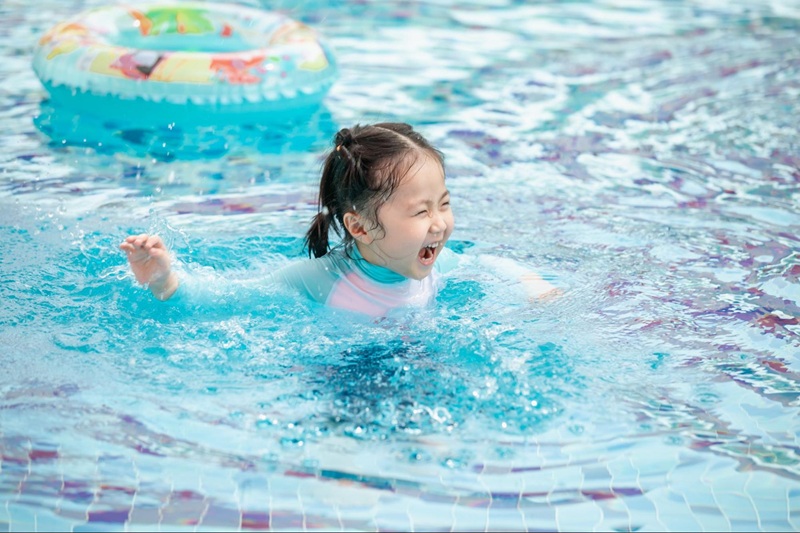
Swimming helps support physical development in preschool children
VAS International Preschool has a spacious and airy outdoor swimming pool where children can practise swimming. Teachers closely supervise swimming lessons to help children improve this important skill.
In addition, during extracurricular activities, the school also organizes trips to water parks, where students can practise swimming while enjoying water games with friends.
3.2. Jump rope
Jump rope is a simple and useful activity for preschool children. Whether at school or at home, children can practise this activity with just one piece of equipment.
Jump rope is also included in physical education lessons because it encourages children to move actively. During the activity, the muscles and joints in children’s legs become more flexible and elastic, which can support their physical growth.
Parents can encourage children to jump rope for about 5 minutes each day to build physical strength, flexibility, and endurance.
3.3. Cycling
Cycling is a familiar sport suitable for many ages. It not only supports physical development but also helps improve cardiovascular health.
To help children get used to cycling, it is important to adjust the saddle and handlebars to fit their height and body size. At VAS, properly sized mini bicycles are available for children during lessons and playtime.
Practising cycling for about 30 minutes a day can help stimulate leg muscle development and improve children’s overall physical fitness.
3.4. Basketball
Basketball involves running, jumping, stretching, and full-body coordination. These movements can support children’s physical development, especially flexibility, endurance, and body coordination.
For this reason, basketball is often included in school sports programs to help children become more active and physically confident.
At VAS, the basketball court is located in the indoor sports complex. Children are carefully guided by teachers in basic skills such as holding the ball, dribbling, and joining small games. These activities help children gradually become familiar with the sport.
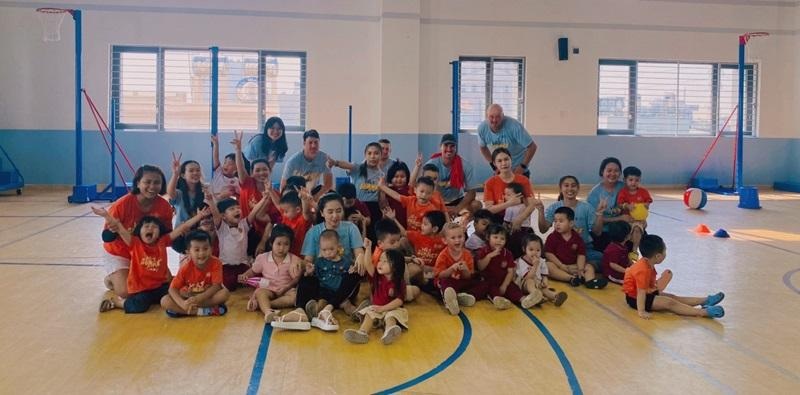
A basketball class at VAS International Preschool
3.5. Badminton
When playing badminton, children need to reach upward with their arms to hit the shuttlecock, move their feet continuously, and observe carefully to respond to the opponent’s shots.
Because of these movements, badminton can help preschool children develop different parts of the body, not only support height growth. Practising badminton at school or at home can help children relax, stay active, and improve their physical fitness.
However, besides regular exercise, parents should also maintain a healthy diet for children. With enough essential nutrients, physical activities can bring better results for children’s development.
3.6. Martial arts
Martial arts classes are now offered more widely at schools from preschool to high school. These classes help students learn basic self-defense skills while also supporting physical development and height growth.
Some popular martial arts taught to children today include:
- Vovinam
- Taekwondo
- Muay Thai
- Traditional martial arts
Martial arts movements, especially stances and leg techniques, help strengthen muscles and support the body’s natural development. Through martial arts, children can improve their physical fitness and learn how to protect themselves in unexpected situations.
3.7. Football/ Soccer
Football, also known as soccer, is a high-energy sport that mainly uses the legs. During the game, the leg muscles, thigh muscles, and lower-body muscles work continuously, helping children stay active and supporting their physical development.
In addition, playing soccer can improve children’s observation and decision-making skills. As children respond to different situations during the game, they also learn to think quickly and coordinate better with others.
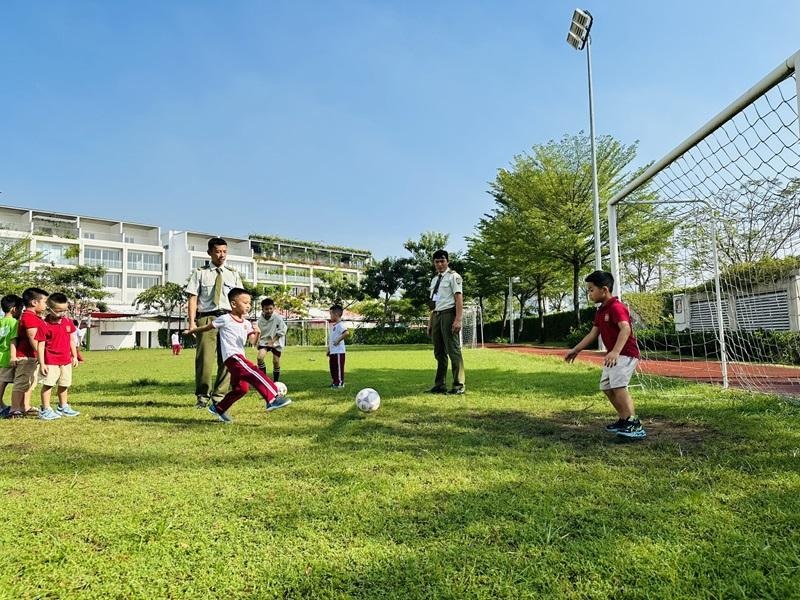
Soccer helps preschool children stay active and develop physically
3.8. Indoor rock climbing
Preschool children are naturally active, playful, and curious. Therefore, indoor rock climbing is considered a suitable activity to support physical development in preschool children. This activity matches children’s active nature while encouraging movement as they try to climb and reach higher points.
When climbing, children’s muscles work continuously, helping improve body flexibility. The climbing movement also encourages stretching and coordination, which can support children’s overall physical development.
At VAS, children can experience this activity through field trips to play areas inside and outside the city. These experiences not only give children memorable childhood moments but also help them explore the world around them.
Through the 8 physical activities above, VAS hopes parents can find useful ways to support physical development in preschool children. Along with suitable activities, parents should also maintain a balanced and nutritious diet to help children grow healthily.
>>> Read more: Detailed updates on the current VAS international school tuition fee schedule
If you would like to learn more about the international education program at VAS, please contact us via the hotline at 0911 26 77 55 or visit www.vas.edu.vn for detailed consultation from our admissions team.
>>> Read more:
>>> 8 holistic extracurricular activities for children’s skill development
>>> Top 5 extracurricular classes to develop critical thinking in elementary students